

 Back
Back





From C-Part to Critical Component: Why Seals Matter in Hydrogen Applications
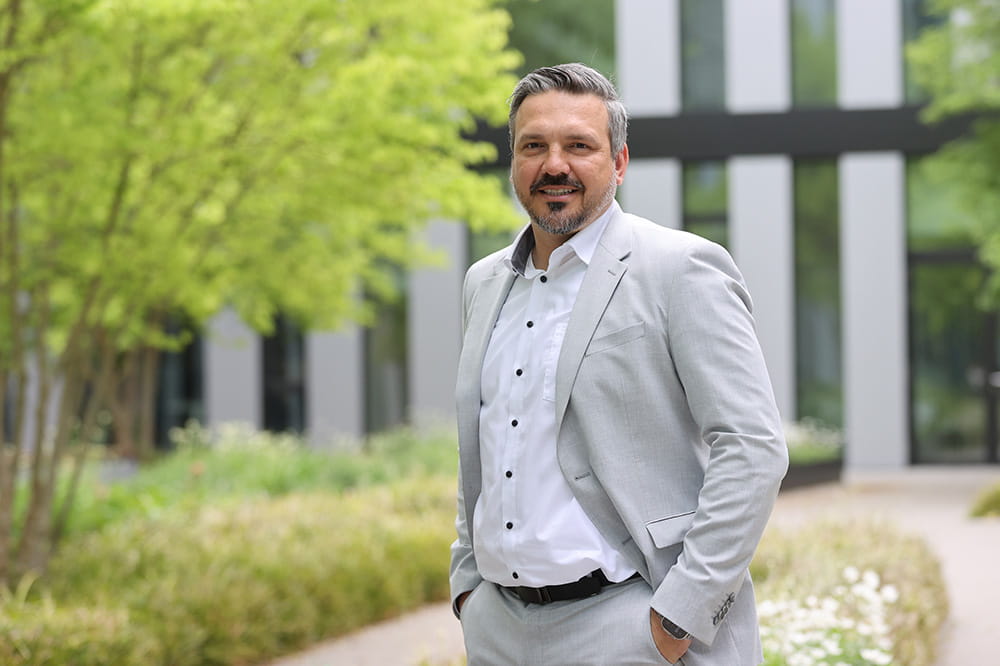
Hydrogen is expected to play a central role in the energy transition—but turning that promise into industrial reality depends on the reliability of every component in the system. One of the most underestimated is the seal. Across the hydrogen value chain, sealing solutions must withstand demanding media, high pressures, strict purity requirements, and long service lives. Artur Mähne is Global Segment Manager for Hydrogen Technologies in the Energy segment at Freudenberg Sealing Technologies. In this interview with Holger Best, Content Manager, ISGATEC, he explains, why sealing technology is becoming a decisive factor in the safe and efficient scale-up of hydrogen applications.
Hydrogen processes are not really new, are they? So what is currently changing for sealing technology?
You are absolutely right. It is not so much the molecule that is new. What is new is the pressure to industrialize. Across the entire value chain, we are seeing increasing technical and regulatory requirements. As a result, the seal is shifting from a C-part to a safety-relevant, safety-critical key component. Whereas in the past, to put it bluntly, a material data sheet and empirical values were sufficient, today’s customer requirements are quite different. The focus is now systematically on permeation, high pressures, explosive gas decompression, media and temperature resistance, and, of course, long service life.
The seal is transitioning from a C-part to a safety-critical key component. What does that change mean for you personally?
Thinking back to the days when there were still pilot phases, experience and simply proving that a system worked were enough. Today, the expectation is that seals must be measurable and comparable, which is why testing and validation programs are gaining importance, especially with regard to permeation, pressure cycling, leakage under real-world conditions, and service life. These are crucial points that our customers are aware of and want to understand. As a result, seals are becoming more data-driven and specified. For us, this means we have to be involved much earlier in the process, specifically during system and stack planning, because, in the end, the materials, design, manufacturing process, and testing methods all need to be perfectly aligned.
Of course, this also changes the process, moving away from relying solely on experience and toward FEA, simulation, test bench testing, and compliance with standards.
Moving away from empirical data? Is empirical data losing importance, or is it being incorporated into the process?
Actually, it is quite the opposite. Experience is still extremely important. Think of it like aviation: experience helps pilots anticipate where turbulence might occur. But today, no one relies on gut feel alone. We fly with sensors, instruments, simulations, and checklists. I see hydrogen seals in the same way. Our experience helps us identify critical areas early, permeation, pressure transients, and especially assembly. But in the end, verification today is data-driven, using simulation, test rigs, and, of course, validation under realistic operating conditions.
So it all works together?
Exactly, you could say experience points the way, and data ultimately provides the confidence. Only that combination makes seals in hydrogen applications comparable, repeatable, and truly controllable.
Safety is an important concept in this context. What actually happens if seals fail in hydrogen processes?
That depends entirely on the application, of course, and the spectrum ranges from pure efficiency losses to a safety risk. Hydrogen is very small, which means it diffuses very easily.
Permeation increases the loss of the energy carrier, and it is also a safety issue. It becomes critical anywhere leaks can occur near ignition sources and, of course, wherever different media could mix. That is why seals are so important throughout the entire value chain. In the end, they ensure not only integrity and efficiency, but also safety. They also help prevent unplanned shutdowns and the costs that come with them.
Can you elaborate on that with a product example, perhaps using an electrolysis stack?
Certainly, let us use an electrolyzer stack as an example. In that setup, seals separate the hydrogen side from the oxygen side. They are designed to maintain purity, hold pressure, and provide electrical insulation. If a seal or sealing interface fails, you can lose that separation. In the worst case, you could end up with mixing, which is obviously a safety issue. In practice, even small leaks are often picked up by sensors and can trigger a shutdown. So it quickly becomes an economic issue, too. That is why material selection and design and, of course, cleanliness and purity are so critical for seals.
So the selection process also has a great deal to do with responsibility. How do you support plant operators in selecting seals or sealing concepts?
We take a holistic approach: media, temperature, pressure, cycle, and, of course, purity, leakage targets, and service life. These are the aspects we consider. Early involvement is crucial for us, ideally before any geometries are finalized. That allows us to design the material and the seal to fit the application, supported by FEA and simulation, and then validate this through appropriate testing methods. This definitely has an impact on the total cost of ownership. Ultimately, it results in fewer failures, more predictable maintenance, and higher plant efficiency.
So that also means that various people and functions are involved in the selection of seals. Who are these people in practice, and what roles do they play in this selection process?
Yes, it has in fact become a kind of team effort. At least that is how I have experienced it in many projects. Development and design determine the geometry and interfaces. Plant planning defines the operating windows. Quality always requires documentation. Maintenance focuses on maintenance intervals. And Purchasing, of course, looks at costs. In addition, there are other development partners. That is precisely why a clear specification is extremely important to us. Otherwise, everyone ends up optimizing in silos, but not the system as a whole. If purchasing decides solely on unit price, this can result in the seal needing to be replaced more frequently. That, in turn, affects the total cost of ownership. This is why we at Freudenberg Sealing Technologies, as a development partner, always try to bring these perspectives together early on, and I would even say that we often act as mediators among our customers’ various functions to ensure that the best result is achieved.
Who might be underestimating the practical significance of sealing in hydrogen processes?
That is a good question. I would say the issue is not necessarily underestimated, but it is often considered too late. Hydrogen is very demanding to handle. Permeation, explosive decompression (RGD), extreme temperatures, and sometimes corrosive media mean that there is rarely a suitable standard solution. Many people first think of the electrolyzer or the compressor and only then realize that the sealing point, not the seal itself, but really the sealing point, determines the tightness, purity, and ultimately the service life of a system. The best solution is achieved when the seal and the sealing point are developed together from the very beginning. From practical experience, I can confirm that we have had to turn down projects because a client was not willing to accommodate adjustments on our part. And spoiler alert: the client came back a few months later after having a bad experience. Fortunately, we were then able to make the necessary adjustments to successfully design and complete the project and its sealing point together.
That sensible, holistic approach often has to be learned through practical experience first.
Absolutely. I could not agree more.
When sealing H2 processes, many standards and regulations must be complied with, depending on the facility. Have all these aspects already been clarified in practice?
I would say the standards landscape is dynamic. Much of it is currently being revised or newly developed. That is, of course, important; standards provide a certain framework. But the specific interpretation always depends heavily on the application, the pressure and temperature profiles, and the media. That is why we combine a standards-based approach with application-oriented testing and validation concepts. We are also actively involved in associations to help shape the regulations.
In this context, do the current standards already reflect the state of the technology you have developed?
I would say they increasingly do. But, as you know, technology often develops faster than standardization. That is why it is so important that standards are viewed more as minimum requirements, and that best practices, simulation, and test bench standards are additionally used to cover real-world operating profiles.
Let us take a journey through these processes from a sealing technology perspective. We have already talked about electrolysers, systems used to produce hydrogen. Here, you quickly come across abbreviations like PEM, AEM, AEL, and SOEC. What do all these mean, and how do these systems differ from a sealing technology perspective?
The four abbreviations you mentioned are the most important electrolysis processes. From a sealing perspective, they differ primarily in terms of media, temperature, and pressure profiles. With the PEM electrolyzer, the proton exchange membrane electrolyzer, we have an acidic environment. This requires high purity standards, pressures of up to about 35 bar in the stack, and, of course, an oxidative environment. This means that seals must withstand O₂ exposure, pressure cycling, and maintain purity.
In contrast, with AEM and AEL electrolyzers, we have an alkaline environment with potassium hydroxide and temperatures slightly below 100 degrees Celsius (212 degrees Fahrenheit). There are pressure requirements here as well, but the focus is on long-term stability and alkali resistance.
With the SOEC solid oxide electrolyzer, by contrast, we are talking about a high-temperature process. Here, temperatures are estimated at 800 to 1,000 degrees Celsius (1472 to 1832 degrees Fahrenheit). We have thermal cycles involving corrosion and relaxation, meaning a completely different material and design window.
But ultimately, what can be said about all these processes is this: the process determines the environment of the seal and, consequently, the material geometry and the type of validation.
Which process is the most challenging from a sealing perspective?
That depends on which sealing point you are looking at. SOEC is a very specialized field due to the extreme temperatures and thermal cycles and is therefore not relevant for our elastomeric seals. PEM is demanding because of the purity requirements, the oxidative environment, and the pressure cycling. And with AEM-AEL, the challenges are the potassium hydroxide solution and long-term stability at elevated temperatures. So I would say that each of these processes has its own specific challenges.
You mentioned RGD earlier, which stands for explosive decompression. What is that?
Explosive gas decompression, or RGD, occurs where rapid pressure changes take place, for example, in compressors or at gas stations. Gas can diffuse into the material. If the pressure then drops rapidly, the gas can expand within the material. This can cause damage from the inside out. That is why we need materials that have proven RGD resistance. In high-pressure environments, we often talk about requirements exceeding 700 bar, and that naturally has extreme effects on the material.
What does that look like on the materials side, how do you meet those requirements?
Unfortunately, there is no one-size-fits-all solution here. Material selection follows the medium-temperature-pressure cycle and, of course, takes service life and purity into account. To give a few examples, certain elastomers and compounds are effective in reducing permeation, and the permeation coefficients must be simulated and validated on an application-specific basis.
For RGD, you need formulations that are robust against explosive gas decompression, especially with fast pressure profiles. For PEM, or proton-exchange-membrane electrolysis, materials are required that can withstand an oxidative environment and high temperatures and also meet purity requirements. So you could say that material, design, and processes always go hand in hand.
We have discussed permeation several times. What role does it play in hydrogen, and what can be done about it?
Permeation is a key issue with hydrogen; the small molecular size promotes diffusion, meaning the gas penetrates the material. This naturally increases energy loss. At the same time, it is a safety issue. Ultimately, material formulations with reduced permeability help address this. And very importantly, we cannot just talk about the material, we also have to simulate and validate material-specific permeation values tailored to the specific sealing location.
When it comes to choosing materials and seals, people often talk about service life. For the stacks you just mentioned, what service life is typically required? And what does that mean for how the seals have to be designed?
Very long operating times are the goal for electrolysis stacks. Specifications often list up to 100,000 hours as the target, and the seals must not become a bottleneck in the process. For us, that means a robust geometric design, the use of suitable materials, a clean assembly process, and, above all, test documentation covering realistic load cases, including thermal cycles.
Let us move further along the process chain. In processing, piston compressors and scroll compressors are predominantly used. What needs to be considered?
Depending on the application, compression and processing dominate in this stage, and there is a great deal of dynamics involved. Wear, tribology, and minimizing leakage are key aspects. Reciprocating compressors operate across a very wide pressure range, and the sealing systems must be low-wear and highly leak-tight at the same time. With scroll systems, the pressure and temperature ranges are different. Special PTFE-based seals are used here, and the trend is moving toward PFAS-free alternatives.
That is to be expected given the current discussions.
That is indeed the case, and we are trying to address it. In addition, certain design principles, such as multi-stage pressure drops and spring-loaded segments, help ensure a tight seal.
These are very different challenges from those in electrolysers. Now that the hydrogen is being transported, what challenges do the sealing points face here?
Transport and storage naturally involve very different boundary conditions depending on the path. Take high-pressure gas, for example. Here, the focus is on permeation, pressure, and temperature ranges. But when we are talking about cryogenic, that is, liquid, hydrogen, the material requirements are extreme because temperatures can drop to minus 253 degrees Celsius or minus 412 degrees Fahrenheit. This calls for concepts entirely different from our classic elastomer seals. At fueling stations and during refueling, rapidly changing pressure profiles, meaning, once again, RGD robustness and low permeation, plus maintenance and inspection concepts are key factors.
So, in principle, there is a broad range here as well, and minus 253 degrees Celsius or minus 423 degrees Fahrenheit is, of course, especially challenging for seals.
Definitely for elastomeric seals, yes.
That is where your own solutions reach their limits, right?
In that case, colleagues from another department can certainly help.
We have now transported the hydrogen as an energy carrier to where it is needed, into the fuel cell, into an internal combustion engine, and so on. What challenges await from a sealing technology perspective?
When it comes to applications, much again depends on the temperature range and the medium. Fuel cells come in various types with very different operating temperatures, from low temperature to high temperature. Seals are selected based on compression set, permeation, and media resistance. Purity requirements and service life also play a central role. In the case of hydrogen combustion, temperature and media influences, as well as system aspects, are decisive. In short, the use case ultimately determines the specific sealing strategy.
We have discussed many requirements, and you mentioned at the beginning that you cannot simply reach into the product portfolio and pull out the right seals. Do these requirements actually lead to new manufacturing processes for seals?
I would definitely say that we have pursued a great many innovative approaches in the hydrogen sector over the past few years, and I would absolutely agree with that across the entire value chain. We have tailored our manufacturing and testing processes for scalability, media purity, low permeation, and high-pressure compatibility.
When it comes to manufacturing processes, we generally use three different methods in the hydrogen sector. First, there is injection molding. Here, we can produce both loose gaskets and apply them to a substrate, that is, perform overmolding. This allows us to design integrated stack gaskets that are reproducible and easy to install.
At the same time, we have large-format press capacities, since we deal with very large cell formats in the electrolysis sector, and this naturally requires suitable presses.
In addition, for some projects we also use extrusion, including a liquid curing method, essentially a salt bath, to produce precise profiles with tight tolerances and chemical resistance, even for very large diameters.
So size is always an issue.
That is actually the case in electrolysis, but it is nothing new for us, since we also serve the wind industry and other sectors. So, bottom line, you could say that manufacturing is now part of the performance.
That sounds like you are H2ready. What comes next? How do you see things developing?
I would call myself a realistic optimist. The market ramp-up is very challenging, but the direction is clear. Requirements are increasing, projects are becoming more industrial, and we are moving away from pure hype toward robust industrial portfolios. That gives us hope.
Technically, we see that seals are becoming increasingly important as functional guarantees for efficiency, reliability, and predictable lifecycle costs. And with that comes greater professionalism in specification, design, testing, and a certain degree of standardization.
The practical potential of this energy source is also being widely discussed, because it is not exactly cheap to produce. Which industries are best suited for green hydrogen?
That is a good question that many people are grappling with. Ideal applications are those where electrification is difficult and where molecules are needed: industrial processes and parts of the chemical value chain, and generally anywhere hydrogen is used as a raw material or energy carrier in processes. These areas are very well suited.
Another major lever, however, is existing hydrogen use, at least if we can gradually decarbonize it, in other words, make the hydrogen greener.
So, making the so-called blue and gray hydrogen greener?
Exactly. Currently, 100 megatons of hydrogen are still being used annually, and producing this hydrogen emits 1,000 megatons of CO2—a factor of 10. If we could increasingly rely on electrolysis to power this process, we would already be making a significant contribution. Ultimately, however, the systems —regardless of the industry— must operate safely and efficiently throughout the value chain. Seals are always a key component in this regard. There is also a recent study from the Fraunhofer Institute that addresses precisely this issue, and I highly recommend it.
Let me summarize: from a sealing technology perspective, hydrogen processes can be mastered when viewed holistically. This includes operating conditions, compliance with standards and regulations, materials science, seal design, and seal manufacturing. As with all topics related to seals, a holistic approach is important, because ultimately, sealing hydrogen always involves a sense of responsibility, especially given these highly safety-critical aspects.
I completely agree. It is precisely this holistic approach that is ultimately the key to truly mastering hydrogen processes safely. This is particularly evident when it comes to seals. They may seem invisible, but ultimately determine the safety, efficiency, and availability of entire plants. Sealing hydrogen always means taking responsibility—for people, for plants, and for the acceptance of this technology. I firmly believe that if we take this responsibility seriously and collaborate early on, hydrogen will not only be a beacon of hope, but will become a reliable building block of the energy transition.
And from the perspective of these former C-parts—now system-critical components—all of this is indeed feasible.
I can only confirm that.






 Back to Top