

 Back
Back

30.06.2026 | Story
New production methods for seals in the hydrogen and electrolyzers sector
Experimental curiosity is accelerating the development of forward-looking solutions, especially in the energy sector. This inventive spirit also fuels continuous advancement in materials, manufacturing processes and sealing solutions at Freudenberg Sealing Technologies. Because one thing is clear: Seals are the decisive factors that enable efficiency, safety, and predictable life cycle costs in hydrogen systems. They are the technology drivers that make it possible to achieve the targeted cost and scaling effects.






Question for the industry expert
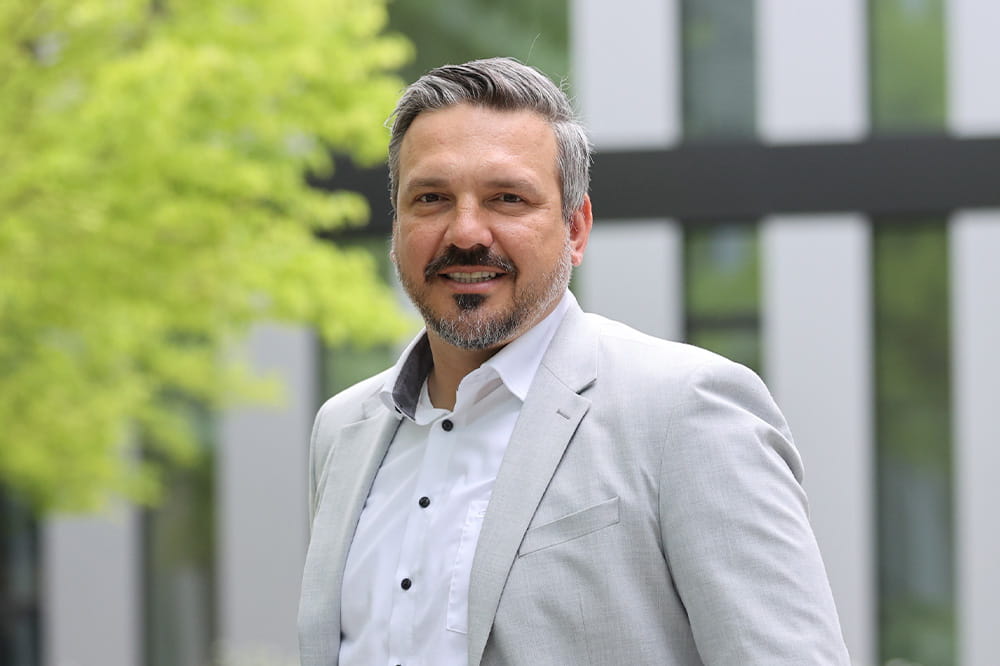
Artur Mähne
Global Segment Manager, Hydrogen Technologies
at Freudenberg Sealing Technologies
Are there new production methods for seals in the hydrogen and electrolyzers sector, Mr. Mähne?
Artur Mähne is Global Segment Manager, Hydrogen Technologies, at Freudenberg Sealing Technologies. He reports: “Yes – and this across the entire H2 value chain. In recent years, we industrialized several production-ready manufacturing process chains for electrolyzer stacks, peripherals, and H2 infrastructure. We specifically designed our manufacturing and testing processes for scalability, media purity, low permeation, and high-pressure capability. In essence, this involves modern extrusion lines, precision injection molding and overmolding onto carriers, as well as large-format press capacities – all backed by our material and process expertise. We develop and analyze all formulations, material properties, bonding behavior, and purity assessments for sealing solutions by applying the finite element method (FEA). I will gladly go into more detail and present our manufacturing processes in three sections.
I will start with a process for injection molding and overmolding of seals onto carriers (for bipolar plates and metal or thermoplastic frames)
At Freudenberg Sealing Technologies, we master the direct molding of seals onto metallic bipolar plates, metallic frames, and thermoplastic carriers. In these applications, key aspects include defined adhesion through bonding agents, controlled groove filling, and the geometric activation of the seal.
For PEM stacks, we have developed a seal design with high-pressure capability that has already been validated for series production. This consists of a groove clamp with retention properties: an L-shaped cross section that is “activated” under operating pressure into a C-shaped barrier. This design is usually injection-molded and demonstrates the interaction between geometry, bonding, and process. In H2 and electrolysis applications, the benefits include a lower number of components, a higher degree of automation, better reproducibility of the com pression position, and lower leakage and permeation.
Large-format presses for manufacturing XXL seals and large O-rings in all material classes
When it comes to large cell formats with diameters of 0.3–2 m and peripheral applications, we use powerful large presses to manufacture large-format frame seals, flat seals, and large O-rings – in line with the current scaling of electrolyzers toward MW/GW factories. Depending on the media window and bolt load, we produce molded EPDM and FKM elastomer parts. Our press capacity enables series production in high quantities. For H2 electrolysis, we offer the benefit of scalable surface sealing for large cells and covers, as well as robust tolerance absorption compatible with serial stacking and gigafactory cycle times.
Extrusion including an LCM (liquid curing method) line, for manufacturing profile and frame seals
We have specifically expanded our profile extrusion technology for hydrogen applications. For example, we developed a new extrusion line based on continuous production technology for delicate cross sections. We have the ability to vulcanize materials in a molten salt bath with optimized heat transfer and without exposure to air. This has allowed us to broaden the range of materials and cross-linking systems for large seals used in hydrogen applications, with a specific focus on reliability and durability. At the same time, our optimal process control has enabled us to significantly reduce manufacturing tolerances. This technology toolkit can be adapted with different extruders in LCM (liquid curing method) set ups, making it possible for us to manufacture continuous stack profiles with tight tolerances, low creep tendency, and high chemical resistance. For alkaline electrolysis (AEL), we are producing extruded profiles for seals with diameters of up to 2m and well beyond. The fundamental advantage of these manufacturing processes for H2 electrolysis is that we can now manufacture large seals in optimized and customized high-performance materials with minimal tolerance variations and high precision. This is important for stack service lives of many tens of thousands of hours.
In closing, the bottom line is this: Yes, there are new manufacturing processes – and we are focusing on vertical integration and scaling. We are investing in standardization and global production capacities at our sites in Europe, China, and the United States. We are doing this with the goal of supplying H2 seals reliably, sustainably, and locally for local markets in high volumes. Thanks to our material and process expertise, the concepts and methods described here are ready for series production – from AEL/AEM to PEM, and from stacks to H2 infrastructure. This directly contributes to the safety, service life, and scalability of electrolyzers. At our company, one thing becomes clear every day: Material and process expertise are the “second half” of every innovation.
Podcast with Arthur Mähne
Global Segment Manager, Hydrogen Technologies bei Freudenberg Sealing Technologies
Where can I get industry news in the hydrogen technologies sector?
There is an immense range of information sources available along the hydrogen value chain and categorization is strongly recommended. Here we will list three platforms that we value, followed by a structured overview of many additional information sources.
Daily Industry News – editorially curated
China Daily – Hydrogen technology section
China’s hydrogen market; technological advances, large scale projects, and international cooperation; prepared for an international expert audience.
https://www.chinadaily.com.cn/a/202511/14/WS69168786a310d6866eb29752.html
CORDIS – EU research news on hydrogen
EU portal for research projects and innovations in hydrogen, including storage and sealing technologies.
https://cordis.europa.eu/article/id/457659-a-novel-path-to-sustainable-hydrogen-storage/de
The Energy and Resources Institute (TERI)
leading energy research institute in India; regular updates on H2 technologies.
Hydrogen Insight
daily updates on projects, auctions, industrial offtakes, and regulations (EU/global) )
https://www.hydrogeninsight.com/latest
H2-View
broad coverage (mobility, industry, politics) plus monthly magazine and webinars; good coverage of Europe and Asia
https://www.h2-view.com/news/all-news/
FuelCellsWorks
very frequent output (daily, global), from OEM news and infrastructure to weekly reviews related to China
Hydrogen Economist (PE Media)
background analyses & outlook pieces (paywall, but strong classification)
https://pemedianetwork.com/hydrogen-economist
Euronews
Hydrogen – EU-focused articles with regulatory relevance (ACER, market realities) (ACER, Markt-Realität)
Policy, regulation, and funding programs (Europe/Global)
IEA
Global Hydrogen Review 2025 incl. the new Hydrogen Tracker (policy database with more than 1,000 measures, project and cost layers). Ideal for a “single source of truth” perspective.
https://www.iea.org/reports/global-hydrogen-review-2025
Clean Hydrogen Partnership (EU)
official news on calls, projects & hydrogen valleys; published 2026 call for €105 million
https://www.clean-hydrogen.europa.eu/index_en
European Hydrogen Bank (EHB)
auction results and lessons learned; second round: many with drawals due to completion guarantee & uncertainty of demandt
https://www.hydrogeninsight.com/
Hydrogen Europe
news/analyses on EU policy (EHB, Innovation Fund, Hydrogen Mechanism) – a good lobby/industry perspective
https://hydrogeneurope.eu/news/
IPHE
International Partnership for Hydrogen and Fuel Cells in the Economy – government network; governance updates & international initiatives
European Hydrogen Observatory
editorial EU news (projects, H2 airports, large-scale plants).
Market prices, data, and analyses
S&P Global Commodity Insights (Platts)
price indi ces, pump price assessments, news/analyses; also the organization behind World Hydrogen Leaders (events)
https://press.spglobal.com/2024-05-14-S-P-Global-Commodity-Insights-Acquires-World-Hydrogen-Leaders
Argus Media
Hydrogen & Future Fuels – global price/cost models, policy news, offtake databases
https://www.argusmedia.com/en/commodities/hydrogen
BloombergNEF
realistic supply outlooks (e.g. share of “likely achievable” capacity by 2030) & cost trajec tories
https://about.bnef.com/insights/clean-energy/hydrogen-supply-outlook-2024-a-reality-check/
Project and Technology Tracker – useful for pipeline and competitive monitoring
IEA Hydrogen Tracker & Projects Database
inter active maps, project status (from concept to opera tion), infrastructure & cost; usable under CC-BY.https://www.iea.org/data-and-statistics/data-tools/hydrogen-tracker
IEA Projects Dataset @ KAPSARC
machine-readable access (data exports), helpful for individual evaluations
https://datasource.kapsarc.org
Hydrogen Monitor (Hydrogen Europe)
annual EU market status incl. funding landscape, permitting, target achievement
A practical checklist:

What information do I need to select seals along the hydrogen process chain?
Media
-
Are my seals used in an acidic or alkaline environment?
-
Do my seals need to withstand potassium hydroxide/caustic potash?
-
Is my hydrogen in gaseous or cryogenic form?
-
Do the seals need to resist oils and coolants?
-
Which purity requirements apply?
-
What is the maximum permissible leakage rate?
-
What is the maximum permissible permeation rate?
-
Which compatibilities must be ensured?
Geometry/hardware
-
What are the best-suited flange geometries and qualities?
-
Which groove and seat geometries are required?
-
What is the quality of the surfaces to be sealed?
-
Which manufacturing process (extrusion/LCM/overmolding) is advisable?
Leakage and operating life
-
How is the permissible leakage rate defined?
-
How are the CSR limits defined?
-
What is the target service life (e.g. 100,000h in electrolysis)?
-
Which maintenance intervals are required?
-
What is the structure of the spare-parts logistics – how quickly must spare parts be available?
Safety and standards
-
Which ATEX requirements (ATEX zones) must be met?
-
How is the RGD risk defined?
-
Which test protocols are required and where are they documented?
-
Is ISO 22734 conformity ensured?
-
For vehicles: is UN R134 complied with?
Conclusion and Outlook
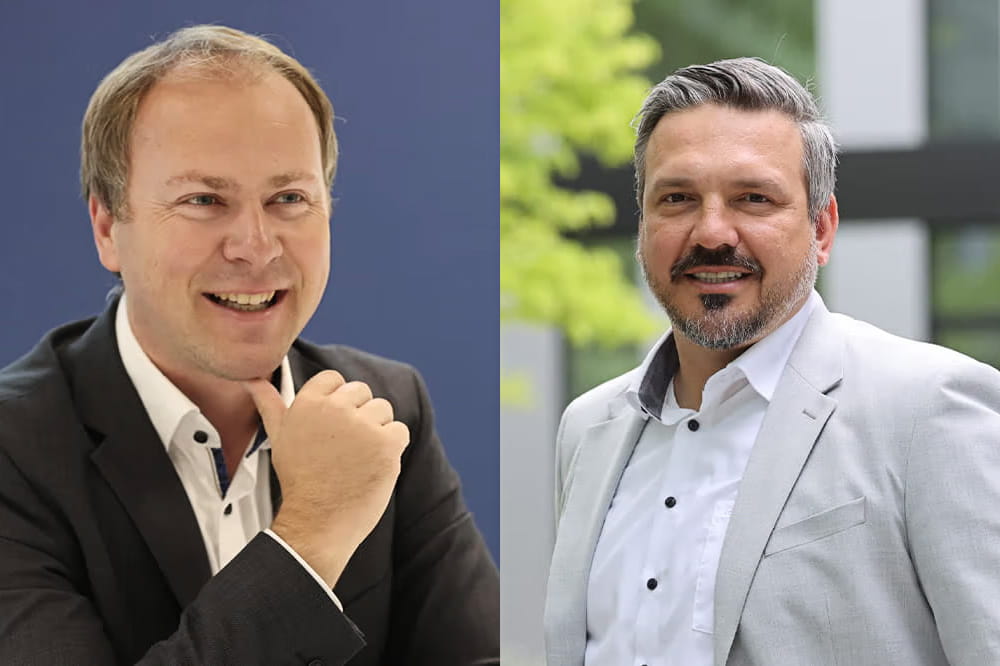
Marcel Schreiner and Artur Mähne
Experimental curiosity is accelerating the develop ment of forward-looking solutions, especially in the energy sector. This inventive spirit also fuels continu ous advancement in materials, manufacturing pro cesses and sealing solutions at Freudenberg Sealing Technologies. Because one thing is clear: Seals are the decisive factors that enable efficiency, safety, and predictable life cycle costs in hydrogen systems. They are the technology drivers that make it possible to achieve the targeted cost and scaling effects.
This white paper helps you stay up to date on sealing solutions for the hydrogen process chain. At the same time, we offer important insights into how innovative technologies can help you move toward climate neutrality. We would be pleased to continue developing this white paper together with you and look forward to your feedback.
Marcel Schreiner
Global Segment Director Energy und Projektleiter H2 at Freudenberg Sealing Technologies
Marcel.Schreiner@fst.com
Artur Mähne
Global Segment Manager, Hydrogen Technologies at Freudenberg Sealing Technologies
Artur.Maehne@fst.com
Other Topics
First Hand News
Best of all, keep up with the latest developments
with the Freudenberg Sealing Technologies newsletter.

 Back to Top