

 Back
Back

07.10.2026 | Story
What you need to know
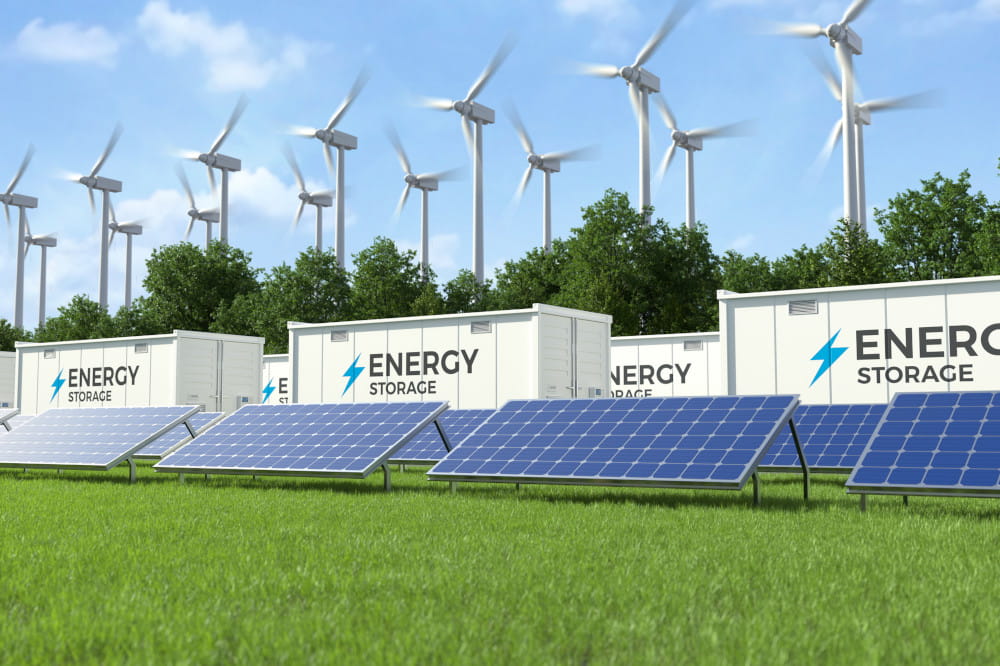
By 2030, 80 percent of the electricity produced in Germany is expected to come from renewable energies. In the “intelligent electricity grids” (smart grids) of the future, energy storage systems are an essential means of absorbing peak loads and ensuring flexibility in terms of space and time. Safety standards are indispensable in this area so that decarbonization can also function across borders. Which legal framework conditions apply where? Here is an overview that does not claim to be exhaustive:




Standards and Guidelines
Which standards and guidelines apply to seals in the process chains for battery energy storage systems?
DIN (German Institute for Standardization)
German Standardization Roadmap Energy Storage Version 2; provides an overview of the standardization of energy storage systems
WEBSITE ›
GB 44240-2024
Chinese standard, secondary lithium cells and batteries for electrical energy storage systems – safety requirements, English version
WEBSITE ›
EU 2023/1542
EU battery regulation on batteries and waste batteries; component of the European Green Deal for the assessment, standardization and legal regulation of battery types and associated obligations in the EU countries
WEBSITE ›
DIN EN IEC 62619 VDE 0510-39:2023-08
Secondary cells and batteries with alkaline or other non-acid electrolytes; safety requirements for secondary lithium cells and batteries for use in industrial applications
WEBSITE ›
DIN EN IEC 62933-5-2:2025-08
Draft – Electrical energy storage systems (EES systems) - Part 5-2: Safety require ments for grid-integrated EES systems – electrochemical systems
WEBSITE ›
NFPA 855 (National Fire Protection Association)
U.S. safety regulations for the installation of energy storage systems
WEBSITE ›
UL9540
Basic safety standards for energy storage systems; safety standards for electrical energy storage technologies, including lithium-ion batteries, lead-acid batteries, fuel cells, flywheels and other electrochemical energy storage systems
WEBSITE ›

Conclusion

Fabien Phong and Marcel Schreiner
Battery energy storage systems are a critical component of global energy infrastructure. The market for BESS is expanding rapidly: global installed capacity exceeded 300 GWh in 2025, representing a 51% increase over the prior year. This growth is directly linked to the expansion of wind and solar generation capacity, where BESS provides the flexibility and dispatchability that variable renewable sources cannot offer on their own.
For this growth to be safe, reliable, and compliant across jurisdictions, the safety-relevant components at the heart of every BESS — seals, thermal barriers, pressure equalization elements, and module barriers — must meet demanding and often conflicting requirements: extreme temperature resistance, long service life, chemical compatibility, mechanical robustness, and compliance with an evolving international regulatory landscape.
Freudenberg Sealing Technologies addresses these requirements through continuous material development, global testing infrastructure, and close collaboration with BESS manufacturers from the earliest design stages. Key innovations include the Quantix® Ultra 94-2 thermal barrier system for module-level thermal runaway containment, the DIAvent® pressure equalization valve for controlled venting, and a comprehensive portfolio of EPDM and FKM sealing solutions qualified for the full BESS operational temperature range.
This white paper provides the technical foundation for understanding BESS sealing requirements. Freudenberg Sealing Technologies welcomes feedback and questions to continue developing this series.
Marcel Schreiner
Global Segment Director Energy
Fabien Phong
Global Key Account Manager, Segment Energy
A checklist: What information do I need to select seals for use across the process chains of battery energy systems?
With this checklist, we want to support you in systematically determining a variety of key parameters required for optimal seal selection.
We wish you every success in working with our checklist!
Application location: Where is the seal used?
Dimensional requirements: What are the dimensions, tolerances, and shape specifications?
Sealing surface condition
Media contact: What media does the seal come into contact with?
Environmental exposure: Are there requirements for resistance
Temperature range
Pressure conditions
|
Mechanical loads during operation or transport
Electrical properties
Aging and service life: What are the aging and service life requirements for the seals?
Material preferences or exclusions
Standards compliance: Which industry-specific norms, standards, or approvals must the seal meet?
Quantity and logistics
|
Requirements for seals and safety-critical components in large-scale battery storage systems
Which legal frameworks apply where?
Further information

First Hand News
Best of all, keep up with the latest developments
with the Freudenberg Sealing Technologies newsletter.

 Back to Top