

 Back
Back

07.10.2026 | Story
BESS: What are the requirements for seals and safety-relevant components in large-scale battery storage systems?
In the energy mix of the future, battery energy storage systems (BESS) play a key role in decarbonization, grid stability, and sector coupling. But when it comes to tightness, material resistance and service life, which specific requirements characterize the particular environmental conditions of the safety-relevant components needed in this area of renewable energy?




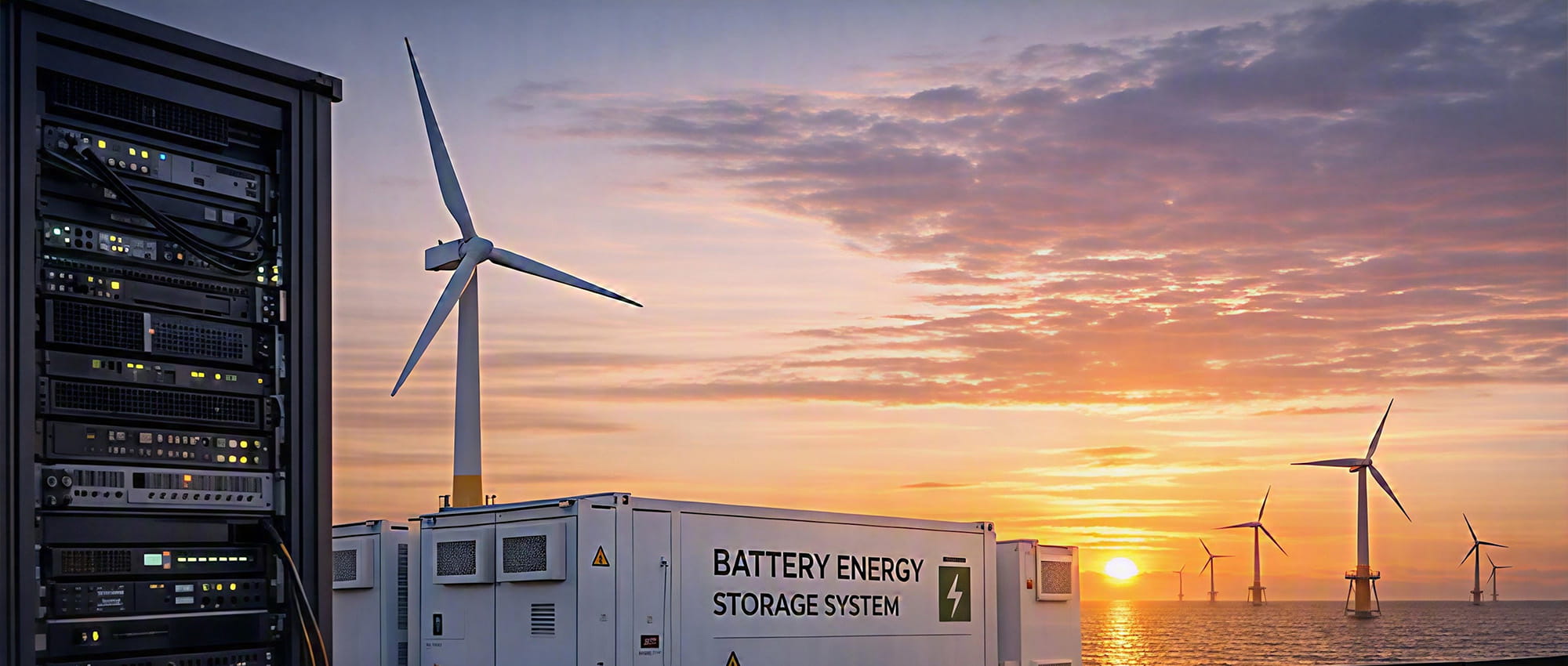
In addition to conventional sealing solutions, the requirements include components such as intelligent pressure compensation elements, cell membranes, and high-performance thermal insulation systems for heat insulation (thermal barriers). The regulatory framework must always be considered as well, especially in the case of technological innovations: Which regulations and standards apply nationally and internationally along the BESS value chain?
This white paper provides brief and concise information on the fundamentals of safety-relevant components for use in battery energy storage systems. It shows which materials, seal designs and test methods are indispensable for the professional and long-lasting operation of BESS.

Expert Assessment

Marcel Schreiner
Global Segment Director, Energy at Freudenberg Sealing Technologies
“Seals and safety-relevant components for modern battery energy storage systems must withstand extreme conditions. For one thing, they have to function reliably during regular operation with continuously rising energy densities, in a temperature range from -40 °C (winter operation) to 85 °C (summer operation). For another, temperatures of up to 1200 °C present a major challenge for the materials. These peak values occur when thermal runa-way takes place. In this area, our specially developed thermal insulation products enable the safe operation of high-performance battery systems. Essentially, manufacturers of battery storage systems depend on high-tech solutions for all safety-relevant battery elements as they expand the energy infrastructure.
Freudenberg Sealing Technologies has been a driver of innovation in the global sealing industry for decades. During this time, we learned that knowledge grows only when it is shared. We already work closely with our customers in the early stages of the technology and system development – and this makes it possible to create not only material innovations and sealing concepts but also safety-relevant battery components that are durable, standards-compliant, and sustainable.
With this series of white papers, we provide insights into the requirements placed on safety-relevant sealing solutions and battery components and present their various performance capabilities. We show which materials are used where, invite our industry expert Fabien Phong to share his views, and provide a checklist as well as links to additional information. Our aim is to support your professional work. We look forward to receiving your feedback so we can expand this series of white papers as needed.”
-
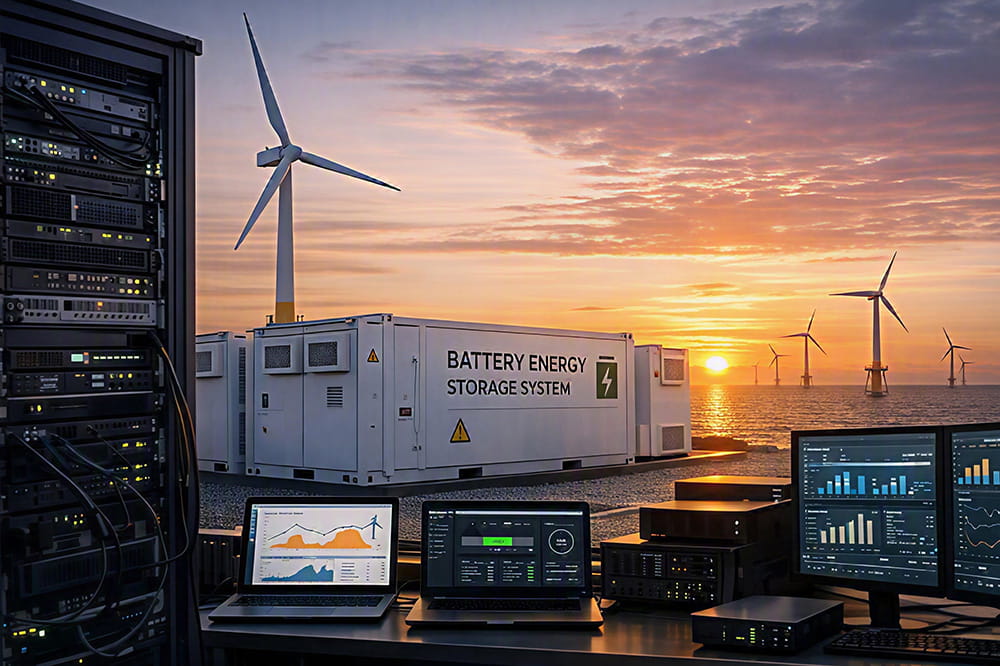
Let’s start with a brief overview: High-performance energy storage systems are a cornerstone of the energy transition: they enable the integration of variable renewable sources (wind and solar), support grid stability through peak load buffering, and facilitate sector coupling. The requirements for materials and sealing systems differ substantially across application types. Stationary energy storage systems demand long-lasting sealing solutions designed for defined temperature ranges, stable chemical environments, and service lives exceeding 20 years.
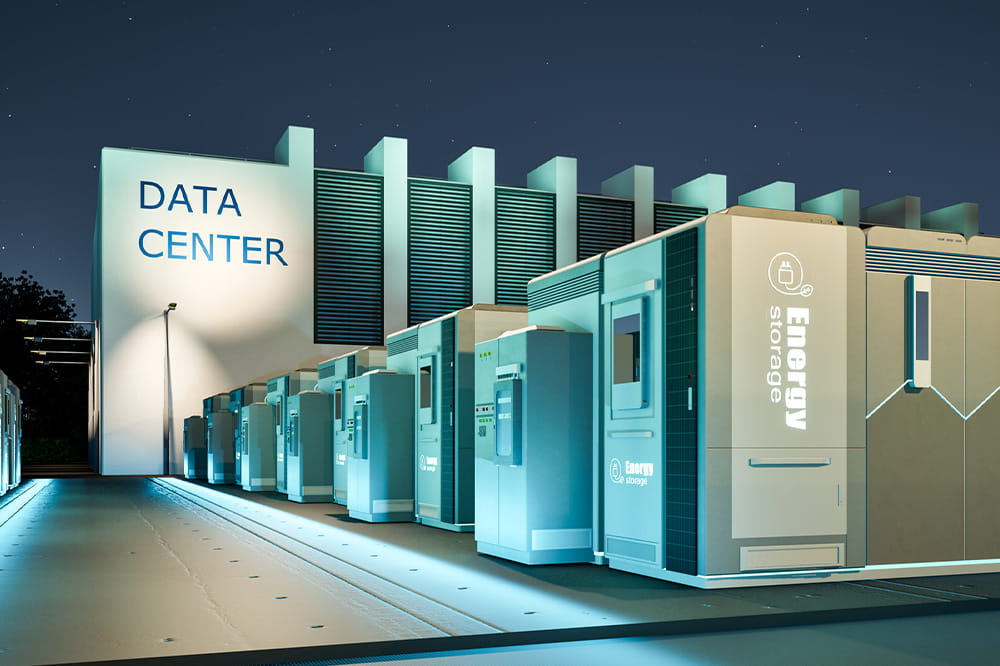
- Battery Energy Storage Systems (BESS): Lithi-um-based electrochemical storage systems contain-erized at grid scale. The primary focus of this white paper.
- Chemical energy storage: Conversion of electrical energy to hydrogen or synthetic fuels for long-dura-tion storage.
- Pumped storage: Hydroelectric systems that store energy as gravitational potential via water reser-voirs.
- Gravity energy storage: Emerging systems using heavy masses raised and lowered to store and release energy.
- Second-life power banks: Repurposed EV battery modules assembled into stationary storage units to extend usable battery life.
- Thermal energy storage: Storage of heat or cold for later conversion to electricity or direct
-
Stationary battery storage systems can feature different cell chemistries. At this time, the most prevalent are lithium-based storage systems, including lithium iron phosphate (LFP, see Glossary) and lithium nickel manganese cobalt oxide (NMC, see Glossary) chemistries. Each cell chemistry has a major impact on a battery’s voltage characteristics, thermal behavior, and electrolyte composition — all of which directly influence material selection for seals and safety components.
Developing and industrially producing such battery energy storage systems requires enormous expertise, including the setup of development, testing, and stress-test environments for all safety-relevant components. Development scenarios include simulation of mechanical cell damage, exposure to extreme solar radiation, proximity fire scenarios, and electrical overload caused by battery management system (BMS, see Glossary) defects. The following three capabilities are essential:
1. How does Freudenberg prevent thermal runaway propagation?
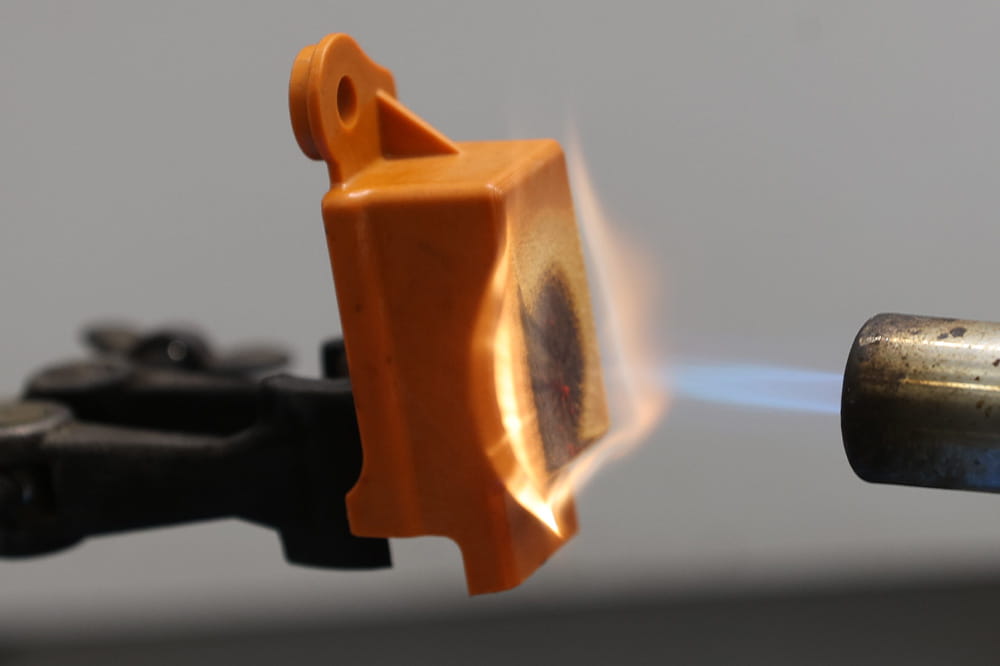
Thermal runaway — the uncontrolled, self-sustaining exothermic reaction within a battery cell — is the primary safety risk in BESS. When one cell enters thermal runaway, temperatures at the affected cell can exceed 1,200 °C. Without effective barriers, the reaction propagates to adjacent cells and modules, escalating into a system-level fire or explosion. Effective thermal barriers — such as Freudenberg‘s Quantix® Ultra 94-2 module and thermal barrier systems — must maintain structural integrity and insulating performance at these peak temperatures while meeting fire-resistance classifications (e.g., UL 94 V-0).2. Why does system integration expertise matter for BESS seals?
BESS sealing components do not function in isolation: they must be compatible with battery management systems, cooling circuits, pressure equalization requirements, and housing designs. This demands close collaboration between seal manufacturers and system integrators from the earliest design stages, and expertise in multi-material assembly, tolerance compensation, and long-term chemical compatibility with battery electrolytes, coolants, and thermal interface materials.3. How does Freudenberg scale supply and maintain quality control?
As BESS deployments scale globally — with installed capacity exceeding 300 GWh in 2025 — seal suppliers must demonstrate the ability to scale production volumes to match demand while maintaining rigorous quality control. This includes traceability across the supply chain, compliance with international standards, and the ability to qualify new manufacturing processes up to series production within short timeframes. -
Synthetic elastomers are a subgroup of polymers closely related to thermoplastics. They consist of long carbon chains to which numerous side groups can be attached; varying the attached groups produces structures that significantly determine the material‘s properties. Key characteristics of elastomers used in stationary BESS include:
- High rubber elasticity and low relaxation — enabling tolerance compensation in battery housings and module assemblies
- Chemical resistance to battery electrolytes (includ-ing lithium salts in organic solvents), coolants, and lubricants
- Temperature stability across the operational range of 40 °C to 85 °C
- Ability to absorb mechanical energy and accom-modate major mechanical deformations without permanent set
- Robust long-term durability suited to 20+ year stationary application lifecycles
For stationary BESS, the most commonly speci-fied elastomers include EPDM (ethylene propylene diene rubber, see Glossary) and FKM (fluororubber, see Glossary). EPDM offers excellent resistance to water, steam, ozone, and UV radiation. FKM provides superior resistance to hydrocarbons, fuels, and high temperatures, making it suitable for applications with aggressive chemical exposure.
Question for the industry expert: Which test procedures are used to validate safety-relevant components in the field of BESS, Mr. Phong?
Fabien Phong is Account Manager in the Energy segment at Freudenberg Sealing Technologies. He works closely with the company’s material specialists and explains:
“In large-scale battery energy storage systems, increasing power densities and charging cycles are now accelerating rapidly. For this reason, there is increasing demand on safety-relevant components that can support this pace of development. As a key requirement, validation procedures must not only assess performance under normal operating conditions, but also under critical failure scenarios defined by international safety standards such as UL 9540, UL 9540A, IEC 62619, and NFPA 855. At Freudenberg Sealing Technologies, our development work focuses not just on excellent material performance but also on steadily reducing the implementation times. Let me summarize the five most important procedures:

Fire and thermal propagation testing (UL 9540A)
A key standard for large-scale BESS is the evaluation of thermal runaway and fire propagation. The UL 9540A test method is the industry benchmark for assessing how failures develop and spread — from cell to module, unit, and installation level. It evalu-ates fire behavior, heat release, gas generation, and explosion risk. Furthermore, it determines whether a failure can propagate within the system. In this context, sealing systems are validated for their ability to maintain integrity under extreme temperature and pressure. As well, they must enable safe gas containment or controlled venting, and they need to prevent fire propagation at component and enclosure level.System-level safety validation (UL 9540 / NFPA 855)
While UL 9540A addresses fire behavior, UL 9540 evaluates the safety of the complete energy storage system and its component interactions. Required by codes such as NFPA 855 and the International Fire Code, it defines system-level requirements for enclosure design, thermal management, and fire protection. Validation includes the verification of containment, insulation, and electrical safety, the evaluation of failure modes and system interactions. It also includes the assessment of installation conditions such as spacing, ventilation, and fire protection.Abuse and durability testing (IEC 62619 / UL 1973)
At component level, standards such as IEC 62619 and UL 1973 define key abuse and durability tests, including overcharge, short circuit, thermal cycling, and mechanical stress. For sealing systems, this ensures validation of long-term performance under mechanical loads, as well as resistance to electrolytes and aggressive media and stability under repeated thermal cycling.Environmental and ingress protection testing
In addition to standard-driven validation, seals must ensure protection against environmental influences, such as Ingress protection (IP testing) against dust and moisture, resistance to ozone, chemicals and electrolytes and — defined by the requirement for the longest possible maintenance-free operation — long-term aging and degradation behavior. Such tests are typically part of factory acceptance testing and certification processes for BESS components.System-level simulation and application-specific validation
Beyond standardized testing, Freudenberg Sealing Technologies performs application-specific validation using dedicated test benches, like simulation of battery system environments and BMS-controlled operation and exposure to limit load conditions, including thermal runaway scenarios. We are, in fact, able to conduct testing of sealing solutions from millimeter scale up to large enclosure diameters.
With hundreds of specialized test benches worldwide, we can validate sealing solutions under realistic and extreme conditions. A key advantage of Freudenberg Sealing Technologies lies in the close interaction between material development, application engineering, and rapid prototyping within dedicated incubator environments. These innovation hubs are designed to accelerate the transformation of new material and design concepts into validated, safety-relevant solutions, enabling significantly reduced development cycles and rapid transition to industrial-scale production.”
Is there a table of application areas, materials and designs for system-relevant components in energy storage systems?
There is now. Whenever high efficiency levels and maximum charging cycles are involved, high- performance energy storage components are needed. New materials and seal designs enable technological innovations along the process chains in energy storage development. Which combination is especially recommended? An overview of the component types used in battery energy storage systems:
| Area of Use / Application | Material Class | Seal Design / Component | Key Function |
|---|---|---|---|
| Cell level | Metal compounds / elastomers / plastic composites | Cell cap | Seals individual battery cells; prevents electrolyte leakage and enables pressure relief |
| Cell level | Polypropylene nonwoven material | Cell envelope | Wraps individual cells; provides electrical insulation and mechanical protection |
| Module level | Silicone | Blast mat for cover protection | Prevents perforations of module/system covers; absorbs heat, preventing burn through |
| Module level | Silicone or Quantix® Ultra 94-2 | Thermal barrier — 3D unique | Prevents thermal runaway propagation by protecting critical components with flexible or rigid thermal barriers up to 1,200 °C |
| Module level | Silicone / aerogel composite | Heat shield (cell-to-cell barrier) | Lightweight, low-conductivity insulation preventing cell growth and stopping thermal propagation |
| System level | Silicone / Quantix® Ultra 94-2 | Module barrier | Fire- and heat-resistant barrier between battery modules; contains thermal runaway at system level |
| System level | Elastomer (EPDM / FKM) | Gasket | Static sealing of housing joints, covers, and flanges; prevents ingress of moisture, dust, and coolant |
| System level | Elastomer / plastic composite | Pressure equalization valve — DIAvent® | Allows controlled gas venting during pressure build-up events; prevents housing overpressure while maintaining ingress protection and spark arresting |
| Electrical connections | Elastomer | Plug & seal | Seals cooling circuits feedthroughs and electrical connectors against moisture and dust ingress |
| Electrical connections | Elastomer | Offset seal / multifunctional plug connector | Accommodates manufacturing tolerances in connector housings; provides simultaneous sealing and mechanical retention |
Standards and Guidelines
What legal frameworks apply where? Here is an overview of checklists, news, standards, and guidelines.
More information

First Hand News
Best of all, keep up with the latest developments
with the Freudenberg Sealing Technologies newsletter.
 Back to Top