

 Back

22.10.2026 | News
Durable Sealing Of Busbar Feedthroughs: Replacing Epoxy With Elastomer
Where copper wiring passes through housing walls, thermal stress can cause microcracks in conventional potting compounds. To prevent this, Freudenberg Sealing Technologies relies on bonding solutions that overcome this problem.


Chemically bonded seals for high-voltage feedthroughs in electric vehicles
When busbars are routed through housing walls in electric vehicles, the continual stress will cause microcracks in the conventionally used epoxy potting compounds. With the increasingly common use of rectangular busbars, this stress is concentrated in the corners. Freudenberg Sealing Technologies uses a different approach by chemically bonding elastomers to the busbar. Its application to rectangular cross-sections is patented.
Where copper is used, potting compounds crack
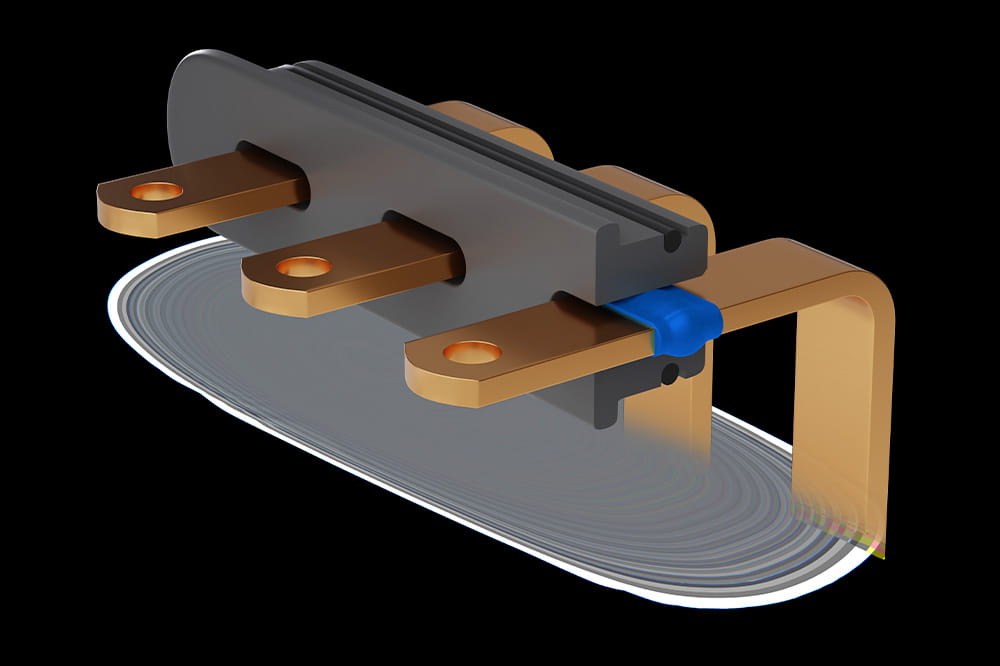
Busbars are rigid electrical conductors made of copper or aluminum. They connect the high-voltage components of the powertrain, such as the battery, junction box, inverter and electric motor. Metal and plastic meet at each housing feedthrough and expand at very different rates when exposed to heat. If the cross-sections are round, stress is distributed evenly and can be managed with an attached sealing element. In rectangular cross-sections, it is concentrated in the corners. The edges create an additional notch effect.
Potting compounds made of epoxy respond to this recurring stress by developing microcracks. These cracks make it possible for oil or coolants to enter areas that have to stay dry. Since the feedthrough also insulates the voltage-carrying conductor from the housing, this can result in a worst-case scenario of leakage currents or a short circuit. It is almost impossible to repair such an area at a later time.
A bond that moves
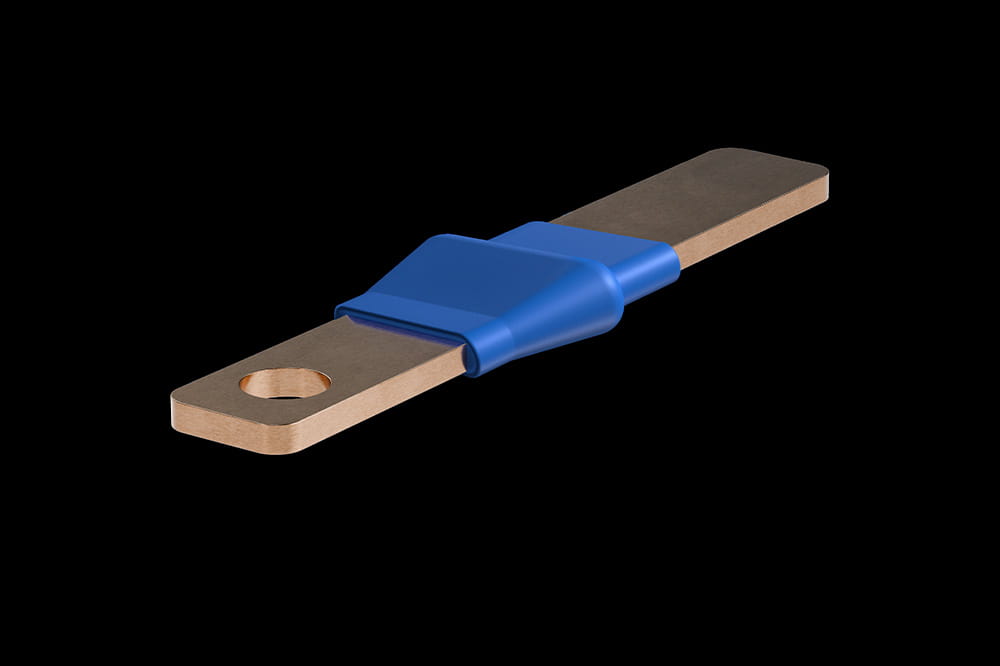
Freudenberg Sealing Technologies relies on a chemical bond between elastomers and busbars. During rigid overmolding, the metal surface is pretreated with a primer and coated with an elastomer layer before the component is overmolded with thermoplastic. This creates a chemically bonded connection. In the overmolded installed variant, the bonded elastomer seal is first applied to the busbar and only later installed in the housing. This compensates for manufacturing tolerances, misalignment and vibrations while enabling additional sealing functions.
In contrast to epoxy, the elastic bond accommodates relative movement between the busbar and the housing, regardless of whether they are caused by thermal expansion during operation or by the assembly. If the cross-sections are rectangular, a specially adapted sealing contour ensures uniform contact pressure even in the corners. Depending on the application, the company uses FKM, AEM, ACM, HNBR, NBR or EPDM, covering temperatures ranging from -40 °C to over 200 °C. The concept also offers advantages when it comes to manufacturing. The potting is often carried out toward the end of the production process – so if any defect occurs at this stage, the entire assembly may become unusable. Elastomer seals, by contrast, can be integrated at different stages of the manufacturing process. This can help reduce waste.
Tested on the finished component
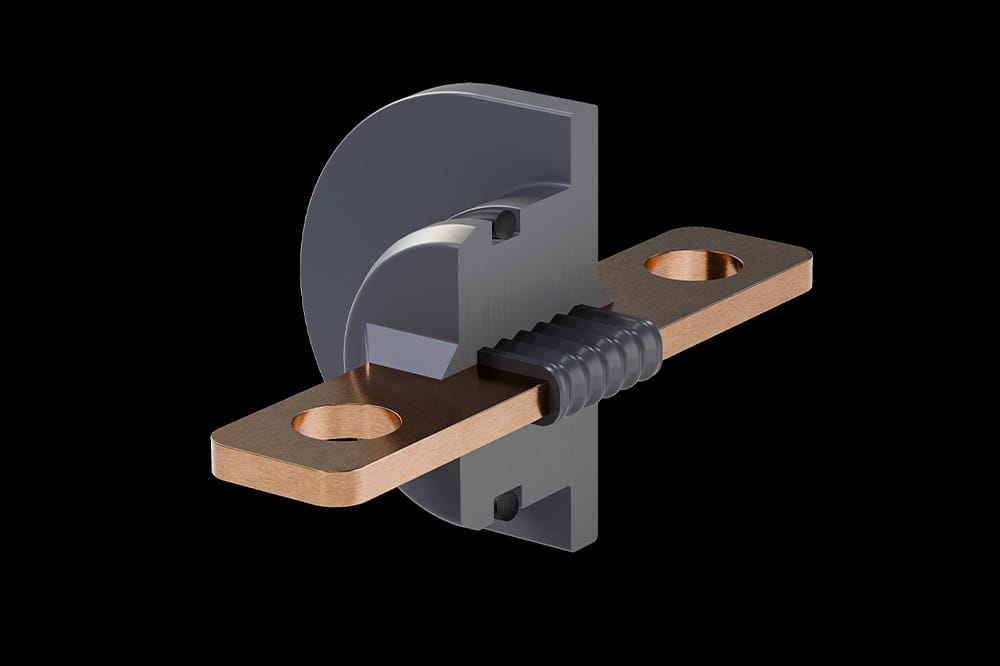
Freudenberg Sealing Technologies has developed a dedicated testing program that covers not only material samples but also finished components. It is based on DIN EN 60068-2-2 for heat aging, DIN EN 60068-2-14 for temperature cycling and LV 214 for combined thermal shock. Applications in oil or refrigerants are also included. Installations in CO₂ air-conditioning (AC) compressors have particularly demanding requirements. CO₂ molecules can penetrate the elastomer and expand abruptly during rapid drops in pressure. Such an explosive decompression can damage the seal from the inside. For this reason, the bond must also withstand test pressures of over 100 bar.
Freudenberg Sealing Technologies first developed this process for busbar feedthroughs in oil-cooled electric motors, inverters and immersion-cooled batteries. Today it is also used in AC compressors, electric pumps, multi pin connectors and numerous other electrical applications. As voltages increase and installation spaces become more compact, the demands on reliable sealing continue to grow. This makes it essential to already consider the sealing concept as the busbar feedthrough is being developed.
More about sealing solutions for busbars: Busbar seals (https://www.fst.com/markets/automotive-truck-bus/busbars//)
More news on the subject Technology & Innovation
Technology & Innovation
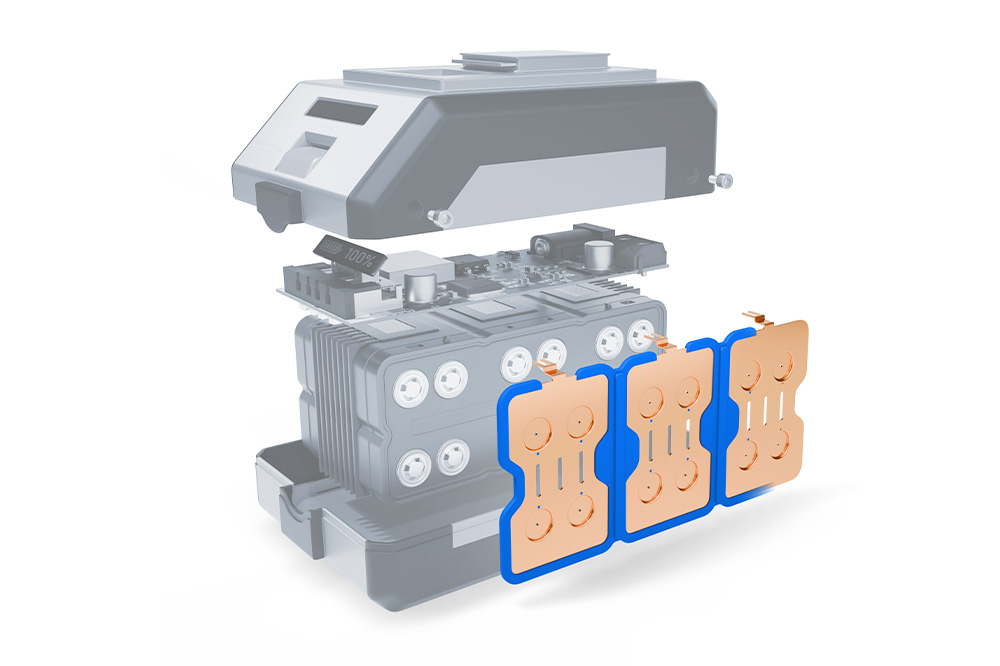
Innovation Driver: Connector Seals Improve Design Flexibility in Battery Platforms
With its connector seals, Freudenberg Sealing Technologies has developed a customer-specific, configurable concept that supports new system-level approaches in the technological advancement of modern battery packs.

Technology & Innovation
DIAvent® maxFlow For High-Performance Batteries
High degassing rate and adjustable trigger pressure for sophisticated battery systems

Technology & Innovation
Modular TPE Bellows for Special-Purpose Vehicles and Industrial Applications
Freudenberg Sealing Technologies is expanding its portfolio of bellows with a new manufacturing process for small-batch production. For the first time, custom-designed bellows made of thermoplastic elastomer (TPE) can be produced with significantly reduced tooling and fixed costs. This is feasible due to a modular tooling concept developed specifically for application-specific bellows geometries in small quantities.

Technology & Innovation
FACT Surface Technology for the Environment: An Adhesive Bonding Process Without Wet-Chemicals
Can bonding processes be designed to work without wet-chemicals? Yes. With FACT, Freudenberg Sealing Technologies is establishing a new, cost-efficient, and sustainable manufacturing process.

Technology & Innovation
Freudenberg-NOK Sealing Technologies introduces FN Lube and FN Lube Plus
Purpose designed lubricants support consistent installation and material compatibility for static seal applications.

Technology & Innovation
Technology Transfer: Automotive Hydraulic Accumulators Prove Their Value in Agriculture
A hydraulic accumulator originally developed for the automotive industry is opening up new possibilities for agricultural machinery operating under extreme conditions. Freudenberg Sealing Technologies has successfully transferred proven passenger car technology to a demanding new application.
Technology & Innovation
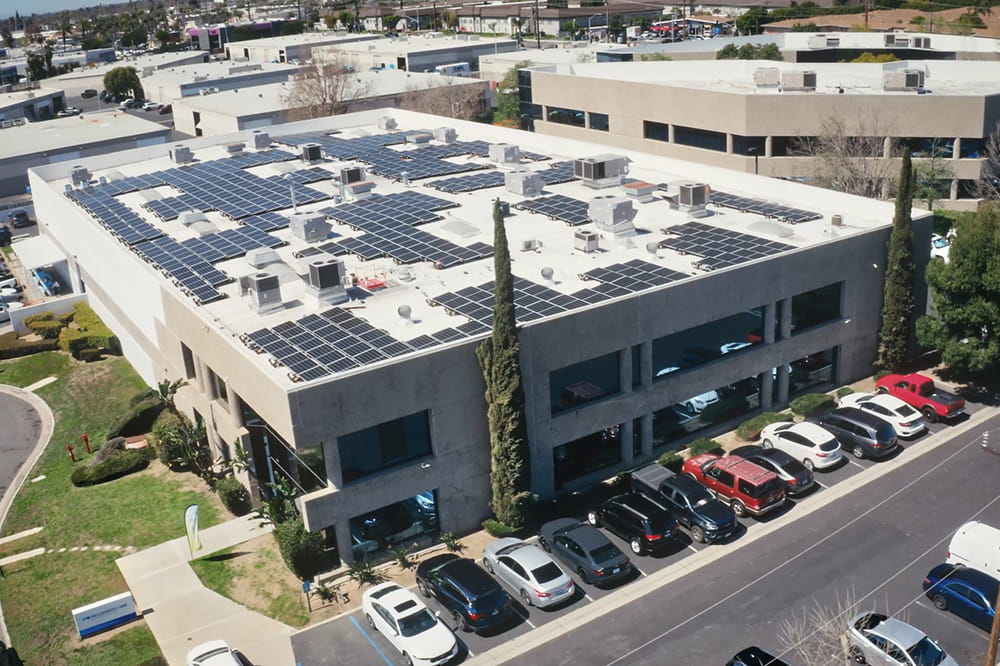
Santa Ana Facility Wins Prestigious IndustryWeek Award
Freudenberg Sealing Technologies (FST) has received the 2025 IndustryWeek Best Plants Award for its Santa Ana, California facility, marking the first time an FST site has earned this distinction in the program’s 35-year history.

Technology & Innovation
Dr. Ruth Bieringer to Become President of the German Chemical Society (GDCh)
On January 1, 2026, Dr. Ruth Bieringer, Vice President Technology & Innovation – Material Technology at Freudenberg Sealing Technologies, takes over as president of the German Chemical Society (GDCh).
Technology & Innovation
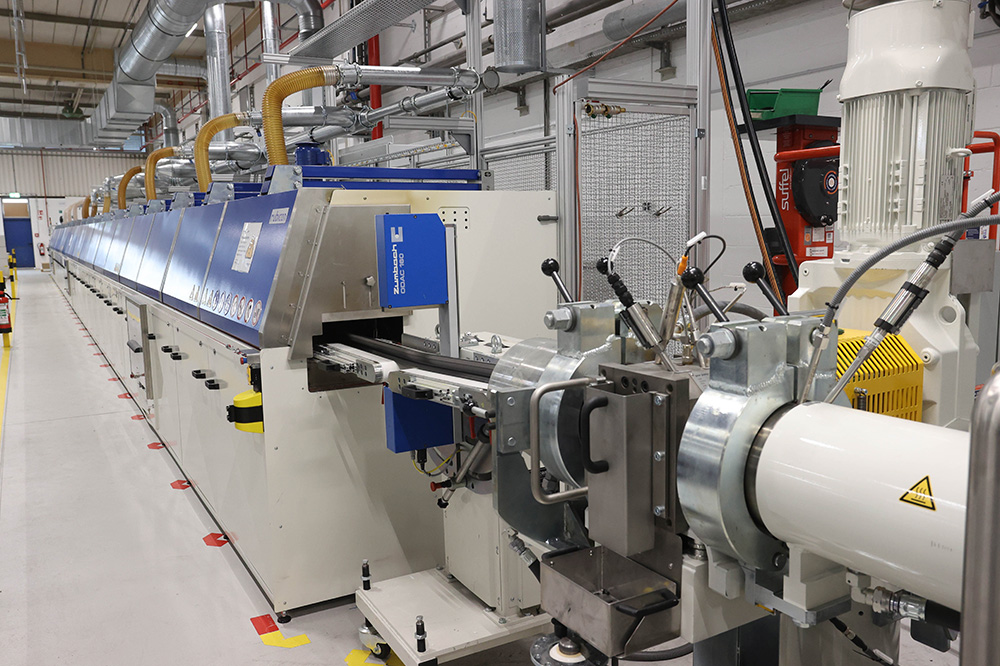
Process Engineering: New Extrusion Process For Seal Profiles
Freudenberg Sealing Technologies is commissioning an extrusion line for sealing profiles vulcanized with molten salt, expanding its portfolio of vulcanized materials and geometries for demanding technical applications.
 Back to Top