

 Back
Back





The Future of Sealing Materials: Between Innovation, Regulation, and AI.
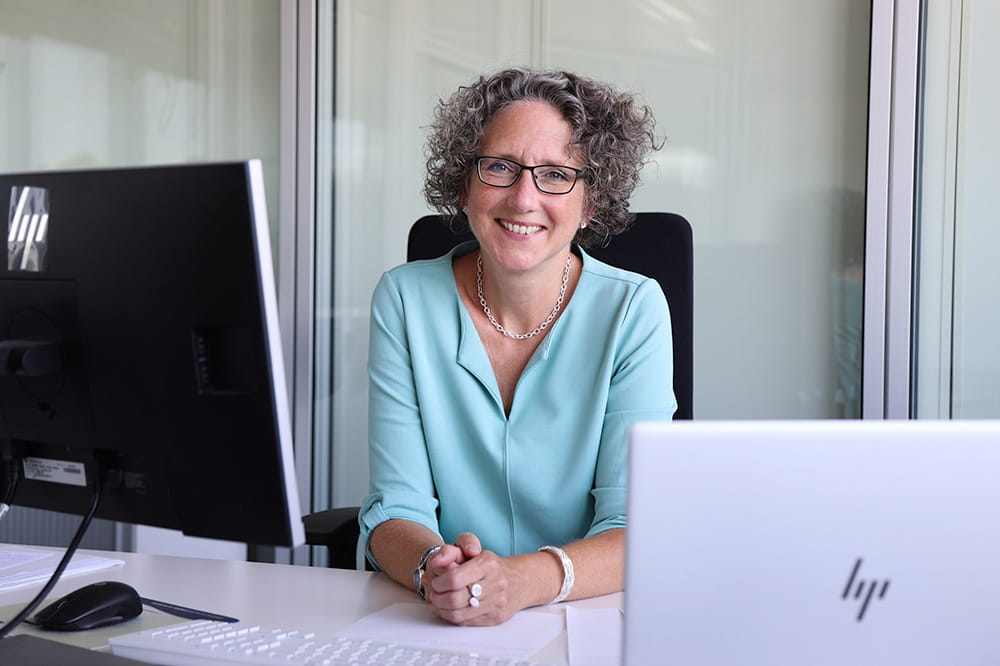
Holger Best, ISGATEC, talks to Prof. Dr. Ruth Bieringer, Vice President of Technology & Innovation, Material Technology at Freudenberg Sealing Technologies. Since January 2026, she has also been an honorary professor in the Department of Engineering at Rhein-Main University of Applied Sciences, and she is president of the German Chemical Society. So she knows materials-related topics from many different angles - industry, academia, and professional associations.
Ruth, let me start with a personal question. You’ve taken on a lot of new responsibilities since the beginning of the year. Are there no challenges left in the field of sealing materials?
Yes, of course there are - there always have been, and today there are more than ever. And I think we’ll get to that as we talk.
I’m sure we will. But briefly, an honorary professorship in engineering - what does that involve from a sealing technology perspective?
To be honest, sealing technology plays a rather minor role there. I mainly teach materials science with a focus on polymers. Of course, every now and then I try to bring in an example from the world of sealing technology to illustrate certain concepts. But sealing technology isn’t the focus of my teaching.
What are your responsibilities at the German Chemical Society? What priorities do you want to set there as president?
Well, I lead the German Chemical Society; I’m involved in strategic management, of course together with the Presidium and the Executive Board. I represent the Society externally. I help drive scientific and societal issues. And, of course, we’re continuing to develop the organization. It’s about networking and encouraging dialogue between science, politics, and society. And, of course, it’s about creating enthusiasm for chemistry and for high-quality education.
Well, I think that’s an important topic for us today, because chemistry is losing ground in Europe.
Yes, and chemistry isn’t “sexy” anymore. Chemistry is often seen as the problem rather than the solution. At least, that’s how it’s perceived. But it’s actually the other way around. Nothing works without chemistry. We won’t achieve the energy transition. We won’t find solutions to climate change. None of that will work without chemistry.
Yes, we’ll have to work on that. But let’s get back to our core topics. As you already mentioned, there are still plenty of challenges when it comes to sealing materials. What are they, exactly?
Well, we probably need to make a bit of a distinction. We have traditional seals - and of course, those are constantly being developed further as well, driven by new requirements. We’re seeing more and more new material classes because we’re expanding our portfolio and going well beyond the sealing function alone. Seals always have to be considered in the context of material processability. And an increasingly important area is regulation - chemical regulation, but also other regulatory frameworks.
That brings us full circle to the association work. Yes, it’s a broad field. Let’s take a closer look at the individual aspects. Traditional seals or sealing points: What are the drivers for new material developments there?
In the traditional sealing portfolio, to put it very simply, it’s all about long-term elasticity, or the abrasion and wear of rubber in sealing applications. As we expand our portfolio - that is, as we look toward e-mobility and hydrogen - the focus is naturally on sealing media we haven’t dealt with before: battery electrolytes, liquid hydrogen, and ammonia as a carrier gas. The challenges have simply changed.
Right, so completely new requirements are coming into play.
Exactly, all of a sudden we’re talking about flame tests. Seals suddenly have to be not only heat-resistant, but also electrically insulating, or thermally conductive, or both electrically and thermally insulating. These are things we had never dealt with before.
Well, that introduces a new element of multifunctionality.
Absolutely, we’re simply broadening our scope, because the old applications aren’t going away - but new ones are being added. The challenges in sealing are increasing, for example with busbars. We’re suddenly looking into foams, which we had never done before, for example in heat shields and thermal barrier materials.
Another point you just mentioned was new material classes. What exactly do you mean by that, and how do they affect sealing technology?
Well, as I said, we’re seeing a trend, especially in battery technology, toward high-temperature-resistant materials. That means we’re working with silicones much more than we used to. In general, we’re seeing a major shift away from rubber and toward thermoplastic materials - with properties different from what we’ve worked with so far.
You just mentioned busbars. There’s actually an interesting podcast on that topic with your colleague Parisa Burger (link). But that’s a great example. Will seals actually become increasingly multifunctional components in the future?
Yes, there’s definitely a trend away from pure sealing elements and toward multifunctional system components. However, if your next question is whether the classic seal is losing importance: No, of course not. We still have C-parts, or C-plus components, and they’re here to stay.
But isn’t that shifting?
Yes, of course it’s shifting. And as a market leader, and as a company known not for being inexpensive, but for high quality, there will naturally be this shift toward multifunctional parts.
Okay. You mentioned another key point earlier: manufacturing technology. We keep hearing that seals are given far too little consideration in terms of how they’re manufactured, even though that’s a key driver of quality and value creation. Do the new materials and sealing solutions you just described require new manufacturing processes?
Yes, to some extent. In principle, even the best sealing material is worthless if it can’t be processed using cost-effective, robust manufacturing processes with minimal scrap. And as we expand our portfolio, we’re using new manufacturing processes. As I mentioned earlier, we’re now suddenly making foams, we’re extruding foams. These are simply things that we at Freudenberg Sealing Technologies had never done before, or only to a very limited extent.
So these topics are new to us. Maybe not necessarily to the entire industry, but they’re new to us, and we’re currently learning a great deal very quickly.
Foams are a product line you’ve added to your portfolio. But does that mean you’re now simply expanding your portfolio in response to increasing demands?
Yes, on the one hand because the requirements are changing, and on the other hand because we’re, of course, a major automotive supplier and know that part of our portfolio will disappear with the phase-out or replacement of the internal combustion engine. We’ve been aware of this since at least 2016 or 2017, and we’re looking for ways to compensate for the business we’re losing while continuing to grow.
When it comes to manufacturing, the issue of availability always comes up quickly these days, and we’ve seen that repeatedly lately – with the pandemic, and now with the Strait of Hormuz and supply bottlenecks. Do you have any recommendations on how to handle this issue?
Yes, that’s obviously the key question. I think there are several aspects to it. On the one hand, of course, there’s procurement. We have strategic suppliers, and our procurement team is doing a great job. We need to diversify our approach. In development, we need to make sure we rely more on dual-sourcing strategies, that we know our supplier portfolio, and, if necessary, put in more work upfront than might otherwise be needed by evaluating potential substitutes right away. In other words, we need to have a backup plan ready so that we can switch quickly if a bottleneck arises.
You mentioned the importance of the chemical industry and its poor reputation. Now the chemical industry is moving elsewhere. We have plenty of examples of that in Europe. Won’t that make the supply issue even worse?
Yes, of course, this will initially mean that raw materials will come from elsewhere – globally speaking, from other regions of the world. The question is: Will this lead to greater dependencies? Will it lead to greater uncertainty? I can’t answer that in general on a global scale. It will depend on the specific case. Not everything is moving to China. But of course, a lot is, with all the challenges that entails.
Actually, you just mentioned it – raw materials. There are major changes taking place, for example, with sealing materials, such as in formulations, and they repeatedly cause problems in practice. I hear this again and again: seemingly minor changes in raw materials later have major practical consequences. Could you perhaps illustrate that with a specific example?
Yes, well, that does happen again and again. With our broad portfolio, it’s often the case that we use a raw material in many different formulations, which ultimately end up in numerous applications for many different customers. And it’s often the case that, at some point, something just doesn’t work out. A recent example is the reformulation of part of our FKM portfolio – our fluorocarbon rubber portfolio – driven essentially only by our suppliers’ decision to switch a processing aid. In other words, they aren’t reformulating the product itself, but only an auxiliary material they need to manufacture the product. And even that involves an incredible amount of effort, because while the basic chemical and thermal stability remains the same, we still see differences in processing. In principle, the devil is always in the details, and at one production site or another, something always ends up not working. Ultimately, we have to make adjustments – we have to adapt formulas or processes.
And speaking of transition, that actually brings us to the next topic you came across earlier: regulation in the wake of the planned PFAS regulation. We don’t want to go into that in depth right now, but it’s certainly bringing about significant changes. What role do regulations like these play today in innovation in materials engineering?
That’s an interesting question. I think they play a central and rapidly growing role. At the same time, they impose restrictions. But of course, they’re also drivers of innovation. I believe you could say that innovation today isn’t just about “performance.” It’s about performance and sustainability - if you view regulations as a form of sustainability - and I think that’s how we need to see it. Regulations aren’t there to annoy us, but to make our lives safer. That’s why we expressly welcome these measures, even though they naturally mean extra effort and extra work. But they also offer an opportunity to set ourselves apart from market players and competitors.
Sure, you just said that regulations aren’t meant to be a nuisance. Now, last year, there was a discussion about whether sealants and adhesives are even considered advanced materials and how they should be treated under EU regulations. How do you view this aspect – that this is suddenly being called into question?
Well, I find the term “advanced materials” a bit tricky. What is “advanced,” and what isn’t? I’d say that many of our standard materials – which have been earning us good money for years, even decades – are advanced. Or at least they were at the time they were developed. That’s why we’re able to hold our own against our competitors.
Then that could lead, for example, to good chemical regulation. That’s the foundation, after all. And what would that look like, given the various positions you hold? What would good chemical regulation look like?
Okay, that’s a tough question, too. I think chemical regulation is always a balancing act. After all, chemical regulation is there to protect people and the environment. And that’s a precious asset. We all want clean drinking water, we want a clean environment, we want clean air. At the same time, of course, it shouldn’t stifle innovation and industrial competitiveness. And it shouldn’t regulate more than necessary; it should be science-based, risk-oriented, and still innovation-friendly. That’s what I’d like to see in chemical regulation.
That means this shift from a risk-based approach to a hazard-based approach would actually limit innovation.
Yes, I’m a strong advocate of a risk-based approach. I don’t think it makes sense to regulate something just because it’s potentially dangerous. We should regulate it only if there’s a risk to people and the environment.
And in many cases, that’s actually manageable. The chemical industry has been dealing with this for centuries now.
Exactly, and what’s manageable doesn’t need to be regulated.
How about artificial intelligence. Just as with regulations and understanding complex issues, there are very high hopes pinned on it. How do you view the opportunities and risks of using AI for materials development across the entire field?
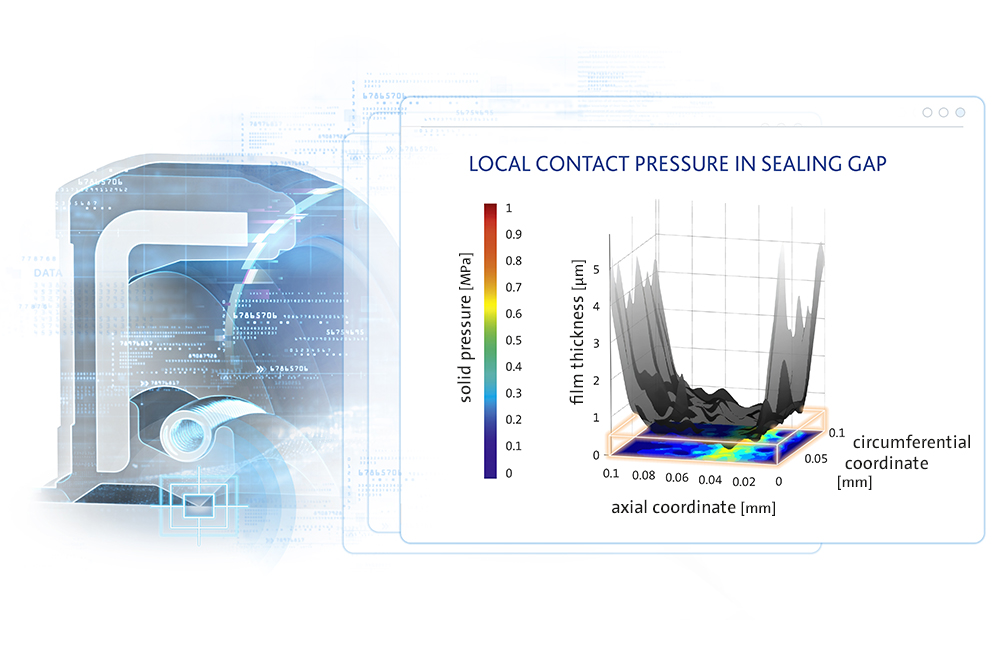
Well, if you ask me what AI can do, I think it can mainly shorten development cycles – meaning fewer tests are needed. Prediction instead of trial and error. The long-term goal you always read about is inverse design, which means I define a goal and the AI suggests materials to me. I think we’re still quite a ways away from that. We mustn’t forget that when it comes to rubber, we’re always talking about multi-component mixtures. A rubber compound consists of 7 to 15 components. The liquids we’re sealing against also often consist of many components. And that, of course, is still a challenge for AI today. On top of that, the vast amount of data we have doesn’t – in terms of either quantity or quality – provide a solid foundation for AI. I think that’s a huge area where we need to improve quickly.
What data are we missing today?
Well, we’re seeing in our pilot projects on AI that we quickly hit limits. It’s about data comparability. Above all, it’s also about linking data – in other words, connectivity. Yes, we need end-to-end data from goods receipt through all our process steps to product testing and validation on the test bench – and unfortunately, we usually don’t have that today.
Well, the data was collected back when AI wasn’t even on the radar.
Exactly. And we have a lot of data silos. In other words: We have a great deal of data, but it’s not linked.
Now AI isn’t just being used in materials development, but is also increasingly being applied in practice to select materials and specify sealing points. How do you view this development from the user’s perspective?
Yes, well, I think the validation of AI predictions will always be necessary. We always have to test things in the end. AI will help us be faster, require fewer tests, and perhaps even develop smarter, faster tests. But it won’t replace testing altogether. That also has to do with liability issues. But what AI will likely be able to do in the foreseeable future is a kind of virtual pre-validation. This is called “shift left.” We create many variants at the beginning and evaluate them in advance. Then we can quickly narrow the field and limit the selection of materials we’ll continue to work with. I think there’s also great potential in so-called hybrid models - combining physics and AI. For example, integrating classical FEM with data-driven models. I believe that’s where the real leverage will be.
I’d like to go back to the user level for a moment. Earlier, when you were talking about your work at the university, you said it’s not so much about sealing technology, but rather about materials science in general. Now, our surveys keep showing that, in many areas, the expertise needed to properly specify a seal isn’t actually there. People are now turning to AI for help – doesn’t that simply create a risk if the results can’t be properly verified? That would have a direct impact on your work.
Exactly – as I said, it will never work without verification or validation. We can’t blindly trust AI; we’re nowhere near that point. AI can make suggestions, but humans will have to review and evaluate them.
Based on the answers you just gave about AI, I’m taking away that we actually still need a great deal more expertise in the right form – in the right “data silos,” as I’ll call them. Are we doing enough basic research in the field of materials to provide a solid foundation for this?
Yes, that’s a good question. We’d have to define the term “basic research” here. Who actually does basic research? Do we do it in industry? Or isn’t basic research really what takes place at universities? Certainly, in part. And of course, the big issue is that a lot of research is conducted at universities, and many discoveries and inventions are made there. But the transition to industry is a major bottleneck. This has to do with risk financing; it has to do with startups, which are certainly being founded. We have a vibrant startup scene in Germany, but there’s often a lack of venture capital to, so to speak, get things off the ground. In my opinion, that’s an area where Germany isn’t particularly strong.
That’s not changing either. I often hear that many industrial companies simply buy up startups and integrate them. These are usually spin-offs from universities. From what I gather, that path isn’t quite the solution.
Well, it’s probably the only way. I just think there are countries that do this much better than we do.
if I were to summarize our conversation a bit, sealing technology remains, to a large extent, materials technology. What are the top three areas we need to focus on in the future?
I’d say, first, regulatory-compliant high-performance materials with secure supply chains. Then, of course, multifunctional material systems instead of pure elastomers. And then there’s what we might call predictive materials – in other words, combining lifetime prediction with prognostics, ultimately powered by AI.
Okay, those are the technical aspects. We still need people to do this – and they’re getting harder and harder to motivate, right?
Yes, sealing technology isn’t exactly sexy either.
Why isn’t it particularly sexy – it’s such a fascinating topic, after all? Is it being marketed the wrong way?
Well, first of all, it’s invisible. Second, it’s already competing with the big trending fields: pharma, climate, high tech, electronics. So you really have to explain how important the topic is. And of course, there are also ways to generate enthusiasm. The technological depth is increasing, and its systemic relevance is growing. It’s inherently interdisciplinary. In sealing technology, you can only excel when chemistry, engineering, and data science work together. So, actually, sealing technology is a highly exciting topic. I’ve been in the field for 26 years now, and not a single day has been boring.
I can imagine that. I mean, I can see it a bit from a media perspective, too. It’s great to see all the topics that come up around it.
Yes, and it has great societal significance. Of course, that’s not always apparent, but we know how important sealing technology is.
We need to make it more visible. Yes, if we’re going to tackle another predictive topic like this – if we meet again in ten years, what will have changed in materials development for seals and for the people working in this field?
That’s difficult to say. I think the way we work, the methodology will naturally be shaped by new methods, not just AI. But in principle, I don’t know whether that much will change. It always comes down to having well-trained people who come up with smart new ideas, who understand customers well, and who understand the market well. We’ll need the raw materials, a broad portfolio at reasonable prices. And We’ll need process engineers who, of course, develop smart process technology. And there’s certainly a lot of room for improvement in automation - ultimately to produce more cost-effectively and more quickly in order to remain competitive.
So it’s business as usual – people just need to work together more closely on these issues and take a more holistic approach.
That’s a good summary. And above all, people have to do it together. I think that’s the key point.
Yes, because that’s often the problem today. I mean, when a problem is identified, people often haven’t worked together.
Right, then the interfaces don’t align, or there are silos that don’t communicate with each other – the problem hasn’t been examined holistically. I see it that way, too.
Well then, thank you very much for your time and for the interesting conversation, Ruth.








 Back to Top