
CCM for PEM fuel cells
Catalyst-Coated Membranes and Membrane Electrode Assemblies for PEM Fuel Cells
Fuel cell technology plays a key role in the transition to sustainable energy supply and mobility. Key functional components are catalyst-coated membranes (CCM) and membrane electrode assemblies (MEA), which significantly determine the performance, efficiency, and service life of PEM fuel cells.
Freudenberg’s CCM and MEA solutions are consistently designed to meet the high demands of modern fuel cell stacks and systems. They are characterized by high electrochemical efficiency, robust long-term stability, and an exceptionally long service life. This makes them particularly suitable for demanding applications in the heavy-duty sector, such as in buses, trucks, marine systems, and stationary applications.

Catalyst Coated Membrane (CCM)
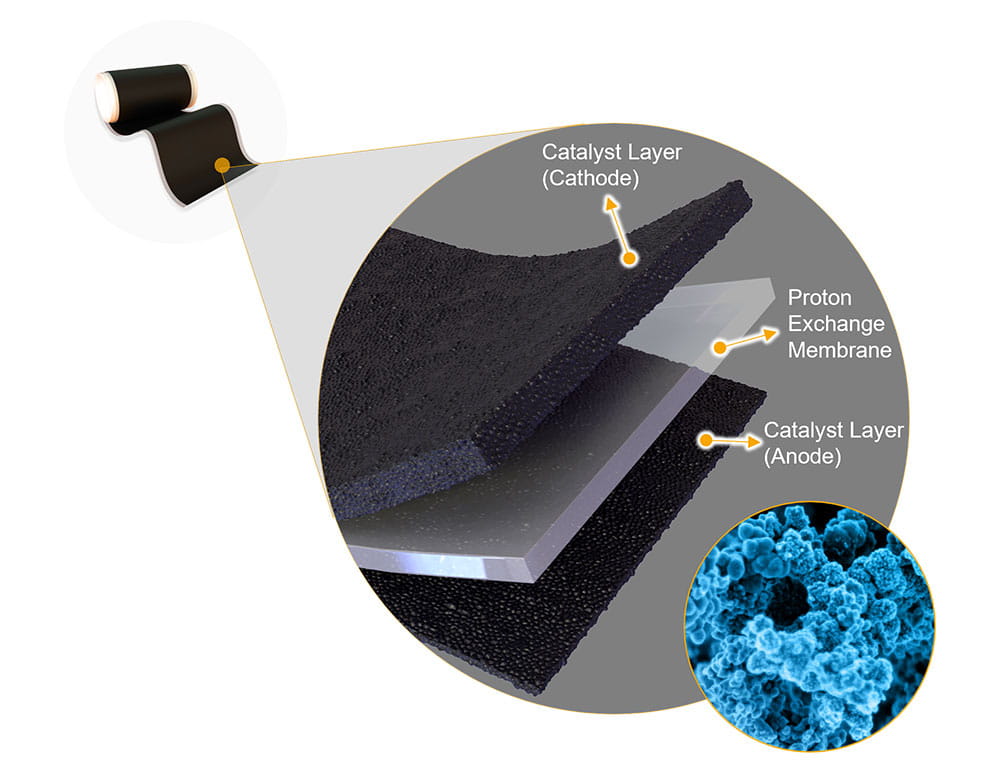
Catalyst-coated membranes (CCMs)—and in particular the catalyst layers—are key functional components of fuel cell systems. Catalyst design has a significant impact on performance, efficiency, and service life at the system level.
Freudenberg’s CCMs are manufactured using a cost- and quality-optimized roll-to-roll production process. This process allows for the use of both commercial catalysts and a patented process technology that enables the use of cost-effective metal salts. In this way, the electrochemically active surface area of the catalyst layers is specifically maximized while minimizing the use of precious metals. The result is high efficiency combined with excellent long-term stability.
Freudenberg’s performance- and stability-optimized catalysts and electrodes—combined with a holistic metal management and recycling concept—thus make a significant contribution to reducing the total cost of ownership (TCO) of PEM fuel cell systems.
7-Layer Membrane Electrode Assembly (MEA7)
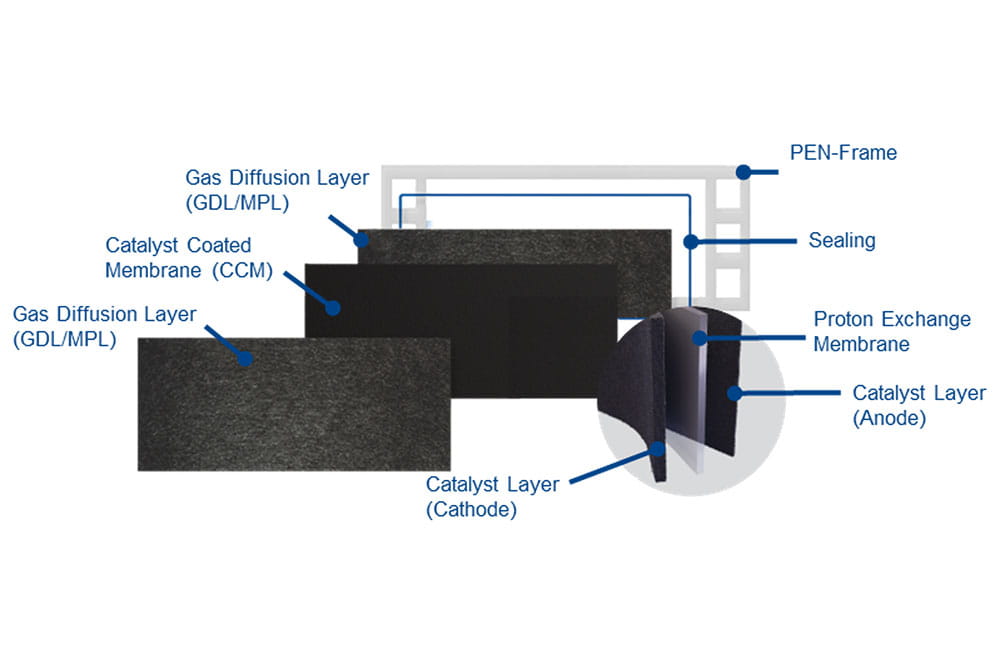
We also offer all CCM solutions as MEA variants for industrial mass production. Our seven-layer MEA7 is based on a membrane (CCM) coated with catalyst on both sides, which is embedded between two high-performance gas diffusion layers (GDLs), each with an integrated microporous layer (MPL).
An application-specific sealing concept integrates the entire cell structure into a precision-manufactured plastic frame. This ensures safe handling as well as smooth and efficient integration into stack production. At the same time, the sealing concept reliably prevents gas leakage and contributes significantly to an above-average service life.
Benefit from performance-optimized CCMs in a high-volume-capable MEA configuration—without the need for significant investment in your own production infrastructure.
Three powerful levers for reducing your TCO for PEM fuel cell systems:
- Reduction capital expenditure (CAPEX) per kW through efficient, high-volume roll-to-roll manufacturing with minimal precious metal loss, based on patented production technologies.
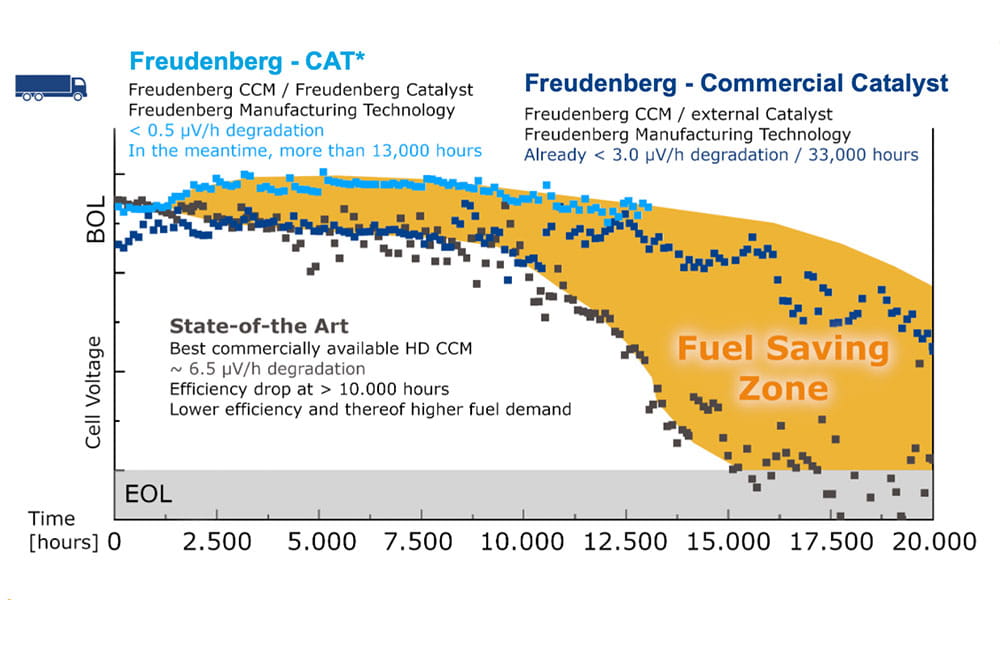
- Reducing operating costs (OPEX) through high efficiency over the entire service life, which enables lower hydrogen consumption while maintaining the same electrical output. This is achieved through the use of performance- and stability-optimized catalysts.
- Creating value at the end of the system’s life through integration into a closed-loop recycling cycle.
Manufacturing and Quality
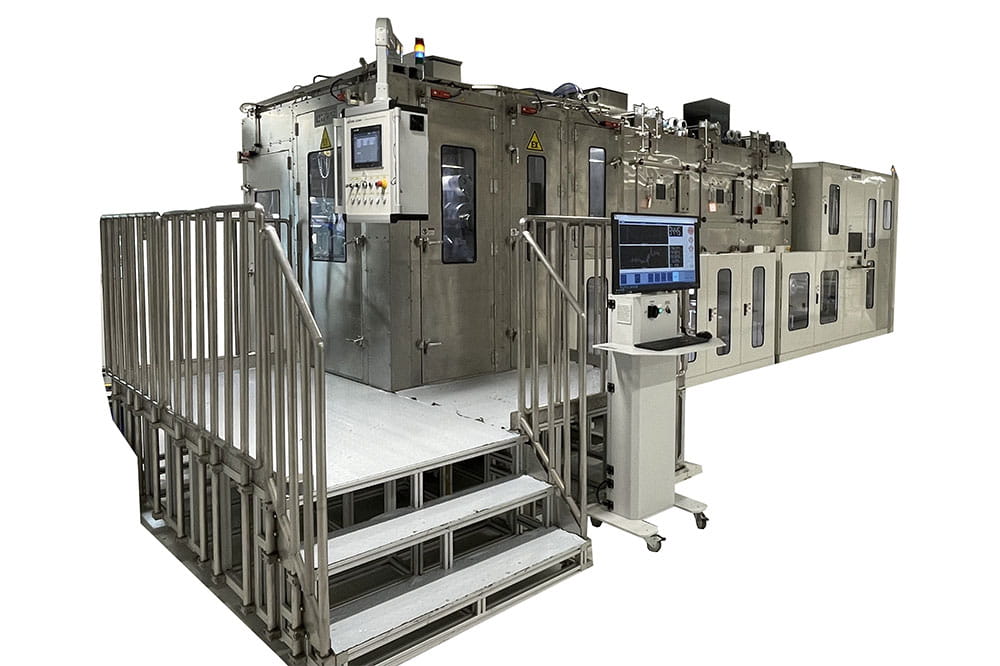
Modern and efficient production processes are essential for scaling up fuel cell systems. Freudenberg has many years of experience in this field and relies on innovative manufacturing technologies, such as roll-to-roll production, to support the industrial market ramp-up and provide its customers with high-performance, competitive solutions.
The fast and cost-efficient roll-to-roll technology developed by the company covers the entire CCM and MEA value chain—from raw materials to the qualified end product. It enables high throughput while maintaining consistently high product quality.
State-of-the-art production lines, combined with integrated visual inspection and quality assurance systems, ensure that all products meet the highest technical and economic standards.
Technical Specifications
- Mechanically robust MEA7 with an integrated frame for efficient, reliable, and straightforward stack assembly.
- Reduction of the total cost of ownership (TCO) of PEM fuel cells through performance- and stability-optimized catalysts and electrodes, as well as comprehensive expertise in metal management and recycling.
- Highly efficient and durable anode and cathode catalyst structures for a sustainable reduction in fuel and service costs.
- High-volume-capable membrane solutions specifically tailored to customer-specific design and performance requirements.
- Optimized GDL and MPL configurations to maximize electrochemical reactivity at the nanoscale.
- Gas-tight interfaces between the MEA and frame that reliably protect the active cell area and ensure high efficiency over a long service life.
- Mechanically robust MEA7 with integrated frame for efficient, reliable, and straightforward stack assembly.
Research and Development with a Comprehensive Test Cascade
At the heart of our development work is a comprehensive, systematically structured testing and validation process that ensures every product meets the highest standards of reliability and performance.
Validation begins at the cell level with detailed electrochemical analyses and extends through endurance and stress tests of single cells and short stacks to full-stack testing. Long-term test programs enable an in-depth understanding of degradation and performance loss mechanisms—right down to the raw material and component level.
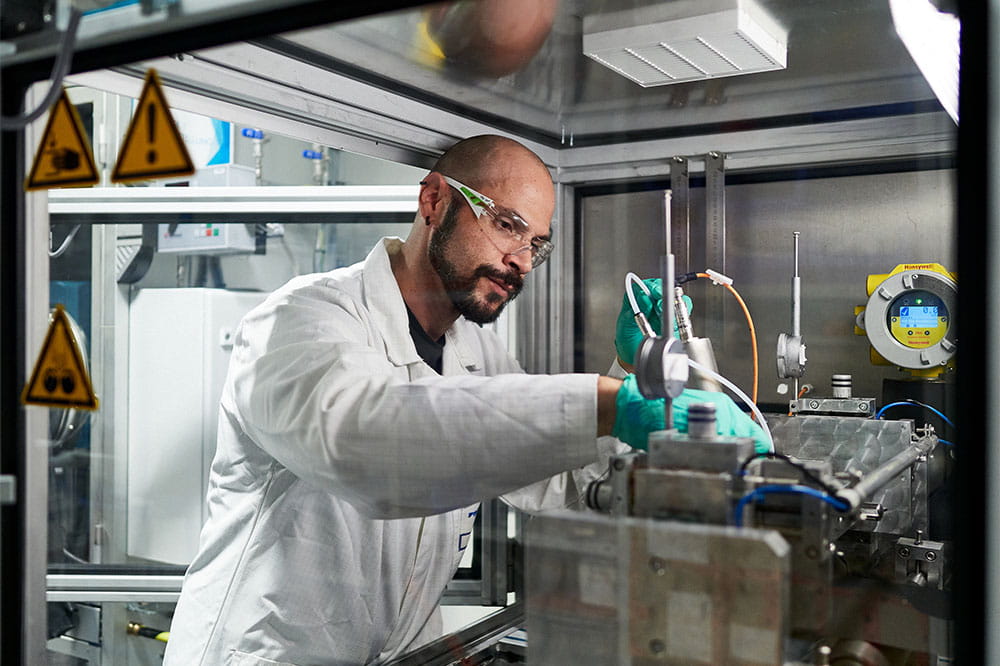
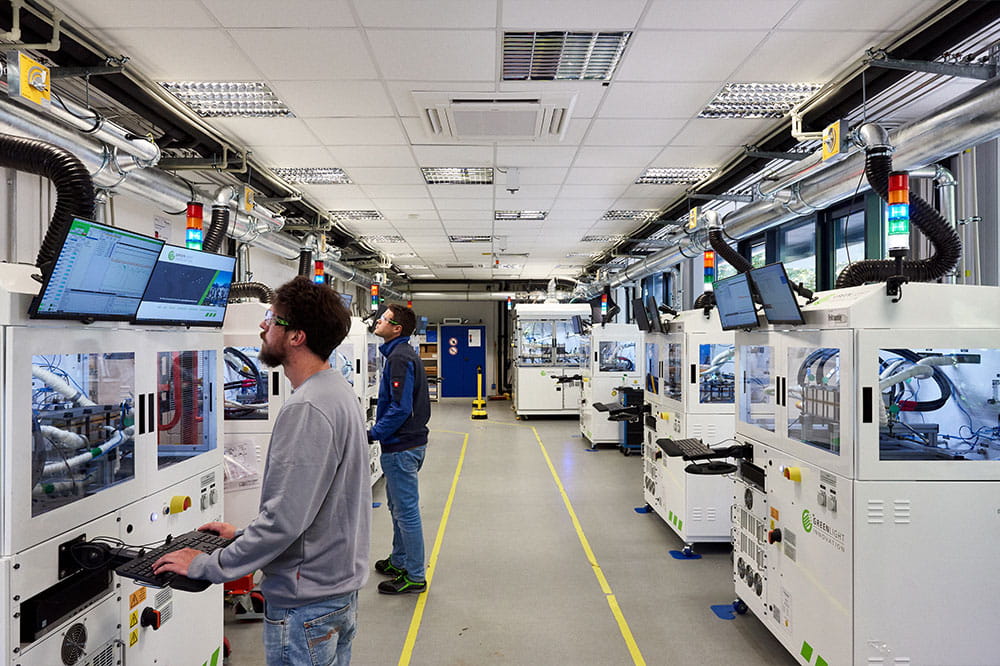
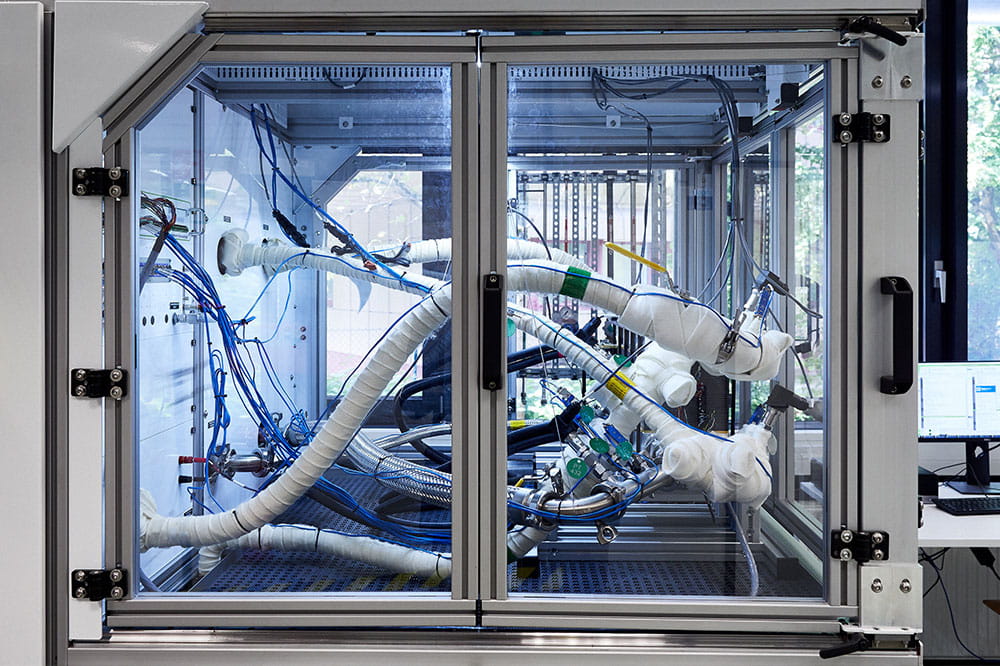
A fully equipped, state-of-the-art analytical laboratory with cutting-edge diagnostic technology supports this process and enables in-depth analyses at the material and system levels. Our interdisciplinary teams of experts possess extensive material expertise across the entire structural hierarchy—from the nano to the micro level—and specifically optimize all components for performance, stability, and service life.
Leveraging our integrated development and manufacturing expertise, we seamlessly guide projects from initial concept through to series production. In doing so, we develop and implement scalable, industry-ready production processes based on our proprietary technology platform and years of application experience, enabling rapid, flexible, and efficient implementation.
At the same time, we are driving the continuous advancement of our catalyst technology with the goal of reducing the use of precious metals while simultaneously increasing electrochemical reactivity. The result is high-performance, long-lasting catalyst layers that ensure high performance while maintaining low total cost of ownership.
Related Topics



Join Us!
Experience Freudenberg Sealing Technologies, its products and service offerings in text and videos, network with colleagues and stakeholders, and make valuable business contacts.
Connect on LinkedIn!
 Back to Top