30.03.2026 | Story
Requirements for Seals in Wind Energy
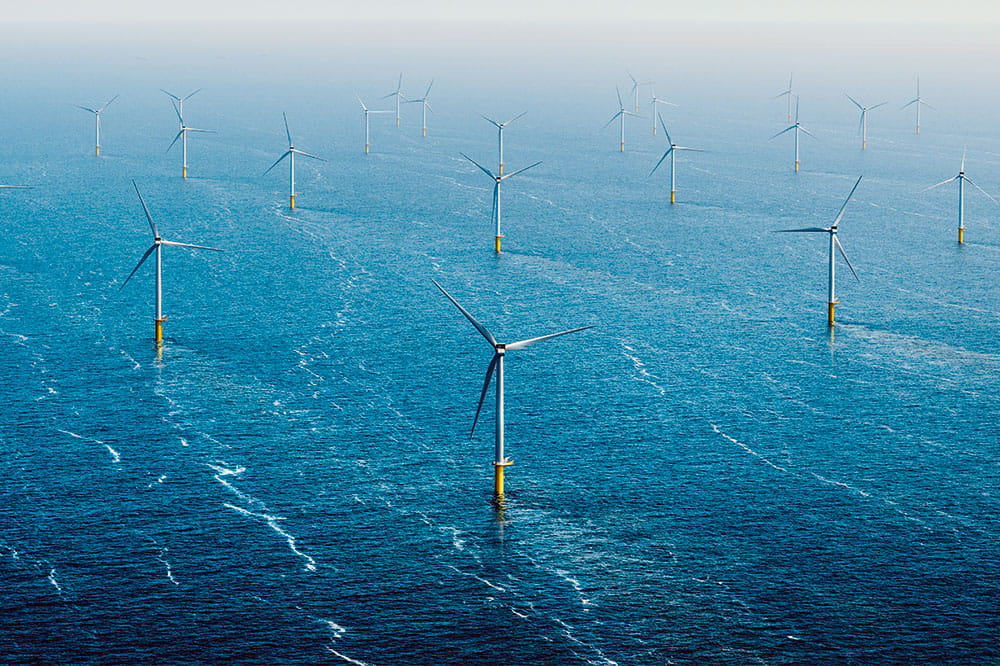
On land and especially at sea, all components installed in wind turbines are exposed to extreme environmental conditions. Leakage prevention, safety and durability are absolutely essential in order to avoid hidden costs and keep maintenance intervals within the scheduled cycles. When commissioning a new wind farm or carrying out a major retrofit project, defective seals can reduce energy output and drive up maintenance costs – usually during harsh weather conditions. That is why it’s important to use excellent materials that meet all current standards and deliver reliable performance.




Which seals are required / used in wind turbines?
Functional reliability and durability are decisive qualities for seals in wind power applications. In sealing solutions for both onshore and offshore systems, there is a distinction between various functional areas, which are further broken down into subcategories:
Seals for the main bearings
- Grease-lubricated main bearings
- Oil-lubricated main bearings
Seals for blade pitch systems
- Blade bearings
- Electrical pitch systems
- Hydraulic pitch systems – pitch cylinders
Seals for main gearboxes
Seals for the machine house (nacelle)
- Azimuth brakes – electric brake
- Yaw brakes – hydraulic brake
- Yaw bearing
- Electric nacelle yaw system
- Hydraulic pressure unit
- Rotor brake
Seals for offshore wind turbines
- Buoyancy module (floating offshore wind energy)
- Transition piece (TP)
- Air tight platform (ATP)

See Our Seals In Action
Experience our cutting-edge sealing solutions in action through an exclusive 3D animation of a Wind Turbine.
View 3D AnimationWhich materials/material classes are suitable for which type of seal?
The performance of a seal is largely determined by the combination of seal design and material, which must be coordinated with each other. The design and material also have to be selected and combined according to the specific requirements of each application.
Important criteria for the selection include:
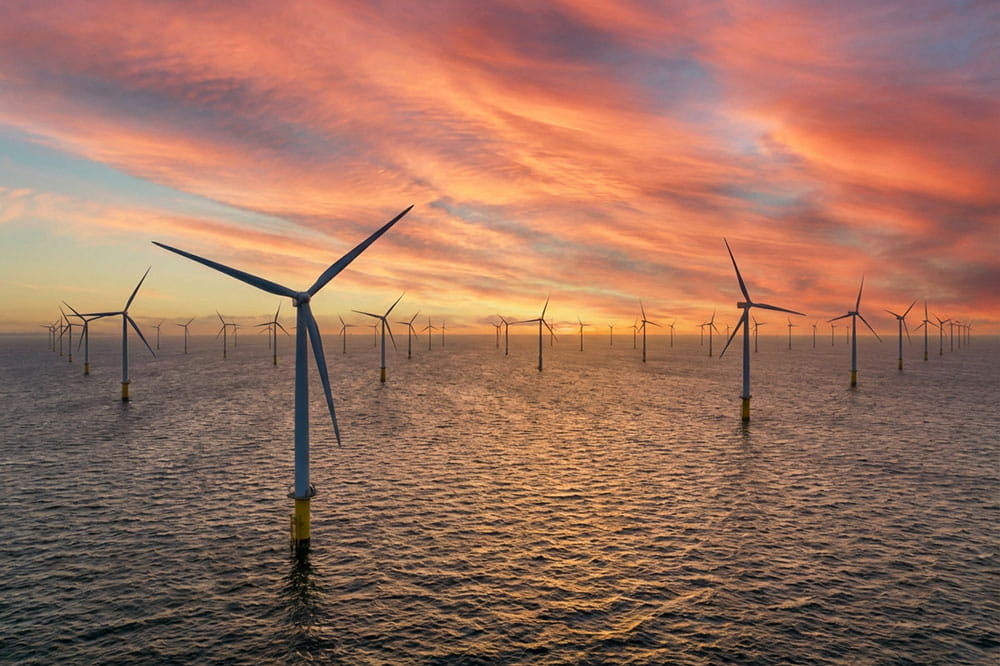
- the temperature range. This includes the ambient temperature (arctic or tropical climate), process temperature in the respective unit and local temperatures at the sealing interfacecaused by tribological effects
- the medium to be sealed, the shrinkage and swelling behavior and the chemical resistance of the material in the applied lubricant
- the environmental conditions. Contamination with seawater,dust, UV radiation or ozone
- the load spectrum. Static or dynamic load.
As a result, each application requires specifically developed materials combined with an optimized seal design. A material is defined by its formulation/ composition and the resulting mechanical and chemical properties. The specific materials can be assigned to different material classes – for example HNBR and PU. Here the materials are defined by their respective base polymer. In the wind energy sector, we refer to the Ventoguard® series, for example, whose custo mized materials have already proven highly reliable in a wide range of applications.
Material classes HNBR, NBR and PU
Depending on whether the bearing is oil- or greaselubricated, different combinations of seal design and material can be used. In these applications, the sealing materials must demonstrate excellent lubricant compatibility and high abrasion resistance. Good elastic behavior at low temperatures is also essential for the sealing function – particularly under high dynamic shaft deflection.
Materials in the NBR, HNBR and PU classes deliver impressive sealing performance under these environmental conditions.
NBR stands for acrylonitrile-butadiene rubber, while HNBR is a hydrogenated variant of NBR. Hydrogenation makes the HNBR material class even better than NBR in terms of ozone resistance, thermal resistance and oxidation resistance. The hydrogenation also results in very good wear resistance.
The polyurethane (PU) material class is remarkable for its optimum lubricant and ozone resistance combined with very good low-temperature performance. Additional strengths of PU include high wear resistance and strong mechanical robustness.
More about HNBR
More about NBR
More about PU
Material class NBR
The preferred material class for blade-bearing seals is acrylonitrile-butadiene rubber (NBR). For these applications, NBR offers an ideal balance of lubricant compatibility and low-temperature elasticity. Its thermal and chemical resistance is also fully sufficient for this environment. The Ventoguard® range made of NBR, for example, features high mechanical strength as well as very low abrasion and compression set. These material properties ensure that the sealing solutions in blade pitch systems are highly stable and functional – which is absolutely essential. The reason: For optimal wind turbine performance, the blade angle must be continuously adjusted to wind speed through rotational movement at the blade bearing. This pitch adjustment in the rotor blade can be achieved via electrical or hydraulic systems.
Material class PU
Polyurethane (PU) seals developed for wide temperature ranges have proven effective in demanding hydraulic environments. They maintain excellent sealing behavior even at low temperatures and under continuous vibration, while also delivering outstanding media resistance. By the way – as energy demand rises, sealing solutions in pitch cylinders are also evolving. Larger turbine dimensions lead to higher technical requirements and stresses on the individual components. This means that the seals also have to be adapted, as the conventional PTFE solution no longer achieves the required service life. Modern pitch-cylinder seals use PU as a more sustainable alternative to PTFE in hydraulic cylinders. PU also offers superior sealing performance in the operation of modern hydraulic systems.
Material class FKM and NBR
Active electrical pitch control in pitch-regulated turbines makes it possible to adjust the angle of the rotor blades. This maximizes the energy output while protecting the system from excessive wind loads. A motor-gearbox assembly drives this adjustment. The assembly is sealed with Simmerrings made of FKM and NBR class materials. Due to the chemical structure of the fluoropolymers used in FKM, this material class offers excellent chemical and thermal resistance.
For gearbox sealing, the material must combine excellent lubricant compatibility with sufficient lowtemperature elasticity. Since the Simmerring® materials are the basis for lubricant compatibility approval under FLENDER specifications, they ensure compatibility with a wide range of industrial gear oils.
More about FKM
More about NBR
Material class FKM
Main-gearbox seals must provide high wear resistance and offer outstanding compatibility with industrial gear oils. The seal must maintain its return capability throughout the full service interval. At the same time, the high circumferential speeds at the sealing interface can lead to increased thermal stress. The material class of choice here is FKM. Due to the chemical structure of the fluoropolymers used here, this material class offers excellent chemical and thermal resistance.
When Simmerrings made of FKM are used in main gearboxes, they demonstrate impressive wear resistance and lubricant compatibility. This ensures robust sealing performance over a long service life.
Material class EPDM
Static flat seals are used in the access area of the nacelle. This is where rubberelastic materials made from synthetic ethylene propylene diene rubber (EPDM) are applied. They offer very high resistance to heat and weathering. Seals made from EPDM also reliably withstand ozone, UV radiation and slightly alkaline saltwater over very long periods. These materials can be manufactured to customer specifications – providing flexible installation options across different mounting points.
Material class NR
For this application, we focus on the high-performance NR substance group. The high-voltage cables and pipes that are used to connect floating wind turbines to the grid generally form the backbone of subsea power distribution. Buoyancy modules are installed at these points to keep tensile and shear stresses on cables and pipes as low as possible. At depths of 100 meters and descending into the kilometer range, every component involved in energy transfer is exposed to the harshest environmental conditions. For buoyancy modules, this means the material must remain seawater-resistant for more than 25 years, withstand pressures of 10 bar or higher and offer temperature resistance up to 80 °C. NR materials developed specifically for this purpose – and approved by the American Petroleum Institute under API 17L – offer very high pressure resistance and contribute significantly to stress relaxation in floating wind turbine applications.
Which standards and regulations must be met by seals in wind energy?
As a rule, European and global standards and legal requirements focus on the applied materials’ durability and ease of maintenance for monitored operational safety. International standards often supplement industry-specific guidelines. There are also extended testing procedures for extreme climate conditions as well as special requirements for documenting the installed components. Last but not least, rising demands on the environmental compatibility of the materials continue to reshape the regulatory framework for sealing solutions. The following provides an overview with links to detailed information and reference sources.
Is there a table with an overview of applications, materials and seal designs for wind turbines?
There is now – and it addresses the question of which sealing designs optimize wind turbine efficiency. The dynamic evolution of wind energy technologies has been accompanied by a sharply rising learning curve for materials and seal design over the past 20 years. Many established materials have evolved into highperformance sealing solutions through new material combinations and seal designs. Advances in production and testing methods are making seals increasingly sustainable, durable and powerful.
Which combinations are especially recommended? An overview:
| Area of use / application | Material class | Sealing solution |
| Main bearings | ||
| Grease-lubricated main bearings | NBR, HNBR, PU | Seventomatic®
Radiamatic® Enviromatic |
| Oil-lubricated main bearings | NBR, HNBR | Seventomatic®
Radiamatic® |
| Blade pitch systems | ||
| Blade bearings | NBR | Extruded seals with single or double lip Axial or radial sealing Blast seal |
| Electrical pitch systems | FKM | Simmerring® (Radial Shaft Seal) |
| Hydraulic pitch systems – hydraulic cylinders | PTFE, PU | Complete piston accumulator system Piston seal (Simko) Rod seal Guide bands Wiper seal |
| Main gearboxes | ||
| Main gear box | FKM | Simmerring® (Radial Shaft Seal) |
| Machine house (Nacelle) | ||
| Azimuth brakes | PTFE, PU | Piston seal Rod seal Guide bands Wiper seal |
| Yaw Bearing | NBR | Extruded Seals with Single or Double Lip Axial or Radial Sealing Blast-Seal |
| Electric Nacelle Yaw System | FKM | Simmerring® (Radial Shaft Seal) |
| Hydraulic Pressure Unit | Diaphragm Accumulator Piston Accumulator |
|
| Rotor Brake | PTFE, PU | Piston Seal Rod Seal Guide Bands Wiper Seal |
| Offshore Wind Turbines | ||
| Buoyancy Module (Floating Offshore Windturbines) | EPDM | Rubber Blocks Friction Pads |
| Transition Piece (TP) | EPDM | MP-TP Seal Airtight Platform Seal (ATP) |

Question for the Industry Expert

Jens Kuhnert
Business Development Manager at
Freudenberg Sealing Technologies
Are there new production or testing methods for seals in the wind energy sector, Mr. Kuhnert?
Jens Kuhnert is Business Development Manager at Freudenberg Sealing Technologies. He says: “When you’ve stood with a customer at the top of a wind turbine, you understand that the forces at play here cannot be simulated under standard test conditions. To replicate such environments, you need a largescale ring test facility for equally large seals that actually evaluates all parameters under real conditions. And we commissioned exactly such a large-component test rig in Hamburg in September 2025. This system allows us to test the performance and service life of seals even under maximum expected loads.
When we use the new large-ring test facility as a development platform, we can evaluate newly developed materials or profiles for functionality within a short time and in line with relevant customer specifications. In addition, all relevant product properties can be validated before moving into series production. This brings us a significant step forward in terms of the desired performance.
But we have even more to offer: Companies across the entire wind-energy value chain are under constant pressure to reduce costs. We take this into account by continuously optimizing our production processes. We have achieved high process reliability and a high standard of industrialization across the entire production chain, for example in our Seventomatic® seals. In addition, we have developed a new industry highlight: for main bearing applications, we can now supply extruded HNBR seals. This led us to invest in a new salt-bath extrusion system. At the same time, we’re continuing to develop additional product innovations and manufacturing methods. This means we are well-prepared for future requirements in the wind sector.”
Where can I get industry news in the wind energy sector?
At both national and international levels, the learning curve in the wind turbine sector remains steep and leads to steadily rising earnings. Wherever new performance limits are being tested, the right sealing solutions are essential – which makes it worthwhile to stay informed about emerging trends. You can find valuable industry insights here:
CWP (CHINA WIND POWER)
Reflects the Chinese wind sector; an indicator and driver of technological progress in the Chinese wind industry
https://www.chinawind.org.cn/index_en
ETIP Wind Plattform
European technology and innovation platform
GWEC Innovation Hub
The global interest group for the wind industry; among other things, it coordinates worldwide research on sealing technologies
Global Energy Monitor
Develops and analyzes data on energy infrastructure, resources and designated uses. The offer includes the Global Wind Power Tracker
https://globalenergymonitor.org/projects/global-wind-power-tracker/
IRENA (International Renewable Energy Agency)
Supports global standardization processes and technology transfer; innovation hub for sustainable wind energy components
IKI (International Climate Initiative)
German-Chinese platform for renewable energy with an associated Wind Environment Research & Training Center
WindEurope Innovation Plattform
Annual innovation conferences focusing on industrial competitiveness and new technologies
Checklist

What information do I need to select seals for wind turbines?
-
Are the wind turbines located on land or at sea?
-
Is it a new wind turbine or a retrofit project?
-
Which seals do I need at which points of the wind energy system?
-
Which materials are ideal for long-lasting seals?
-
Do I need sealing profiles that are not yet available?
-
Who can offer me prototype production for sealing profiles?
-
Do I need seal diameters that can’t be manufactured in series?
-
Do I need an environmental impact assessment?
-
Do I have to meet any environmental requirements?
How Can Seals Support Renewable Energy Production?


First Hand News
Best of all, keep up with the latest developments
with the Freudenberg Sealing Technologies newsletter.

 Back to Top