30.03.2026 | Story
Requirements for Seals in Photovoltaics
The installation and commissioning of solar modules or solar panels reached new record levels in 2024 and 2025. For those dispensing with fossil fuels, photovoltaics is one of the key technologies on the path to global climate neutrality. Today, solar panels are installed in every climate zone on earth and in every conceivable location. In this context, the sealing solutions used in these systems rarely get any attention. Without them, however, the solar modules could not consolidate their performance– nor could the resulting green energy flow into the power grid. This section explains which components and materials are indispensable.




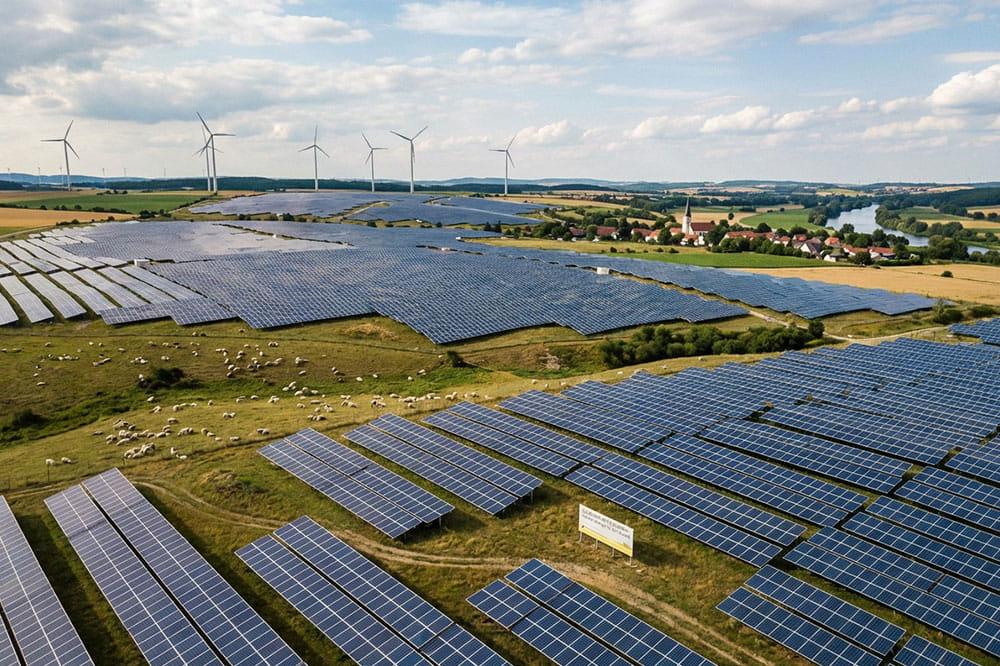
Which seals are required / used in solar installations?
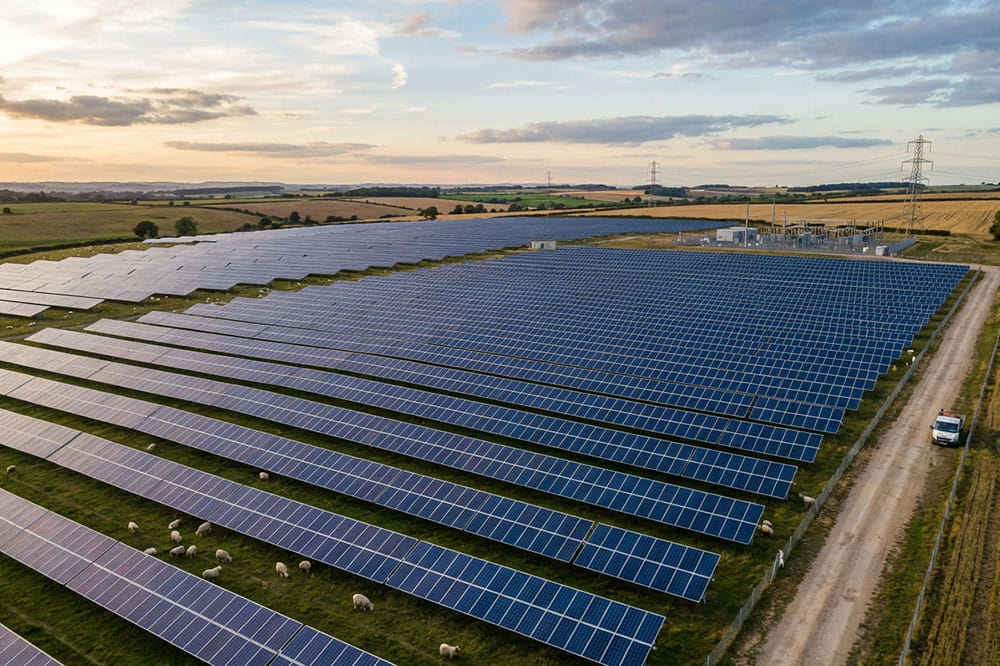
Solar modules are produced for a wide range of applications and purposes. Researchers continuously work on pioneering technologies to increase the efficiency of solar cells. Thick-film and thin-film solar modules are currently the most common. These are divided into glass-glass or glass-foil modules. Regardless of whether the solar module is flexible or semi-flexible, each one requires different seals:
Seals for solar connectors / plug connectors
Seals for inverters
- EPDM cable-entry seals
- Cable-outlet seals
- Housing seals
Which materials or material classes are suitable for each type of seal?
UV radiation, weather exposure and sometimes extreme temperature fluctuations determine which specific material is required for each seal. The binding element in the material selection is compliance with the applicable fire-protection regulations. The most frequently used materials or material classes are also listed here:
Material class Silicone compounds
Silicone materials are ideal for solar connectors because they tolerate the temperature cycling that occurs between day and night, for example, or between summer and winter. Silicone is a synthetic polymer composed of silicon, oxygen and additional chemical elements, such as carbon or hydrogen. These polymers have a backbone structure of silicon and oxygen atoms connected by siloxane bonds (Si–O–Si). The base material already provides high elasticity and excellent temperature resistance. It also delivers impressive resistance to moisture and chemicals. Good to know: The seals used here meet the UL 94 standard for safety and flammability of plastics used in devices and equipment.
Material class EPDM
In outdoor applications, ethylene-propylene-diene rubber (EPDM) provides long-lasting and outstanding resistance to weathering and UV exposure. With a maintenance-free service life of up to 30 years, EPDM is ideally suited for seals in inverter converters. The ethylene component provides mechanical strength, while the propylene increases flexibility and durability. The diene monomer content improves the elasticity and long-term stability of the seals. The materials used here have approvals under UL 1703 and UL 157. To maximize material performance, Freudenberg Sealing Technologies applies a peroxide crosslinking process.
Which is the leading-edge manufacturing process for seals in photovoltaics?
The injection molding process (IM) is considered the leading method for manufacturing elastic seals such as O-rings used in solar connectors and plug connectors. It enables the production of large quantities of identical parts in a short time and with consistently high quality. The process begins with carefully selecting and mixing the appropriate compound, such as liquid silicone rubber (LSR), which may be supplemented with functional additives like UV stabilizers. Next, technicians prepare the injection mold and set the machine parameters before beginning the actual processing.
During injection molding, the material is first metered and plasticized to prepare the volume required for injection. The injection phase follows, during which the material is transferred into the mold. Then it undergoes vulcanization under heat and pressure, which gives the component its final elasticity and dimensional stability. Once cross-linking is complete, the seal is demolded and post-cured in a separate step called tempering. This step is essential to achieve the required compression set and remove volatile components from the material.
In conclusion, a fully automated, 100% visual inspection ensures that every seal meets the specified geometries and surface characteristics to be ready for use. This combination of precision, efficiency and quality assurance makes injection molding a defining process for the production of seals in photovoltaics.
Which standards and regulations must be met by seals in photovoltaic systems?
When planning and installing photovoltaic systems, it is essential to examine the regulatory requirements and framework in detail. Specific standards and special provisions apply worldwide that must be considered. The following are examples of standards and regulations that include specifications for the use of seals in photovoltaic systems

Question for the industry expert

Carsten Grauel
Site Manager at Freudenberg Sealing Technologies
Are there new production methods for seals in the photovoltaic sector, Mr. Grauel?
Carsten Grauel is Site Manager at Freudenberg Sealing Technologies. He says: “In 2023, we redesigned quality management in the injection molding process and introduced an automatic visual inspection system at the Öhringen site that is controlled by artificial intelligence. This new quality-assurance process has proven particularly effective in the mass production of our sealing components. The automatic visual inspection elevates our global quality management to an entirely new level.”
Where can I get industry news in the photovoltaic sector?
CPIA
China Photovoltaic Industry Association
https://www.chinapv.org.cn/English/list3.html
Fraunhofer ISE
Research on module construction and sealing technologies
https://www.ise.fraunhofer.de/en/business-areas.html
PV Magazine International
Multilingual reporting with a regional focus
REN21
Global Renewable Energy Policy Network
SEIA
Solar Energy Industries Association; Trade association of the US solar industry with up-to-date news, market data and political developments.
SolarPower Europe
Publishes the Global Market Outlook 2025-2029
https://www.solarpowereurope.org
TaiyangNews
International news portal focusing on Asian photovoltaic markets, especially China and India
How Can Seals Support Renewable Energy Production?



First Hand News
Best of all, keep up with the latest developments
with the Freudenberg Sealing Technologies newsletter.

 Back to Top