30.03.2026 | Story
Requirements for Seals in Hydropower
Hydropower plants deliver maximum energy output in 24/7 operation. They are the most reliable source of renewable energy, supplying several hundred megawatts of continuous power and forming a key pillar in achieving climate targets. The powerful generators and turbines continue to stand as marvels of engineering. However, to harness the immense energy of water effectively, the seals, guides and plain bearings play a decisive role. Materials with outstanding properties defy harsh environmental conditions. Whether in the construction of monumental new dams with integrated hydropower plants or in the carefully planned maintenance of existing facilities, the same principle applies worldwide: Customized sealing solutions keep turbines in constant motion and convert flow energy into usable power.




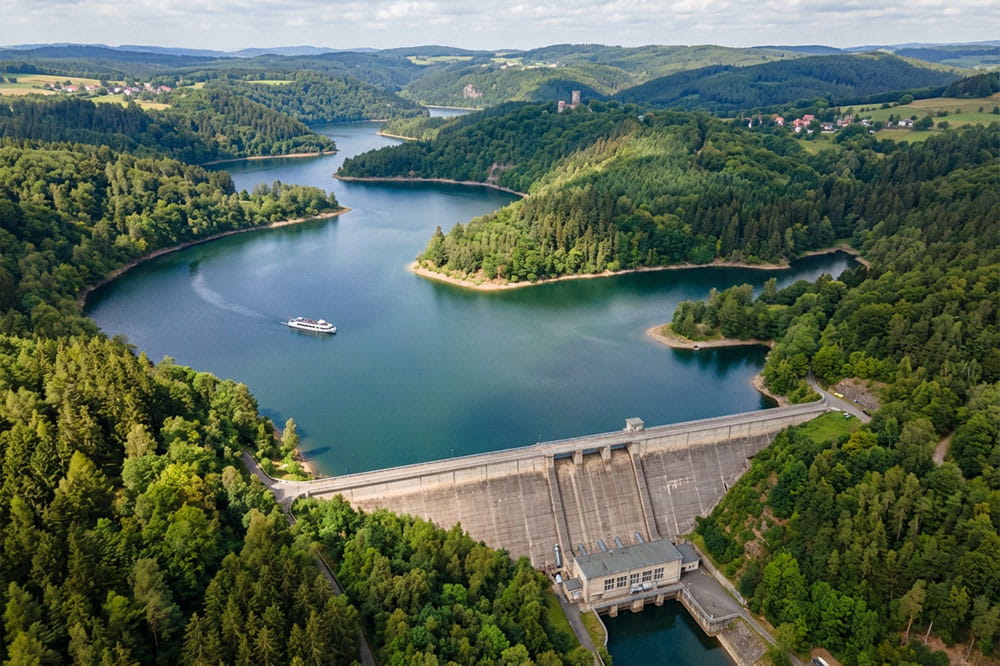
Which seals are required / used in hydropower plants?
Five different categories of hydropower plants exist worldwide. On land, we distinguish between run-of-river plants and diversion power plants installed in streams and rivers. Pumped-storage plants and cavern power plants, in contrast, primarily serve as energy reservoirs. By now, tidal power plants along the coasts have also reached market maturity.
Across all applications worldwide, four types of turbine have proven effective:
- Francis turbine
- Kaplan turbine
- Pelton turbine
- Propeller turbine
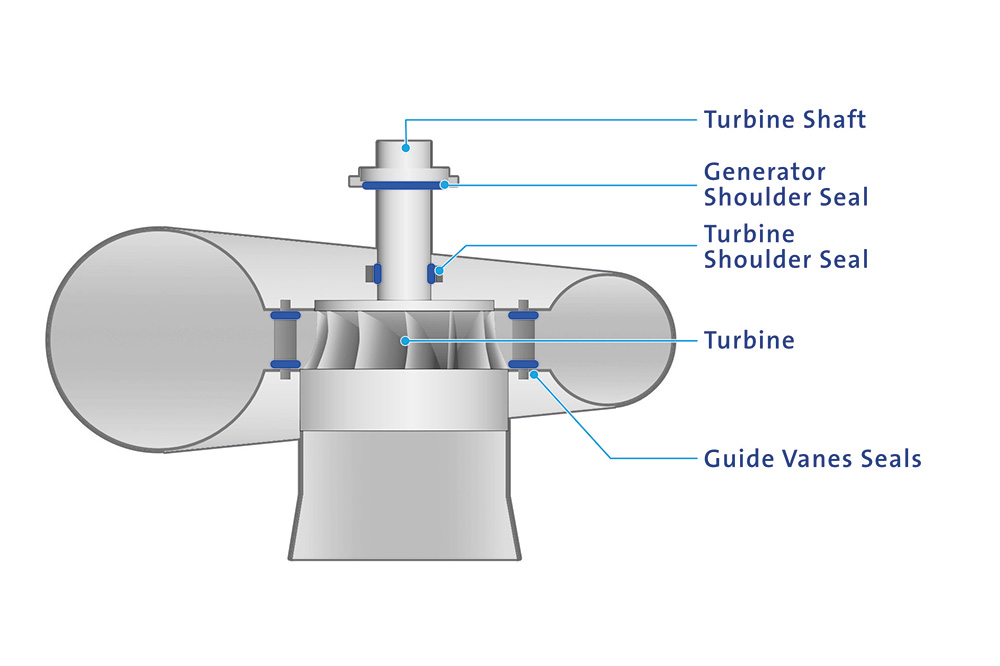
A graphic overview of these four turbine types and the seals required for each is available here.
The reliable operation of these axial-flow turbines, reaction turbines and impulse turbines requires the following seals:
- Guide rings
- Expansion sleeves
- Guide vane trunnions
- Gate trunnions
- Generator shoulder seals
- Flanges
- Hydraulic accumulators
- Piston seals
- Labyrinth seals
- Guide vane seals
- O-rings
- Rod seals
- Support rings
- Turbine shoulder seals
Sealing Solutions in Hydropower
The seals used in hydropower plants are classic seals. All sealing solutions are designed to withstand extreme pressures, minimize leakage and support sustainable energy generation across different hydropower environments.
Hydraulic Seals and Hydraulic Components
The applications for seals in hydropower plants described below also define the range of environments where high-performance hydraulic seals are required. The most important hydraulic components are also worth a look:
- Servo motors and pitch control systems – used in guide vanes and turbine blade adjustment for precise control of the water flow
- Compact hydraulic power units and directional control valves – standard components for lock and weir control
- Sealing systems – high-performance seals for hydraulic cylinders and servo motors ensure reliability under extreme pressures
Common sealing materials used in hydraulic systems include the following:
- PTFE combined with elastomer preload elements or steel springs for seals and wipers
- UHMW-PE (polyethylene) combined with elastomer preload elements or steel springs for seals and wipers
- PU (polyurethane) for seals and wipers
- Elastomeres for seals and wipers
- PA (polyamides), POM (polyoxymethylene), PTFE and PEEK for guide rings and support rings
Static Seals
Good to know: For sealing solutions that are in direct contact with water, peroxide-crosslinked EPDM provides better aging resistance than sulfurcrosslinked EPDM. These materials can also be manufactured to customer specifications. In hydropower plants, one sealing type dominates static applications:
- EPDM – for weather-resistant and environmentally robust O-rings
Which sealing geometry is required where in hydropower plants?
Hydropower applications primarily use classic hydraulic seal geometries: rod seals, piston seals, wipers and guide rings. These specific seals are required in a wide range of sizes and are available with diameters of three meters and more. They are usually custom-designed for individual requirements.
Which is the leading-edge manufacturing process for seals in hydropower plants?
In today’s highly automated world, it is hard to imagine systems operating without standardized sealing solutions. Hydropower plants are an exception. Existing hydropower facilities worldwide play a permanent role in the sustainable national energy supply. In some plants – often more than 100 years old – seals made from natural rubber or early synthetic materials are still installed and now require replacement. Depending on the medium and expected temperature range, these specific seals are primarily made from EPDM, FKM, NBR or HNBR.
One thing is true for every hydropower plant: There are no standard sizes for seals. Instead, the systems require custom-cut sealing profiles with diameters of up to two meters or more – always in small quantities and often as individual custom-made parts. This process of material selection, production and quality assurance is carried out by companies with extensive material expertise, production facilities and test benches. Freudenberg Sealing Technologies has a dedicated hydropower sales team that operates worldwide, measuring specific systems and coordinating sealing solutions designed to last 30 years or more. When ordering customized seals, working with material experts pays off.
Which materials or material classes are suitable for which seal environment?
The seals used in hydropower plants are classic seals. All sealing solutions are designed to withstand extreme pressures, minimize leakage and support sustainable energy generation across different hydropower environments.
The operating conditions play a primary role in the material selection. In addition to the seal type, the decisive factors include the medium, temperature, pressure and – in dynamic applications – the movement speed. Each environment is illustrated below with three particularly suitable materials.
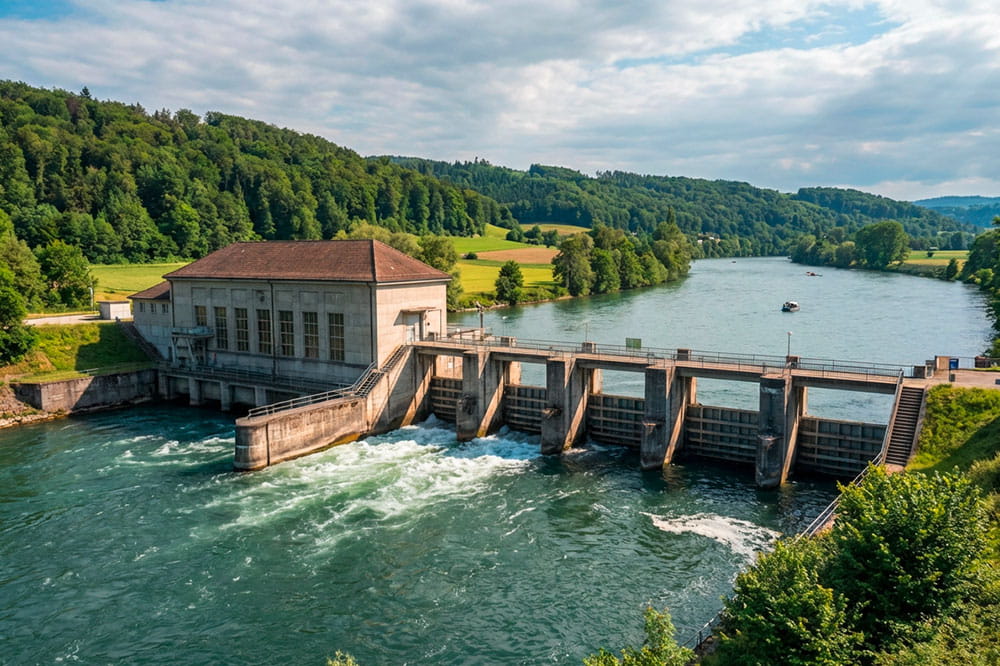
Fresh Water
Many onshore hydropower plants can operate under well-defined environmental conditions. For standard operation, the following materials provide a balanced combination of water compatibility, wear resistance and sealing performance:
- Nitrile rubber (NBR) offers good water resistance and cost-effective manufacturing
- Polyurethane (PU) delivers excellent abrasion resistance and durability
- PTFE (polytetrafluoroethylene) is chemically inert and low-friction
More about NBR
More about PU
More about PTFE
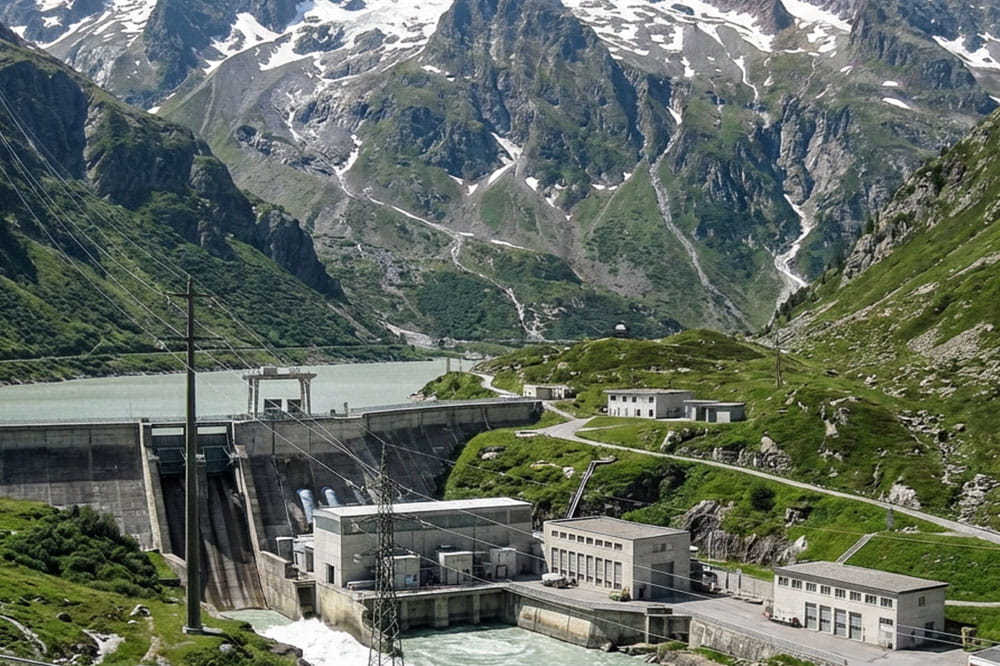
Icy Environments
In glacial melt regions, seals must remain supple and flexible at freezing temperatures over long periods. The following materials remain functional even at sub-zero temperatures and prevent brittleness and seal failure:
- EPDM (ethylene propylene diene monomer) offers excellent resistance to cold temperatures and ozone
- Silicone rubber keeps its flexibility even at temperatures below 0 °C
- PTFE polytetrafluoroethylene) with fillers maintains its performance even in extreme cold and is highly resistant to ice abrasion
More about EPDM
More about PTFE
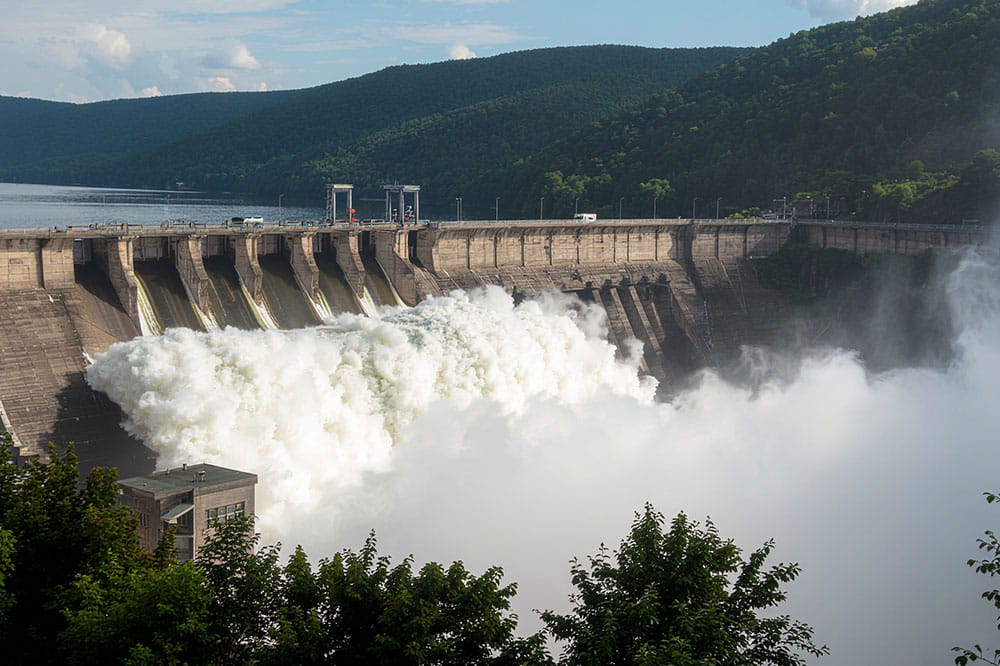
High Flow Velocities
Where turbulent flow conditions and strong vibrations dominate, robust all-round materials are required. The following materials withstand dynamic loads, reduce turbulence-related wear and maintain their sealing performance under vibration.
- PEEK exceptional mechanical strength and vibration resistance
- FKM (fluoroelastomers) offer high temperature and chemical resistance
- Reinforced PTFE has low friction coefficients and impressively high wear resistance
More about PEEK
More about FKM
More about PTFE
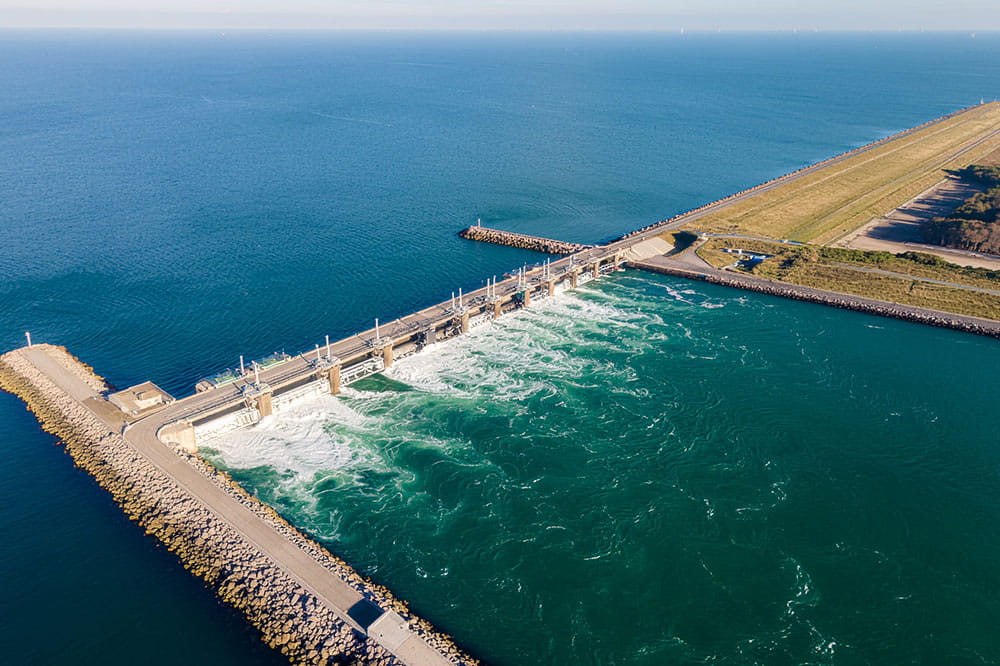
Salt Water
Wave and tidal power plants lying off our coasts face continuous exposure to saltwater. Because saltwater is highly corrosive, chemically inert and corrosion-resistant materials are essential. The following materials perform reliably in this environment:
- FKM provides excellent resistance to chemicals and salt water
- EPDM shows good resistance to salt water and UV radiation
- PTFE is non-reactive and yet corrosion-resistant
More about FKM
More about EPDM
More about PTFE
Which standards and regulations must be met by seals in hydropower plants?
Hydropower sealing systems are also governed by national and international standards. Many of these standards are continuously updated. Below is a selection of relevant European and international guidelines. For project-specific planning, we recommend a consultation with seal manufacturers and certification bodies.

Question for the industry expert

Scott Sharpless
Global Key Account Manager, Power/Energy at Freudenberg Sealing Technologies
Are there new production methods for seals in the hydropower sector, Mr. Sharpless?
Scott Sharpless is Global Key Account Manager, Power/Energy at Freudenberg Sealing Technologies. He has supported numerous hydropower maintenance projects in Canada and the United States. For him, speed is one of the greatest challenges when seals need replacement in hydropower plants. He says: “Hydropower plants require precision seals, guides and plain bearings that are usually not available in standard sizes. And we are often called in when a critical seal fails outside the scheduled maintenance intervals. That is exactly why we launched our Freudenberg Xpress® manufacturing service in 2024.
With this service, we can quickly produce custom seals – often already in 24 to 48 hours. This minimizes downtime for the operators and supports urgent maintenance with precision-engineered seals made from sustainable, long-lasting materials.”
Where can I get industry news in the hydropower sector?
China Daily – Hydropower News
China Daily regularly reports on current developments, projects and trends in the hydropower sector in China, including major projects, innovations and political framework conditions.
https://www.chinadailyhk.com/hk/article/618339
ESA (European Sealing Association)
Guidelines (updated 2024)
https://www.europeansealing.com/about-us/position-statements/
Global Hydropower Tracker (Global Energy Monitor)
Worldwide data set and news on hydropower projects, including developments in Asia and South America.
https://globalenergymonitor.org/de/projects/global-hydropower-tracker
Hydro Review (International)
English-language, global trade magazine with news, analyses and reports on hydropower projects worldwide, including Asia and South America.
https://www.renewableenergyworld.com/hydro-power
IEA (International Energy Agency)
Hydropower division; detailed market analyses; global development trends and regular status reports on hydropower.
https://www.iea.org/energy-system/renewables/hydroelectricity
IHA (International Hydropower Association)
World association with news, studies and events on hydropower focusing on international and regional developments, including Asia and South America.
Checklist

What information do I need to select seals for hydropower plants?
-
What does preventive maintenance of the hydropower plant include?
-
Are weekly visual inspections performed?
-
Are all seals and bearings inspected annually or semi-annually?
-
Are divers needed to replace seals?
-
-
How can I identify the sealing system currently installed?
-
What specifications or drawings are available for this?
-
How can measurements or images provide missing information when drawings are no longer available?
-
How much flexibility do I have when replacing seals? Can I use a different sealing material, for example?
-
Are modernization measures planned for the systems that consider efficiency gains by replacing defective seals with precision seals?
-
Which standards and regulations apply to maintaining existing plants?
-
Are contact details of sealing experts available?
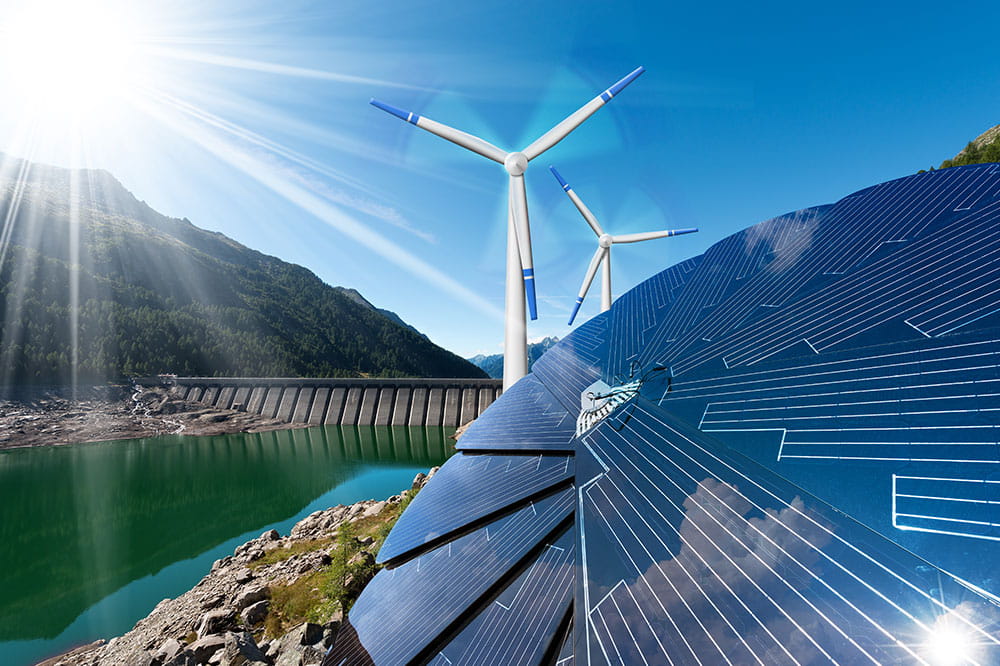
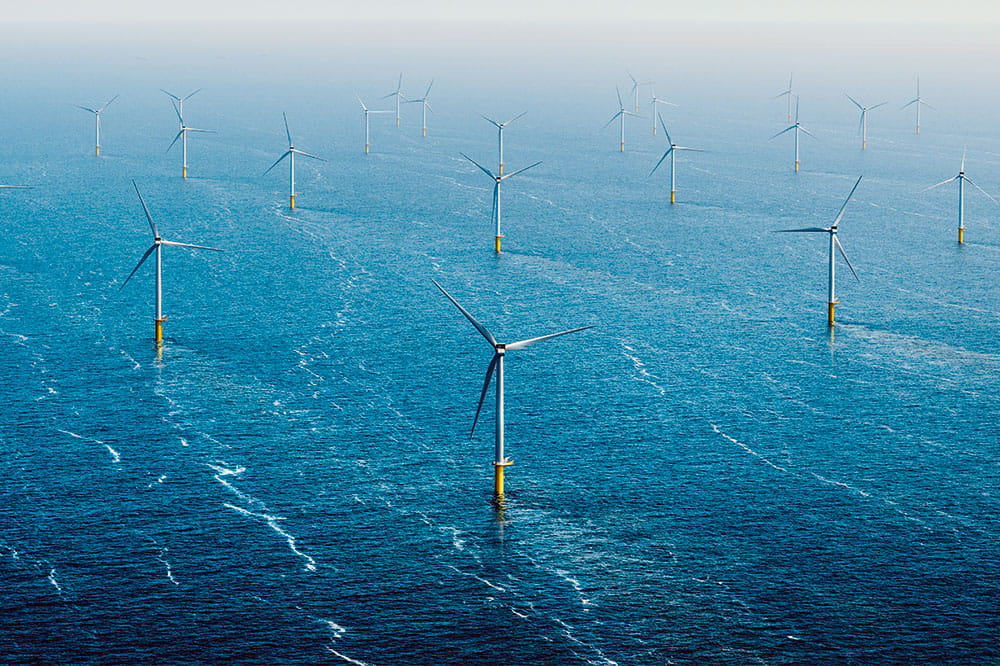
How Can Seals Support Renewable Energy Production?


First Hand News
Best of all, keep up with the latest developments
with the Freudenberg Sealing Technologies newsletter.

 Back to Top