

 Back

In a nutshell: Is there an overview of applications, materials, sealing and damping designs for humanoid robots applications?
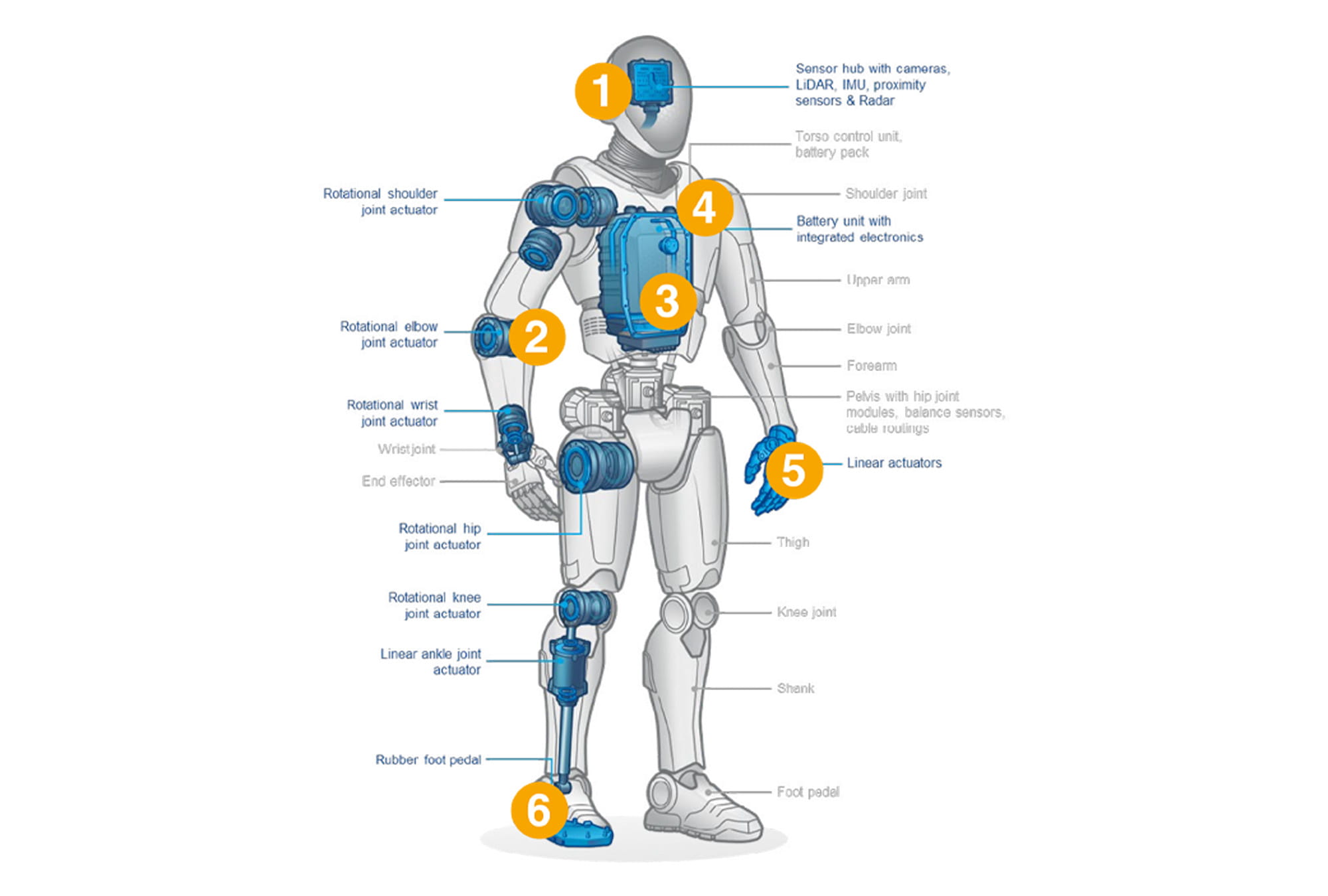
There is now – because a picture is worth a thousand words. We have compiled all the information listed above into three diagrams. So, you can immediately see, which materials and designs are suitable for achieving optimum peak performance. Figure 1 shows a humanoid robot in which all areas requiring sealing and damping elements or sensor modules are marked in blue. The illustration extends from the head (sensor hub with cameras, LIDAR, IMU, calibrated proximity sensors, and radar) through the shoulder joints with actuators and the tactile elements in the hand area, all the way down to the rotational joints at the knees and the rubberized foot pedals. Figure 2 zooms in on the areas marked in blue.
The numbered circles in figure 1 are clickable and link to an overview on the following pages. The individual components are shown here along with their corresponding material classes. This overview is designed to help you find the right highly specialized sealing and damping solutions. For individual inquiries, you are welcome to contact the specialists at Freudenberg Sealing Technologies, for example.
3D Sensing - Waveguide Antenna
For the sensing hub inside the headgear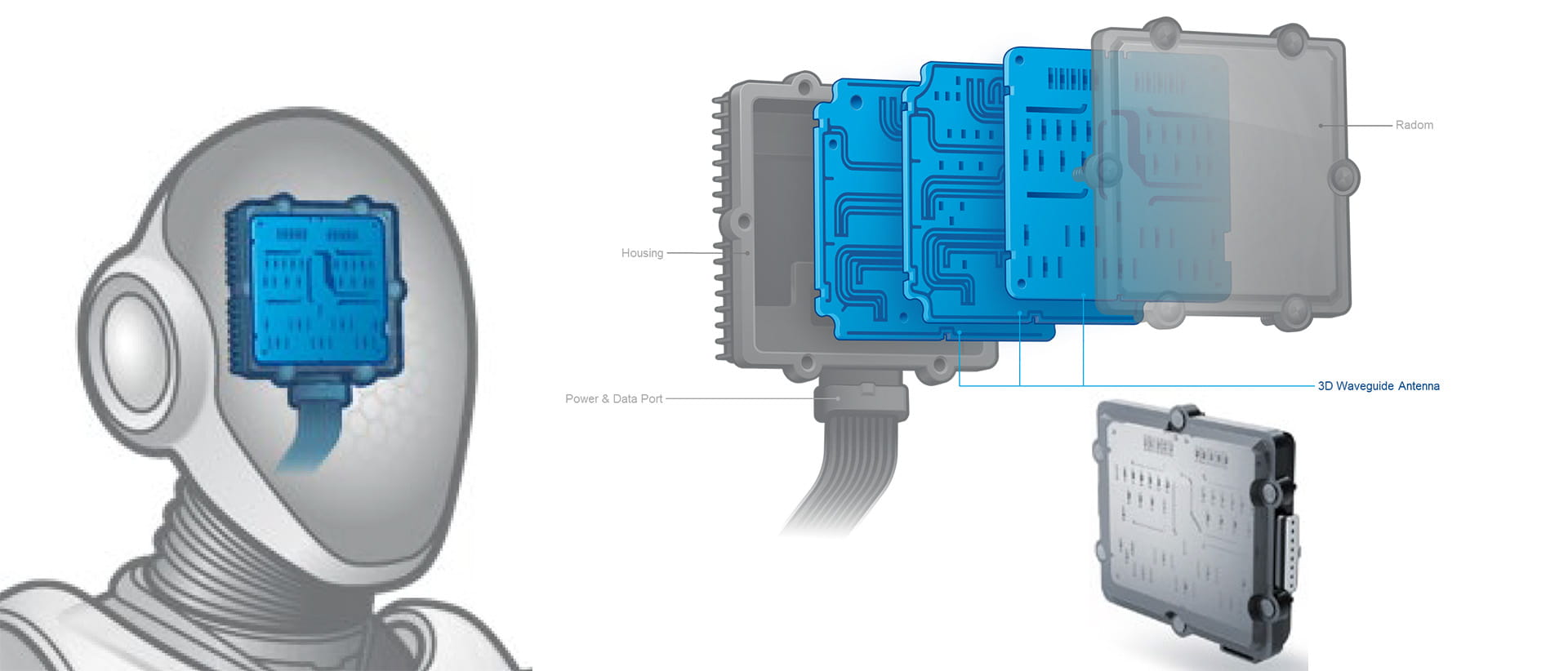
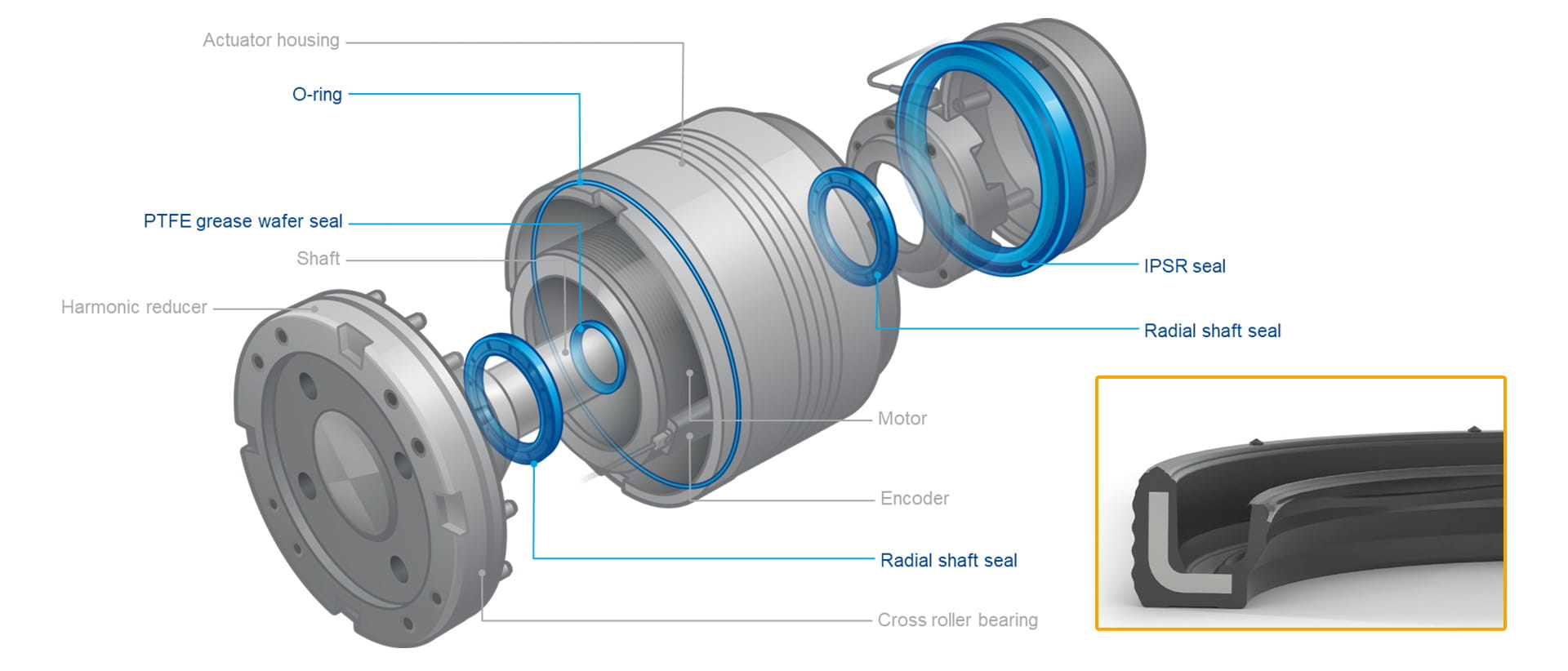
Long-Life Sinus Seals
PSSApplied in gearboxes / motors for humanoids
Ventilations and Gas-tight Busbars
DiaVent Min for battery cells and Busbar Sealings for battery cells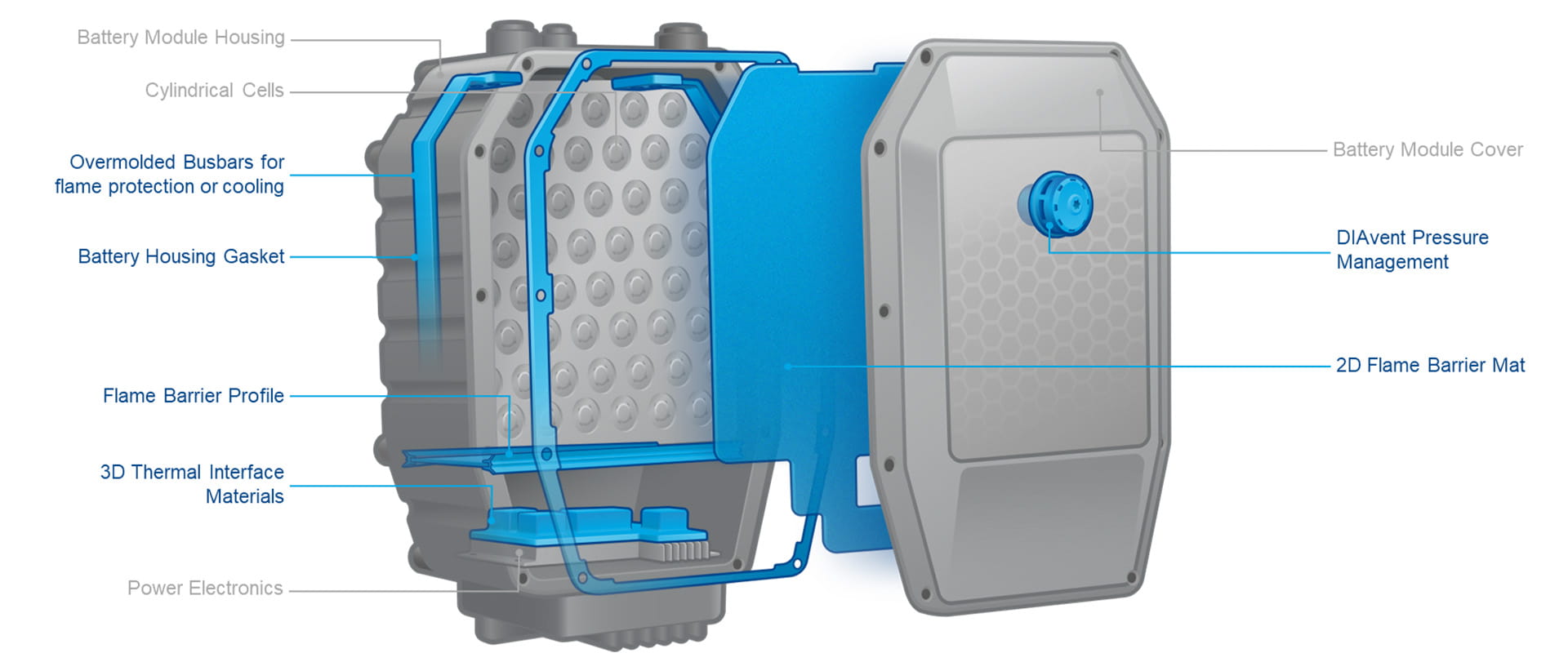
Compact Design, Body Covers and Hygienic Design
Compact Design PTFE Wafer Seals Secure internal lubrication in humanoids Body Covers Rubbers Gaskets For robot body covers / flanges Hygienic Design Hygienic USIT For robot body covers / flange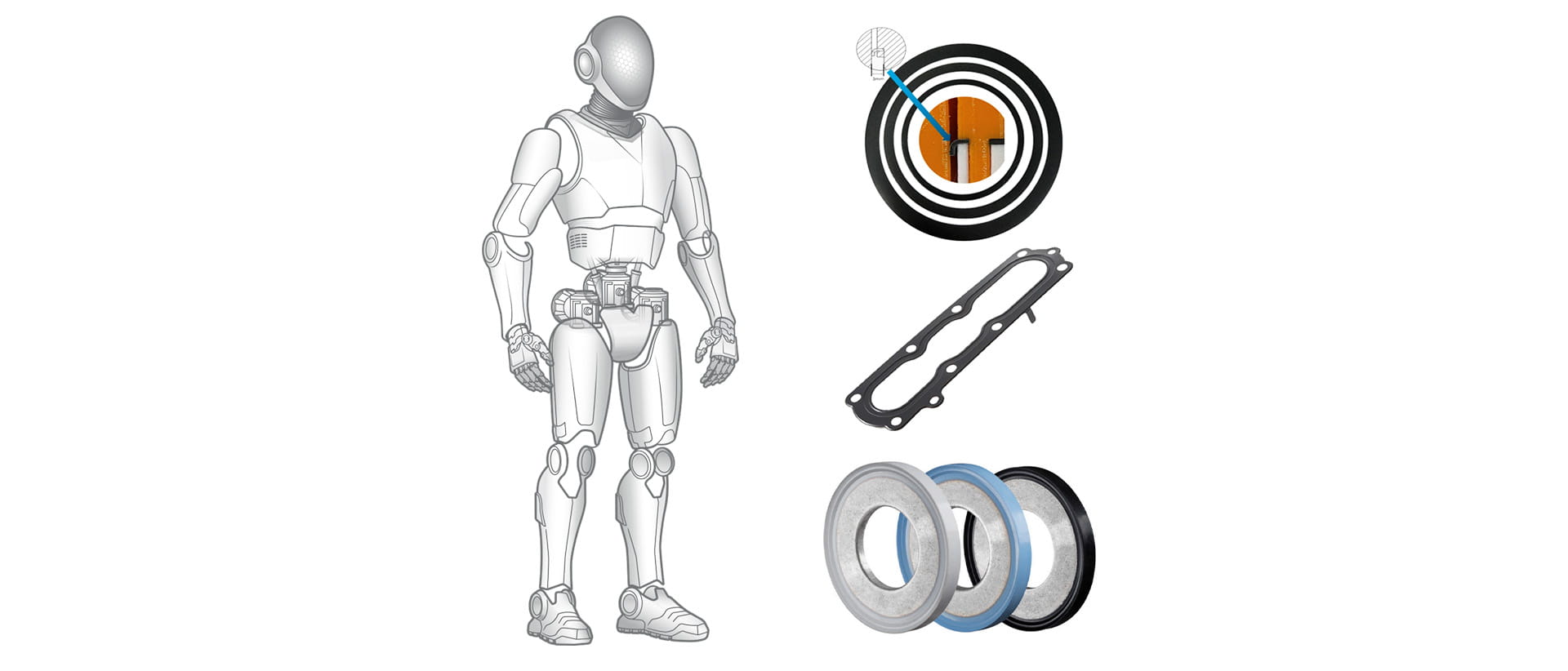
Waterproof – ISPR
For finger joints and wrists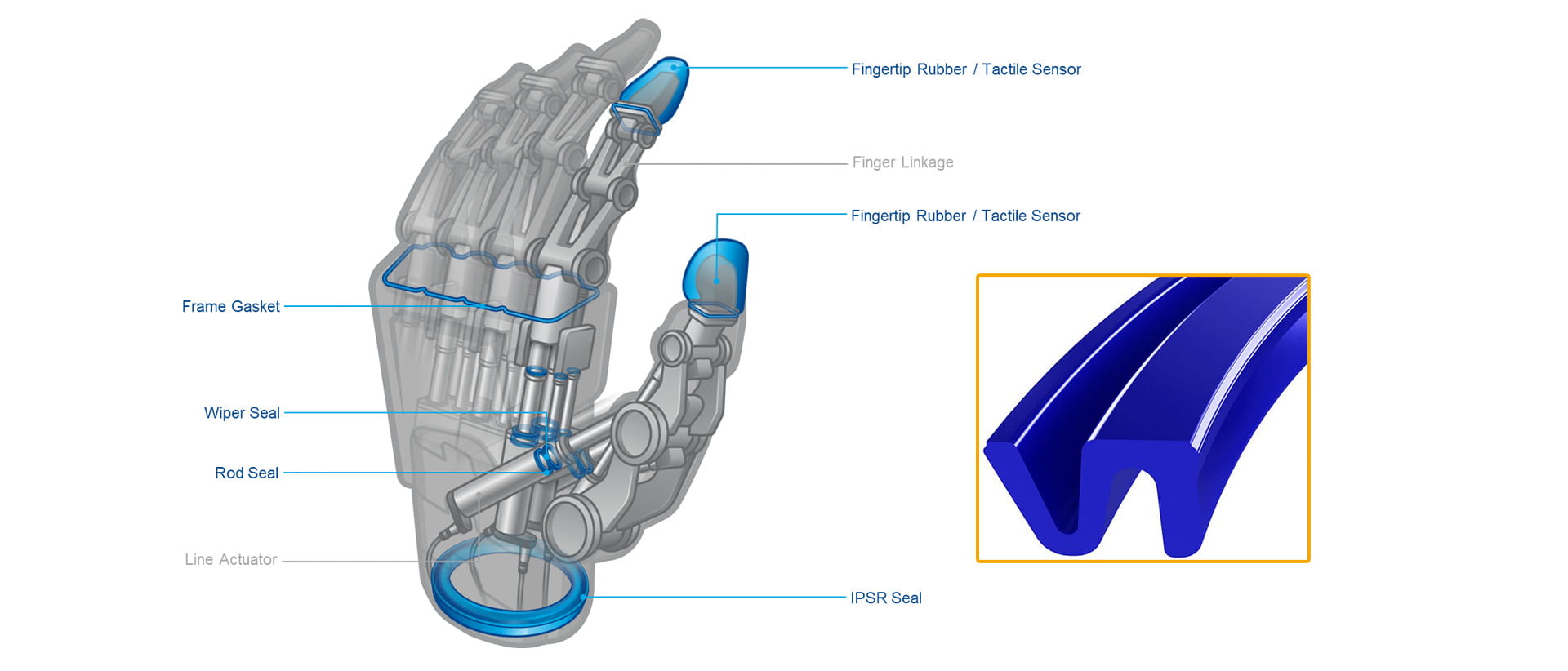
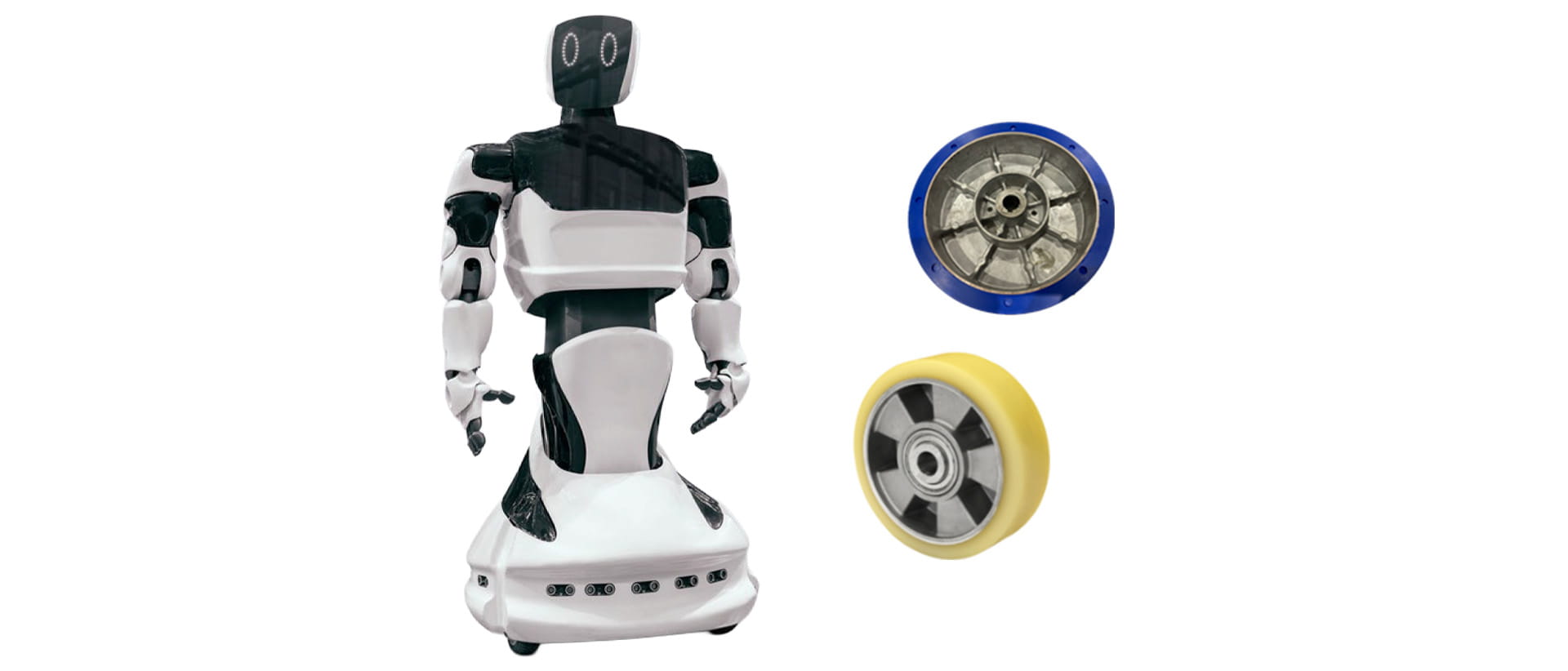
Transmission
PU WheelsFor AGVs and wheeled humanoids
Which standards and regulations are relevant for robotic systems?
Robotics systems are subject to many regional and globally interconnected guidelines and standards that relate to sealing and damping technologies. These define a comprehensive regulatory framework for the new development and operation of robotics applications. This means that development teams and integrators must continuously stay on the ball and follow legal requirements when they incorporate the latest technological advances into their designs. Here is an excerpt of the guidelines and standards that were current at the time this white paper was written. For the development of new robotics projects, we strongly recommend delving deeper into this topic.
ANSI/RIA R15.06-2012
American National Standards Institute (ANSI) standard for industrial robots and robotic systems; defines requirements and guidelines for the inherently safe design, safeguards and information for the use of industrial robots
WEBSITE ›ATEX-Richtlinie 2014/34/EU –
Directive governing equipment and protective systems intended for use in potentially explosive atmospheres
WEBSITE ›China’s Industrial and Military Robotics Development;
Ministry of Industry and Information Tech-nology (MIIT), National Development and Reform Commission (NDRC). Guideline. This is aimed at establishing a complete robotics industry system in China, including the expansion of industrial production capacities and promotion of innovation and technological development
WEBSITE ›IS 15033 (2001)
Manipulating Industrial Robots – Indian national standard based on international norms; defines performance criteria and test methods for industrial robots
WEBSITE ›ISO 8373:2021 (en)
Robotics, Vocabulary; defines terminology used in standards and regulations related to robotics
WEBSITE ›DIN EN ISO 13482:2024-10
Draft: Robotics – Safety requirements for service robots (ISO/DIS 13482:2024); German and English version prEN ISO 13482:2024
ISO 10218-1:2025-02
Robotics, safety requirements – Part 1: Industrial robots; regulates requirements for the design of industrial robots and the integration of their applications
ISO 10218-2:2025-02
Robotics, safety requirements for robot systems in industrial environments – Part 2: Robot systems, robot applications, and integration of robot cells
DIN EN ISO 10218-2:2021-03
draft: Robotics – safety requirements for robot systems in industrial environments, part 2: Robot systems. Robot applications and integration of robot cells
ISO/TS 15066:2016
Safety requirements for collaborative industrial robot systems and their working environments; supplements the requirements and guidelines for the operation of collaborative industrial robots according to ISO 10218-1 and ISO 10218-2
DIN EN ISO 13849-1:2023-12
Safety of machinery; rules specifically applicable to robotics for safety-related parts of control systems and general design principles
ISO 18646-1:2016-09
Robotics, performance criteria and related test methods for service robots – Part 1: Locomotion of wheel driven robots
JIS Y1001 (2019)
Japanese Requirements for Safety Management Systems for Robot Services / Using Service Robots; new JIS standard defines requirements for safety management systems for robot services and service robots
Schutzarten IP54 und IP65 VDI 2740 Blatt 1:1995-04
VDI 2740 Sheet 1:1995-04 – Mechanical equipment in automation technology, grippers for handling devices and industrial robots




 Back to Top