

 Back


Questions for the Experts

Dr. Daniel Froelich, Christian Wilbs
Question for the industry experts: Are there new manufacturing or testing methods for seals and dampers in the field of cobots and humanoids, Dr. Daniel Froelich and Christian Wilbs?
Dr. Daniel Froelich, Technical Director, Lead Center Simmerring at Freudenberg Sealing Technologies, says: “A key factor for success in robotics is the combination of a high-performance product portfolio, a deep understanding of applications, and the ability to quickly bring innovative solutions into series production. Freudenberg Sealing Technologies has a product and material portfolio for radial shaft seals in industrial robots that has been built up over decades and continuously refined. On this basis, we have established a leading market position in the field of rotary seals for robotic applications.
A particular challenge lies in the highly dynamic swivel movements found in modern robotic systems. Under these conditions, our innovative seal designs achieve high flow rates and are combined with high-performance elastomer materials that are specifically tailored to the synthetic lubricants used in robotics.
Just as important as the product itself is the application expertise we have built up over many years. Successful sealing solutions for robotics applications require a deep understanding of the entire system’s requirements — from the lubricants used and highly dynamic load cycles to the specific environmental conditions. This expertise enables us to work with our customers to develop robust and high-performance sealing systems."
Christian Wilbs, Product Design Engineer at Freudenberg Sealing Technologies, says: “Today, modern sealing solutions perform significantly more tasks than simply sealing. Through modifications that have virtually no impact on installation space, additional functions can be integrated that create real added value for the user. The spectrum ranges from simple dust lips to applied nonwoven washers and integrated PTFE washers. In addition to protecting against dust, dirt, and water, such solutions can, for example, also dissipate electrical voltages, thereby providing additional protection for rolling bearings.
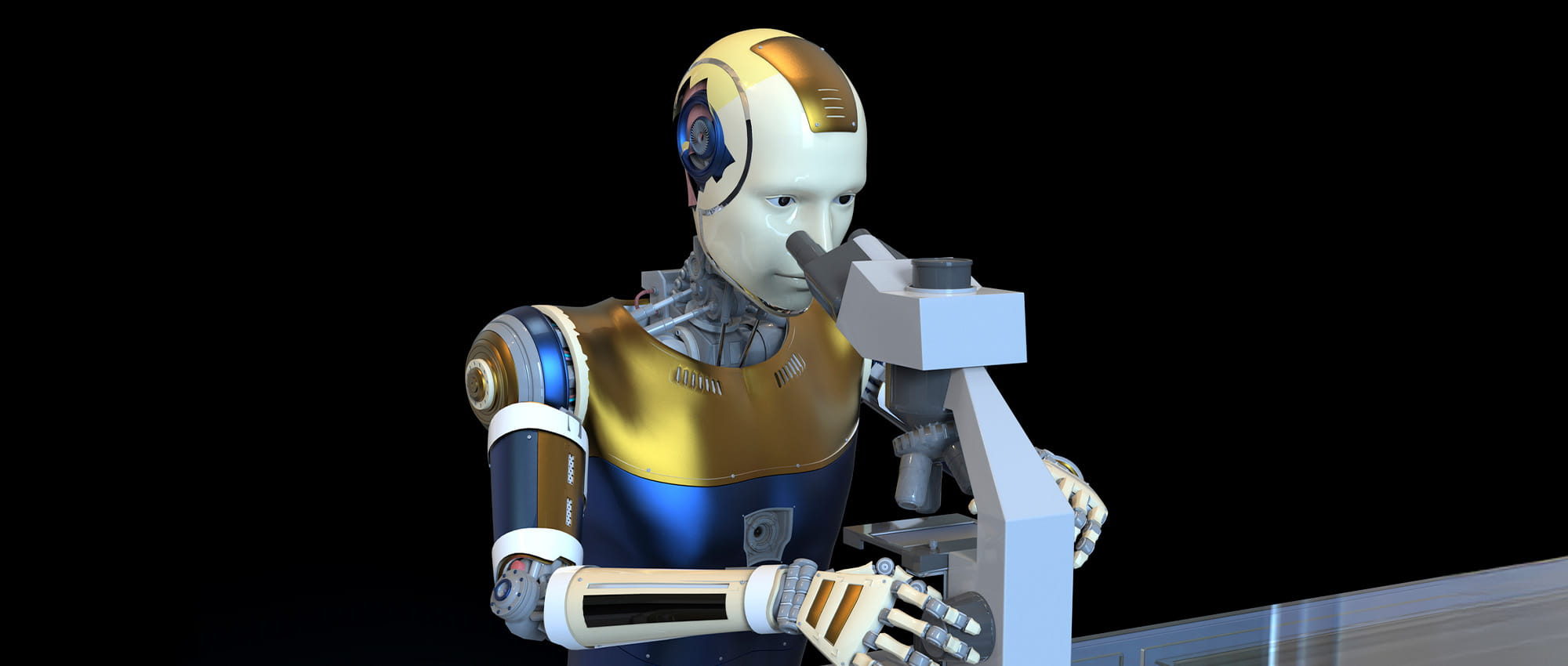
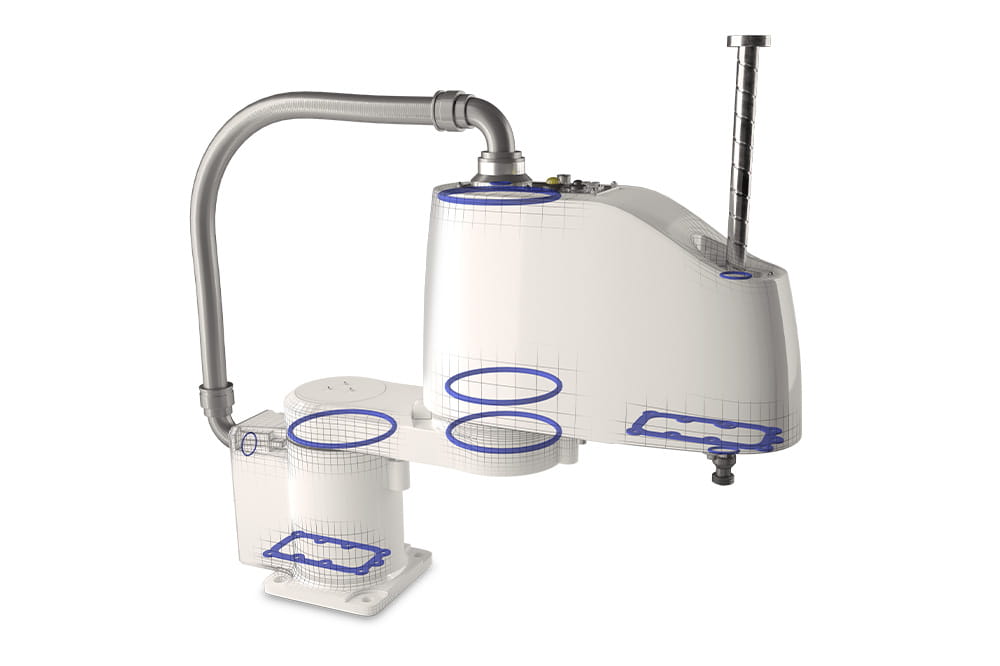
While robotics applications in the past focused primarily on 6-axis robots, Delta robots, SCARA robots, and cobots, a new generation of systems is currently gaining importance: humanoid robots. Many of the requirements for dynamic seals are similar to those of classic industrial robots. At the same time, new challenges are emerging. These include, in particular, very small installation spaces, significantly shorter development cycles, and collaboration with new market participants who are often characterized by a distinct startup mentality.
This is precisely where we see our particular strength. With our innovative sinus lip seal portfolio, we have a clear USP for highly dynamic applications. This is complemented by a state-of-the-art test facility, global production sites, and extensive experience from numerous successfully completed projects in the field of conventional industrial robots. This combination puts us in the ideal position to reliably and efficiently meet the requirements of future generations of robots as well.”
Industry News
Every day, new portals and information hubs emerge all over the world that report on innovative trends and inspiring success stories in robotics. At the same time, conferences and leading trade fairs offer specialists opportunities to present product innovations and discuss ideas and concepts. Here we provide you with a selection of tips that either provide timely coverage of robotics developments or exert influence across the entire industry. With this list, we encourage you to delve deeper into the various information channels.
A checklist:
What information do I need to select seals and dampers for various robotics systems?
To help save time when selecting the ideal materials, sealing and damping designs for individual robotics development processes, here is an alphabetically sorted selection of checkpoints that you should take into account. This list is intended solely as an aid for starting your research.

Pressure conditions and pressure peaks:
-
What is the static and dynamic operating pressure?
-
Do pressure surges occur as a result of rapid valve switching or emergency shutdowns that temporarily exceed nominal pressure values?
Installation space restrictions:
-
What axial and radial installation dimensions are available?
-
Are there restrictions due to adjacent components, cable routing or sensor systems that require special geometries?
Electrostatic properties:
-
Is electrical conductivity required to prevent electrostatic charging or is the opposite – an insulating effect – required?
Kinematic load profiles:
-
What movement frequencies, acceleration values and travel speeds occur at the contact point?
Contamination level of the operating environment:
-
Are dust particles, metal abrasion, spray water or aggressive aerosols to be expected?
Service life expectations and maintenance intervals:
-
What operating hours or load cycle counts must seals and damping elements achieve?
-
Are maintenance intervals planned for scheduled replacement or is maintenance- free operation required?
Media compatibility and chemical resistance:
-
Which fluids, lubricants, hydraulic oils or cleaning chemicals come into contact with the seal/damper?
Emergency running properties in the event of lubricant loss:
-
How does the seal behave in the event of a temporary loss of lubrication?
-
Is a dry-running tolerance required for safety functions?
Surface quality and tolerances of the contact surfaces:
-
What roughness values and geometric tolerances apply to the shaft and housing bores?
Frictional torque and energy efficiency:
-
What maximum frictional torque can be tolerated without affecting the drive design?
Temperature range in the operating cycle:
-
What are the minimum and maximum temperatures and temperature gradients?
Approvals and conformity to standards:
-
Which industry-specific certifications are required?
-
Which documentation obligations must be observed?
Conclusion
The rapid and multifaceted development of robotics now encompasses all process chains in the manufacturing industry. Research institutions, spin-off companies, and globally active, cross-industry technology leaders act as key drivers of these innovation boosts. In this dynamic market environment, highly elastic and durable materials, sealing profiles and sophisticated damping designs ensure that mechanical excellence, intelligent sensor systems, and AI-based control algorithms translate into highly precise movements. In this booming environment, however, one constant will likely continue to prove itself in the years to come: The greatest innovations emerge from a smart idea that arises from dialog.
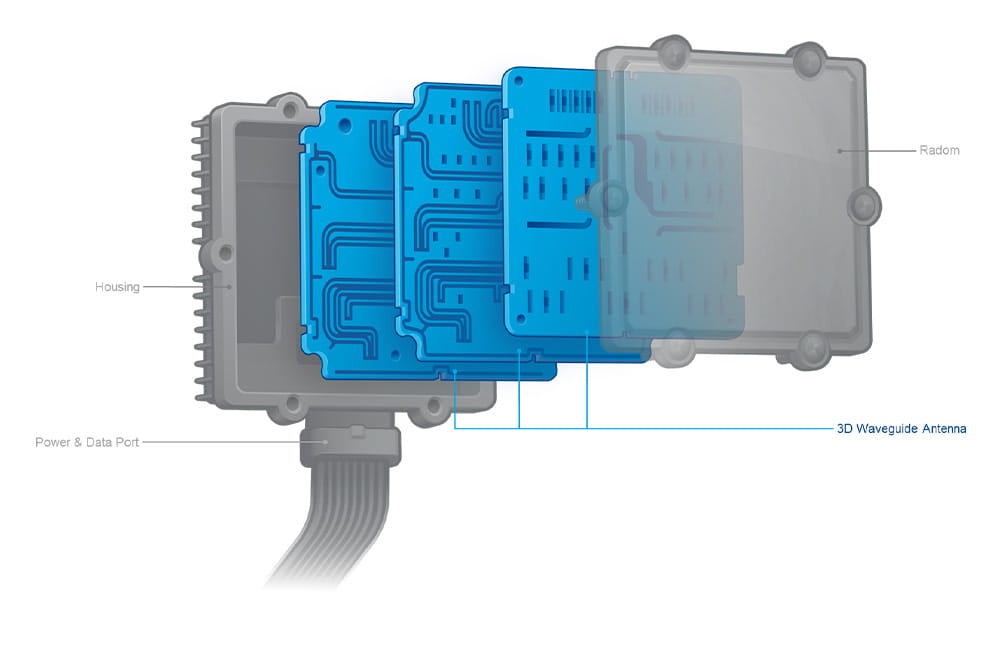
In this context, we would like to draw your attention to a product group that originated in the automotive industry and is currently being tested for transfer into humanoid robotics: delicate waveguide antennas for radar sensor systems. These electrically highly conductive hollow waveguide antennas transmit and receive electromagnetic signals with minimal loss when they are reflected by an object. To achieve this waveguiding capability, manufacturers metallize fine channel structures using application-specific coating processes. This manufacturing approach enables a high degree of design freedom, which is increasingly requested by sensor manufacturers in major markets across Europe, the United States and East Asia.
We look forward to seeing which cross-industry key technologies will ultimately prevail and welcome your feedback as we continue to develop this white paper
Other Topics




First Hand News
Best of all, keep up with the latest developments
with the Freudenberg Sealing Technologies newsletter.
 Back to Top