

 Back


WHAT ARE THE REQUIREMENTS FOR SEALS AND DAMPING ELEMENTS IN ROBOTICS APPLICATIONS?
Robotics: This term encompasses a value chain that ranges from industrial and articulated-arm robots to cobots and autonomous systems used in warehouse logistics – and it also includes the design of humanoid robots intended to approximate the full range of human capabilities. Each of these process chains involves customized robot mechanics integrated with state-of-the-art models using artificial intelligence and advanced sensor technology.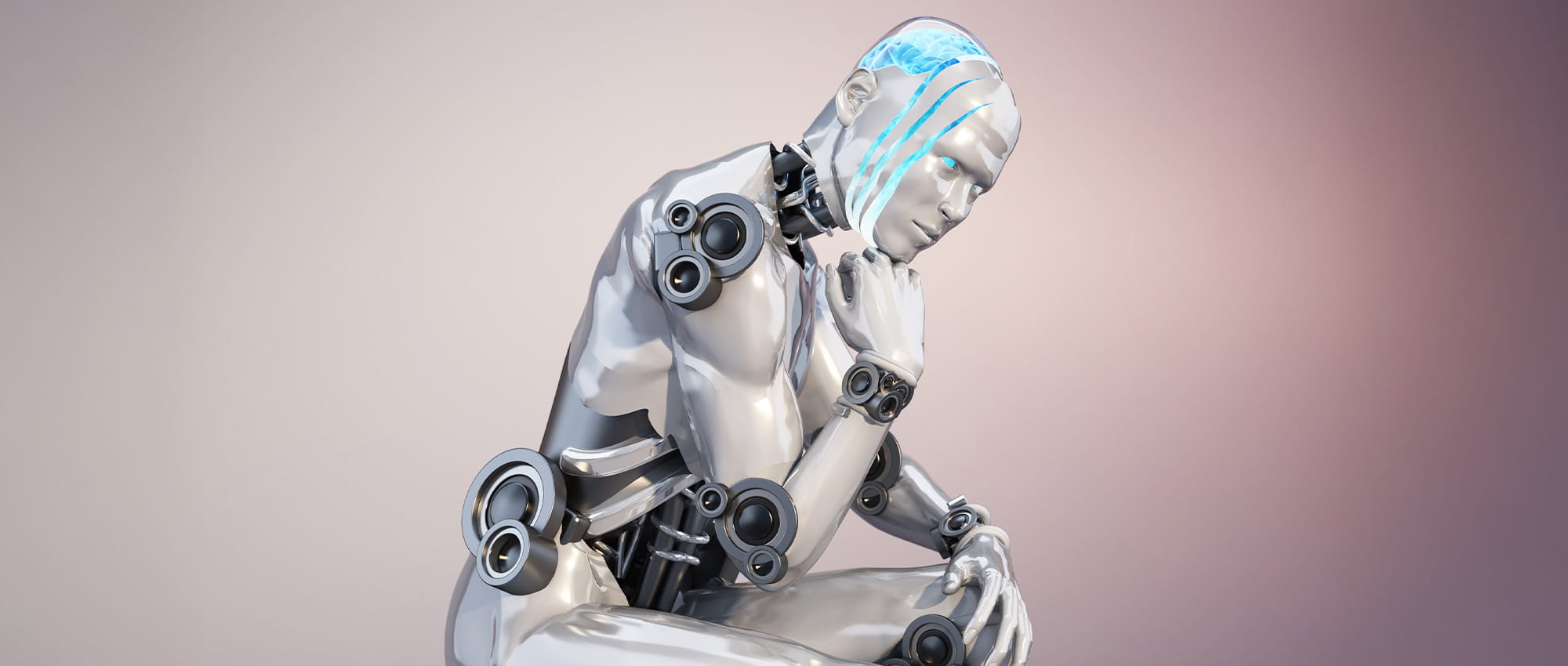
In reports on the diverse robotics markets and technologies, two aspects rarely get mentioned: seals and dampers, without which mechanical motion would not even be possible. Seals keep lubricants where they are needed. Damping elements, in contrast, absorb oscillations and vibrations and enable optimal power transmission. This white paper outlines the robotics market segments with ground-breaking developments – and it identifies the materials, sealing profiles and surface solutions best suited to make this evolution possible.

Expert Assessment

Hunter Cheng,
Global Segment Manager Robotics, Freudenberg Sealing Technologies
“Technological progress always emerges when smart people seek solutions to eliminate risks and optimize processes. In robotics, the revolutionary advances of recent decades clearly demonstrate what we can achieve when we think out of the box. Today, medical robots assist in open-heart surgery and tumor operations. At the same time, service robots have become an increasingly familiar presence in private households, whether outdoors for lawn mowing or indoors for floor cleaning.
All these robotic technologies rely on sealing solutions, damping elements and application-specific small-scale batteries that support their use under diverse system requirements and environmental conditions. For more than 30 years, we at Freudenberg Sealing Technologies have worked closely with our industrial customers to develop innovative materials and sealing profiles that are needed for dynamic progress in robotics. Building on this materials expertise, we now also develop and manufacture a broad range of damping elements and electronic components for battery modules. In all these areas, development engineers must work closely with materials and design specialists so we can implement product ideas and turn them into market-ready solutions within a short time.
At Freudenberg Sealing Technologies, we work with our customers to actively shap market trends and establish new economic benchmarks, including in the development of humanoid robots. Unlike traditional robots, supporting robotics to not only adapt controlled indoor workspace but also get ready to work in complicated, challenging open workspace in close future will soon become our new missions. We pursue a modular, holistic approach in robotics development and place strong emphasis on cross-industry information exchange. With this white paper, we invite you to deepen your understanding of sealing and damping solutions for robotics applications and enter into dialog with us as we continue to advance key aspects of robotics together.”
-
The field of robotics covers the design, development, construction and use of robots. It integrates elements from mechanics, electronics, computer science and mathematics. In essence, robotics applications are systems that can perceive their environment, make decisions and execute defined actions. This requi-res robots to have sophisticated sensors that collect information about their surroundings. They use actuators to perform movements or actions – such as electric motors in joints and wheels, powerful hydrau-lic or pneumatic drives in larger systems, and highly specialized grippers on robotic arms. Complex control systems are needed to coordinate these decisions and movements. In the following robotics segments, high-performance seals and damping elements are essential to provide energy-efficient battery operation and ensure that actuators can perform the desired activities:
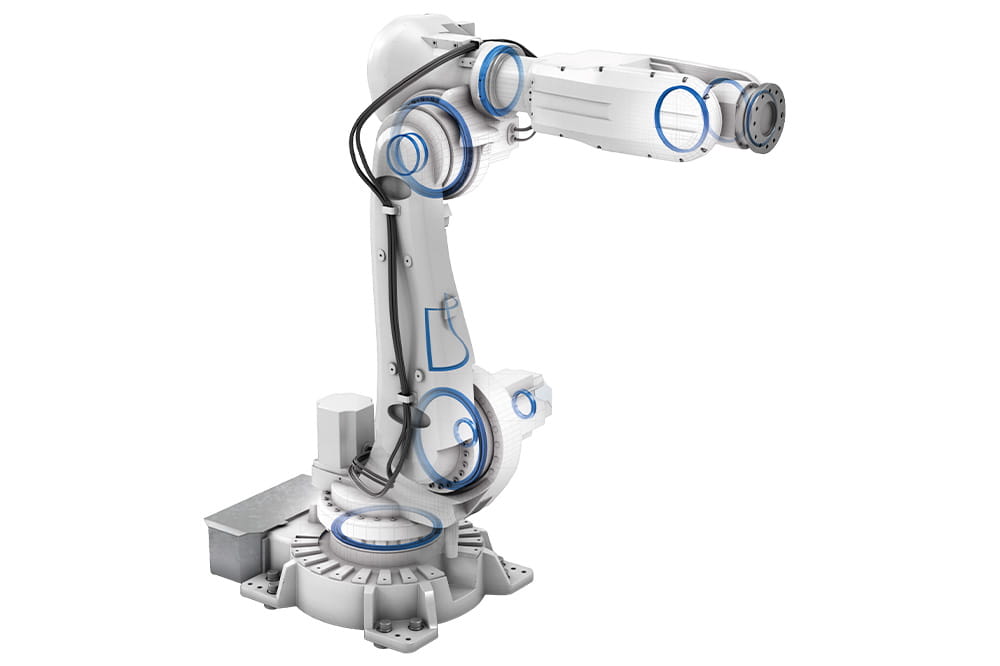
Which seals and dampers are needed by 6- and 7-axis robots?
Six-axis robots operate from a fixed base and have six degrees of freedom. Seven- axis robots gain an additional degree of freedom by being mounted on a linear guidance system. These robot systems perform a wide range of tasks with a high degree of flexibility. Seven-axis robots, in particular, can approach multiple work-stations and cover greater distances. This high level of flexibility and mobility requires flexible materials that withstand mechanical loads while increasing efficiency and operational reliability, especially in the front end.
Sample applications include:
- Axis dampers
- Gearbox seals
- Motor seals
- Dynamic Seals for robotic joints
- Static Seals on robot bodies
- Additional counterbalance system whenever necessary
- Cushion seals on robot sliders (the 7th axis)
-
Automated guided vehicles (AGVs) and autonomous mobile robots (AMRs) are driverless transportation systems. They automate processes in warehouses and production facilities and offer significant growth potential in logistics applications. AGVs follow pre-defined routes and are therefore ideal for standard-ized processes. AMRs are much more flexible. They use application-specific sensor systems and artificial intelligence to act independently and flexibly in real time. They can avoid obstacles, for example. This makes them ideal for dynamic storage processes and variable production environments. Operating these systems requires robust materials and designs that can withstand dusty and damp environments. Sam-ple applications include:
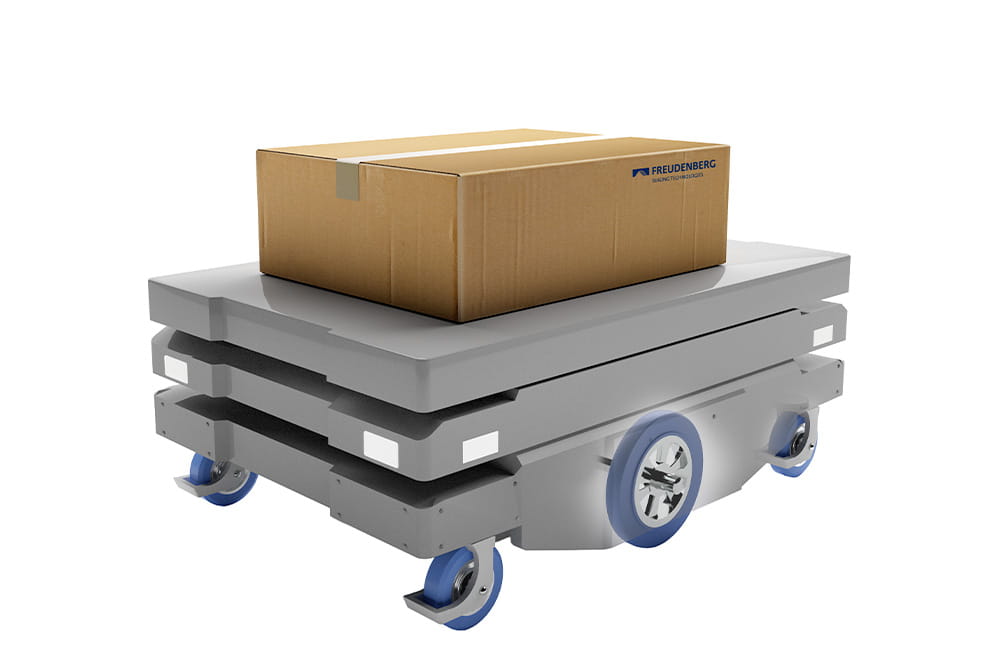
Sample applications include:
- Wheels and shock absorbers
- Seals for car bodies and wheels
- Motor seals
- Gearbox seals
- IPSR (Ingress Protection Seals for Robotics) for waterproofing
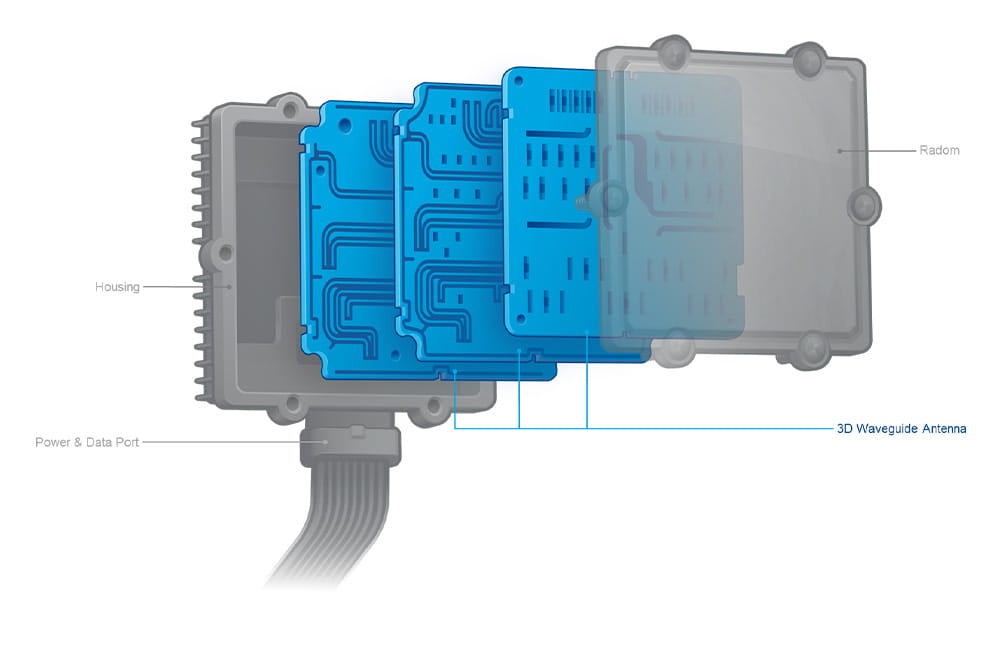
- Waveguide Antenna for AMR to allow 3D scanning and obstacle detection
-
Cobots, widely recognized by their 4-axis struc-ture, are specifically designed to work directly alongside humans in shared workspaces. In industrial environments, they handle repetitive or physically demanding tasks, relieving emp-loyees while also improving the quality of work. Comparing with the commonly seen industrial robots, Cobots are lightweight robots. They significantly increase efficiency and productivity in industrial processes because they can safely interact with people without requiring protec-tive equipment. They also offer high flexibility and can perform a wide range of tasks in diffe-rent work environments. For reliable operation, cobots require specific sealing geometries and damping elements that combine high wear resistance, flexibility and temperature stability.
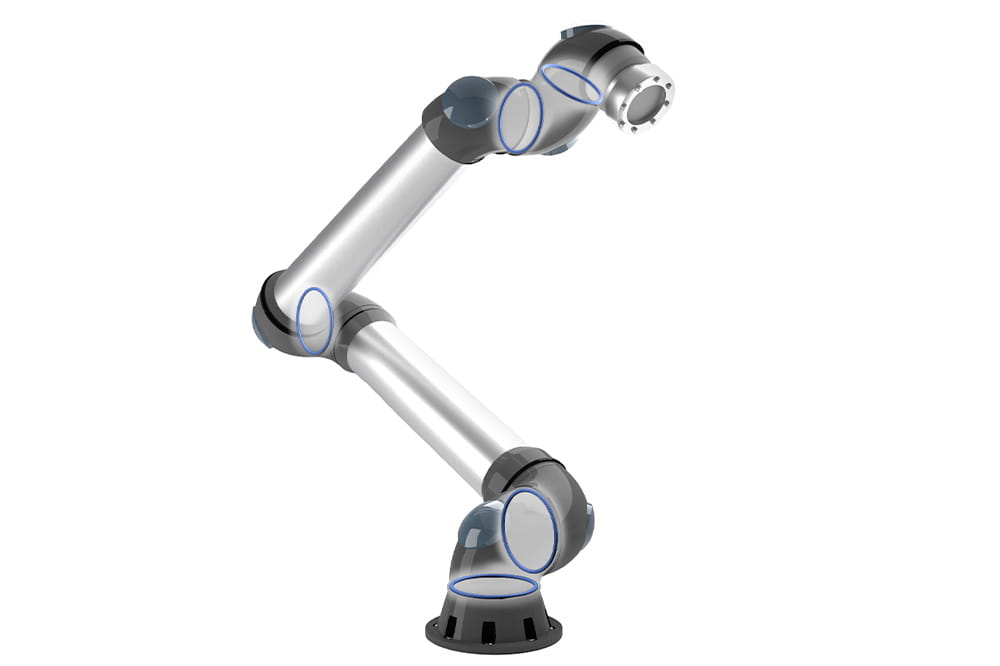
Sample applications include:
- Seals for the entire robot arm
- Gearbox seals
- Elastic shock absorbers
- Motor seals
- Hygienic seals for direct human touch
- IPSR (Ingress Protection Seals for Robotics) for waterproofing
-
Delta robots, also known as parallel-link robots, consist of three independent arms arranged in an isosceles triangle (Δ – delta in Greek) as a parallel kinematic system. They have three degrees of freedom. Their design makes delta robots industrial all-rounders – it eliminates the need to move the downstream mass of links and drives, as each actuator connects directly to the tool carrier. This low moving mass allows them to execute movements with very high dynamics and precision. Consequently, manufacturers frequently use delta robots for pick-and-place applications as well as for assembly and packaging processes with high cycle rates. These applications require high-performance seals and dampers that prevent leakage and reduce maintenance effort.
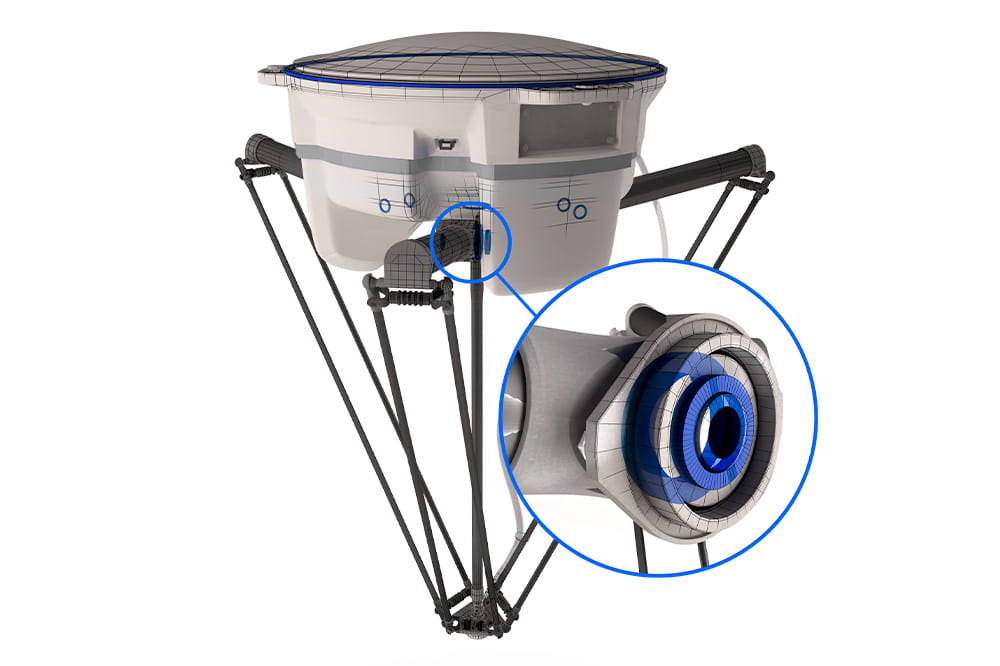
For example:
- Gearbox seals
- Motor seals
- Seals for a static base
- Vibration dampers
-
Articulated robots are distinguished by multi-axis joint structures that enable flexible movements and performance in three-dimensional space. Their serially connected axes allow these industrial robots to execute complex motion sequen-ces with high precision, making them suitable for a variety of applications. The perfect combination of fine mechanical precision and adaptive motion planning makes articulated robots an ideal solution for a wide range of dynamic motion tasks in automated processes. The environmental conditions of the application determine which materials are optimally suited to support the heavily strained joint functions.
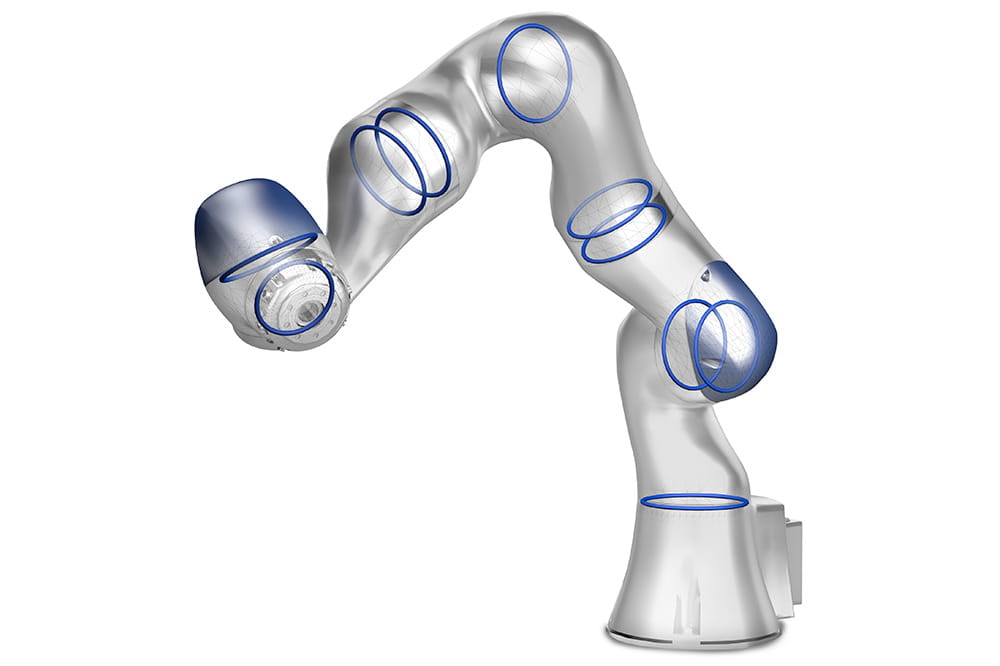
The following are required:
- Seals for robot grippers/end effectors
- Seals for rotatory joints
- Seals for translational joints
- Joint dampers
- Additional seals for end effector / gripping unit adapters whenever necessary
-
Humanoid robots are modeled on the human body and its motion capabilities in both appearance and mechanical performance. At present, there are steep learning curves in the areas of electronic components and energy supply, thermal management and sensor technology. In the future, general-purpose humanoid robots are expected to operate in a wide range of environments without requiring any adaptations of existing framework conditions. To achieve this, they must be capable of dynamically stable operation. A typical humanoid features a head, a torso, two arms with hands or grippers and two legs with feet, or an alternative mobility system, such as three wheels. The highly complex mechanics of humanoids require a wide range of seals, damping elements and sensor materials. Durable and robust materials with specific designs that ensure consistently low friction are parti-cularly important here.
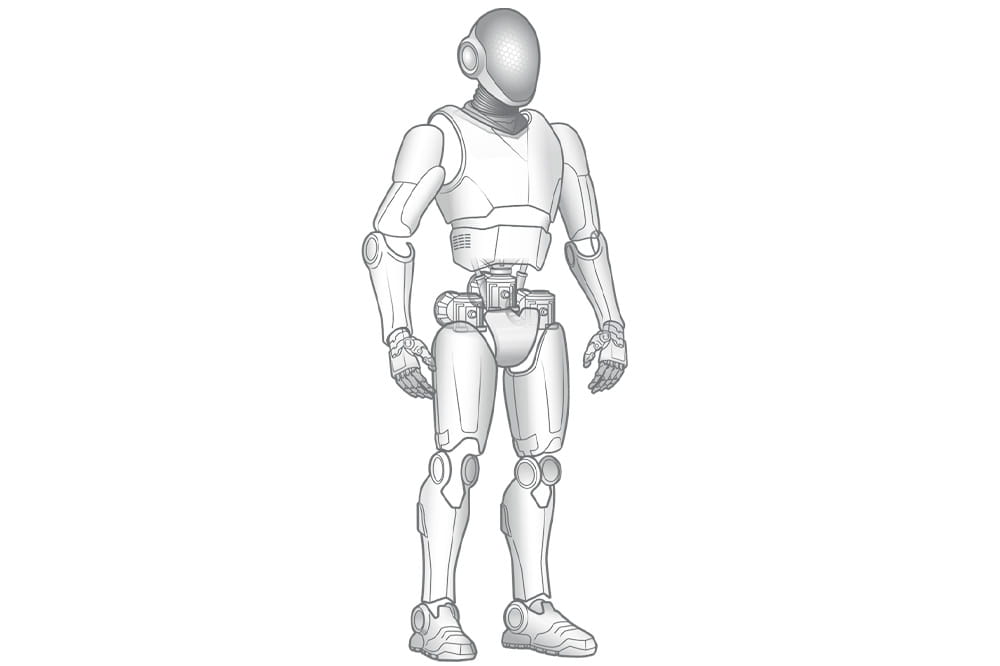
For example:
- Damping elements for different actuators
- Seals for drive units
- Seals for battery modules
- Seals for dexterous hand assemblies including wrists and finger joints
- Compact and flat wafer seals used in limited space to keep lubrication
-
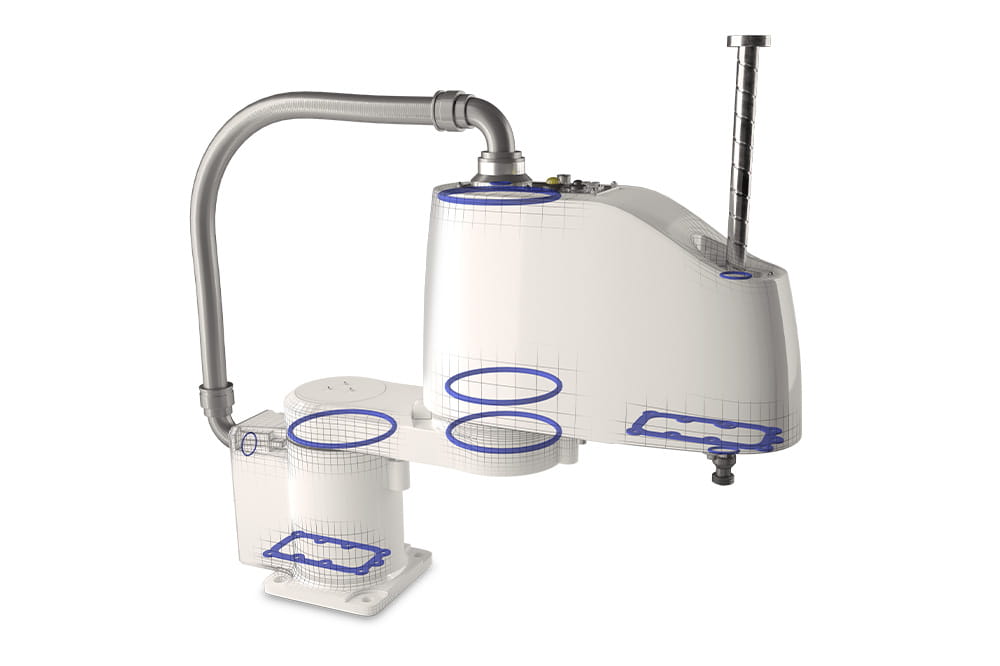
SCARA robots (Selective Compliance Arm for Robotic Assembly) are a specific class of industrial robots. They feature one horizontal linear axis and three rota-tional axes, providing four degrees of freedom. Their joints and segments are arranged in a serial kinema-tic chain or row – with each joint directly connected to the preceding and following segment. SCARA robots can reach objects within a defined working area and process them at high speed. They stand out with their high precision and speed, properties which lead to their frequent use in manufacturing and assembly processes. These demanding applications primarily require sealing and damping elements with low friction and high wear resistance.
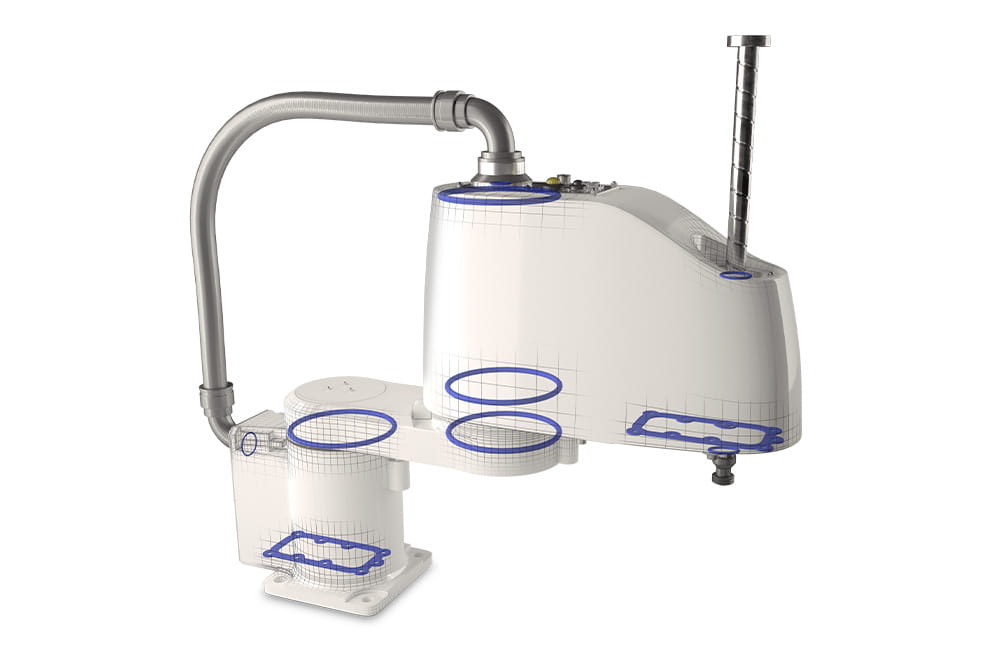
For example:
- Dampers for shoulder joints and connectors
- Motor seals
- Gearbox seals
- Static seals for upper and lower base covers
-
Service robots are not directly involved in industrial production processes. Instead, they perform simple and defined services for people. Household and gar-den robots now roll across homes and lawns all over the world. Their drive and steering wheels connect via axles and adapt to changing ground conditions. The same is true for transport and delivery robots, infor-mation and navigation robots, as well as care robots. These applications require robust seals and dampers that resist cleaning agents, moisture, and dust. At the same time, they must ensure mobile power transmission and the leak-free operation of charging stations.
For example:
- Seals for drive elements
- Motor seals
- Seals for service stations
- Wheels and shock absorbers
- eCON for safe grounding to avoid bearing damage due to electrical discharge
Following this overview, we will focus on the robotics areas that are currently advancing with the most momen-tum. We will also list all the requirements for materials, sealing and damping solutions described above: for cobots and humanoid robots. This is where pioneering techno-logical concepts are combined with established materials expertise:
https://www.fst.com/news-stories/robotics/robotics-preview/materials/
Understanding the Requirements for Robot.
Other Topics




First Hand News
Best of all, keep up with the latest developments
with the Freudenberg Sealing Technologies newsletter.
 Back to Top